News

Hunting Bags Explained: Types, Materials and What Each One Is Built to Carry

2026-10-26 0 Leave me a message
"Hunting bag" is one search term covering at least six different products: soft and padded gun cases, waterproof and floating gun cases, blind bags, game bags, hunting packs, and duffels. They share a buyer and a season, and very little else. A game bag for elk quarters is supposed to breathe. A blind bag that rides in a layout boat is supposed to do the opposite. A shotgun case carried across a dry stubble field fails in completely different ways from one that spends a morning lying in a flooded pit blind.


This guide sorts hunting bags by what they carry and what they are exposed to, then looks at the two decisions that determine how a bag performs in the field: the shell material and the way its seams are joined. The final section is for brands and distributors writing a specification for their own line.

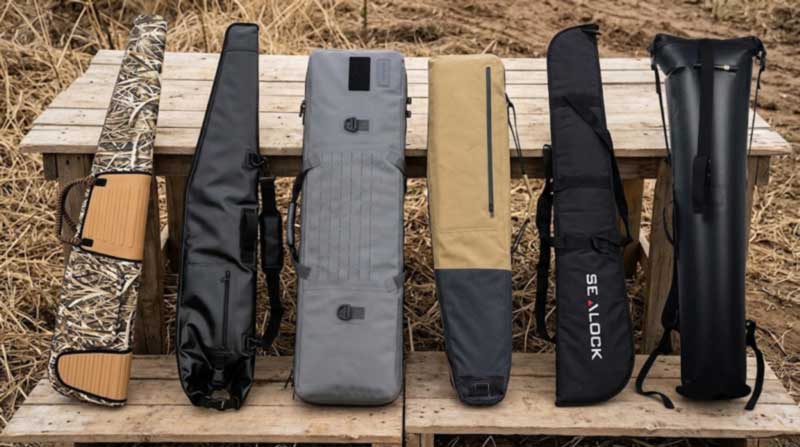
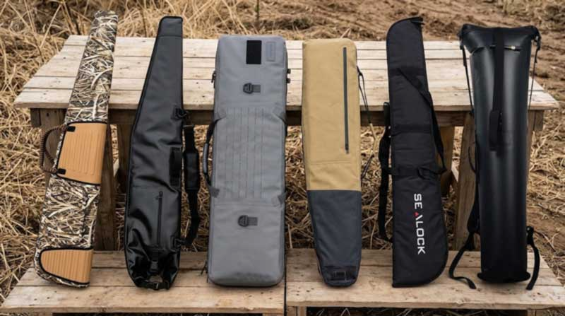
Six types of hunting bags laid out side by side: padded gun case, welded waterproof gun case, blind bag, game bags, hunting daypack and waterproof duffel
Six products sold under one search term. What each one carries, and what it gets exposed to, decides how it should be built.

What Counts as a Hunting Bag?

In retail and in search, the term covers any soft-sided carrier made for the field. It is easier to work with in six groups, because each group has a different job and a different way of failing.

Type What it carries Main threat Typical construction
Soft and padded gun cases One long gun, between truck, field and home Impact, abrasion, trapped moisture Stitched polyester Oxford over foam
Waterproof and floating gun cases One long gun around boats, marsh and flooded timber Water entering through seams and the closure Welded TPU laminate with a roll-top or sealed zipper
Blind bags and waterfowl dry bags Shells, calls, phone, keys and a dry layer Sitting in water, salt and mud Welded TPU, often with a waterproof zipper
Game bags Quartered or boned-out meat Heat, flies, spoilage Breathable knit or woven fabric, deliberately not waterproof
Hunting packs Gear for the day, and meat on the way out Load, noise, comfort over distance Stitched nylon or polyester on a frame or harness
Duffels and totes Clothing, boots and camp gear in transit Rain in the truck bed, spray in the boat, rough handling Coated or laminated fabric, either stitched or welded

Sealock builds the long-gun side of this list: soft, padded, waterproof and tactical gun cases, in both welded and stitched construction. The other groups are covered here because buyers compare them, and because the same material and seam decisions apply across all of them.

Soft and Padded Gun Cases

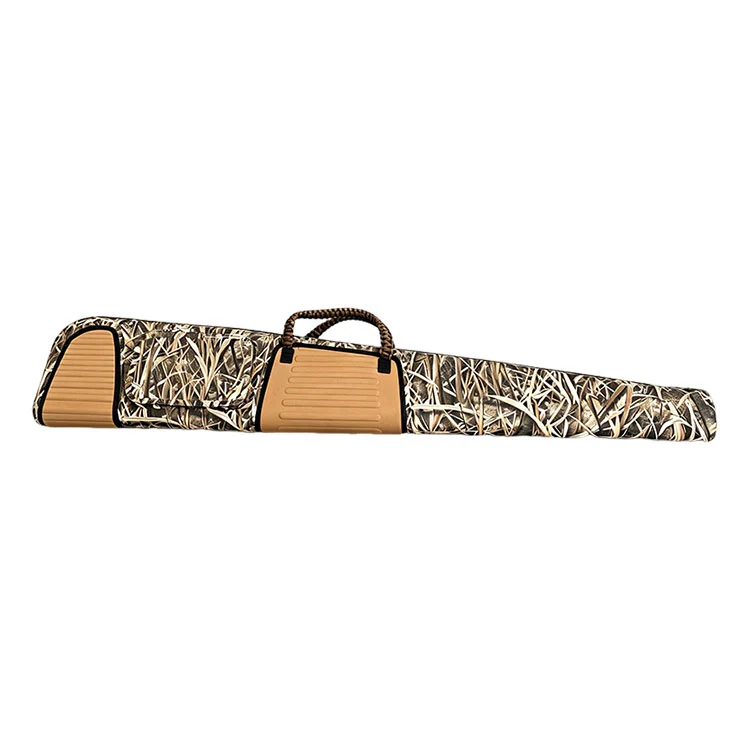
The soft gun case is the hunting bag most people own. It is a fabric shell over a foam layer, a full-length zipper, a carry handle, and usually a shoulder strap. Its job is to stop scratches and dents between the gun cabinet and the field. Rain protection is a secondary job, and a limited one.

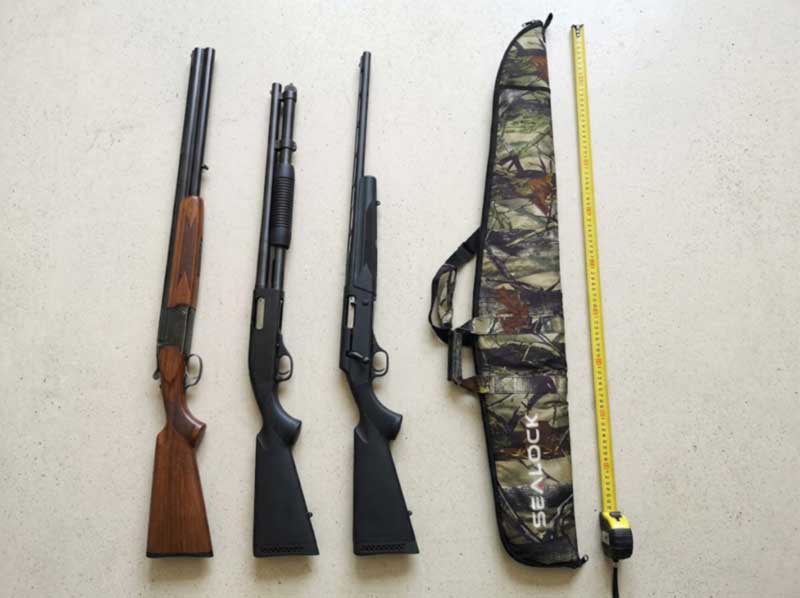
Most failures fall into three groups. The first is fit. A case's nominal length is not its internal length: by the time the ends are formed and the padding is in place, a soft case usually takes a gun one to two inches shorter than the size printed on the label. Buyers who measure their rifle at 48 inches and order a 48-inch case end up forcing the zipper around the muzzle.

The second is zipper stress at the barrel end. When a zipper runs all the way to the tip, every time the gun goes in, the muzzle crown or front sight bears on the zipper chain. Over a season, that one spot is where teeth separate.

The third is moisture. Open-cell foam behaves like a sponge. A gun that goes into its case damp after an evening sit and stays zipped in a warm truck or a closed cupboard is sitting in its own humid microclimate, and surface rust can appear where the foam touches the metal. The case did not let water in. It held the water that came in with the gun.

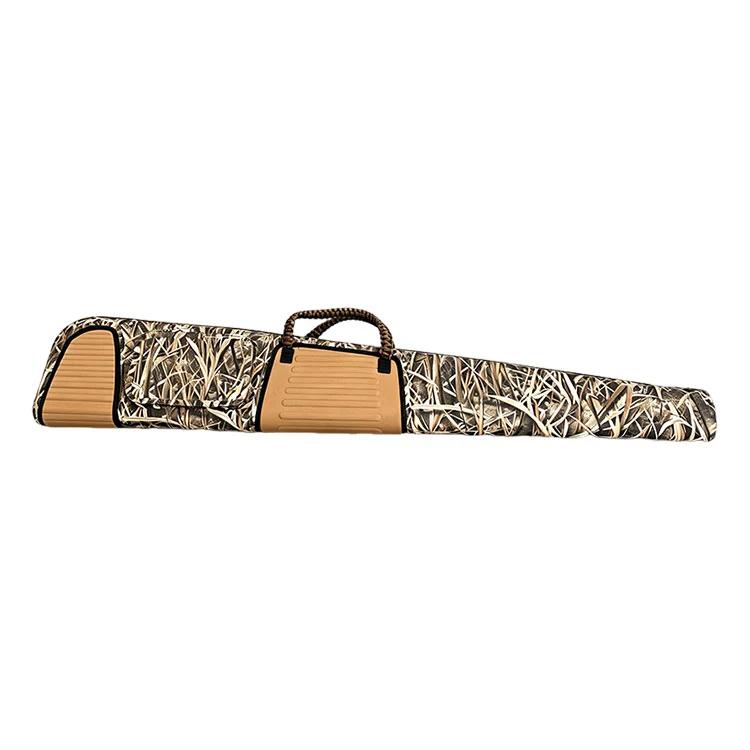
Padding thickness is a balance between protection and weight. Sealock's SL-E899 padded shotgun case uses 10–15 mm of foam between a 600D polyester Oxford shell and a soft polyester lining, and weighs about 0.85 kg. The same pattern also runs as two configurations, sold as the upland and waterfowl builds. The upland build has 10 mm of foam, no front pocket and weighs 0.68 kg, for a hunter who walks all day. The waterfowl build keeps 15 mm of foam, the pocket, and a zip pull enlarged for gloved hands. At the heavy end, the SL-P1076 padded rifle case adds a removable 40 mm multi-layer gun pad inside a 134 cm tapered body, for rifles up to roughly 127–130 cm overall. It weighs 1.5 kg.

All three are stitched cases, and stitched cases are water-resistant, not waterproof. A coated Oxford shell sheds rain, dew and a wet dog. It will not keep water out if the case lies in a puddle or goes over the side of a boat, because every stitch is a needle hole through the fabric. That limit belongs on the product page and the hang tag, not in a returns report.

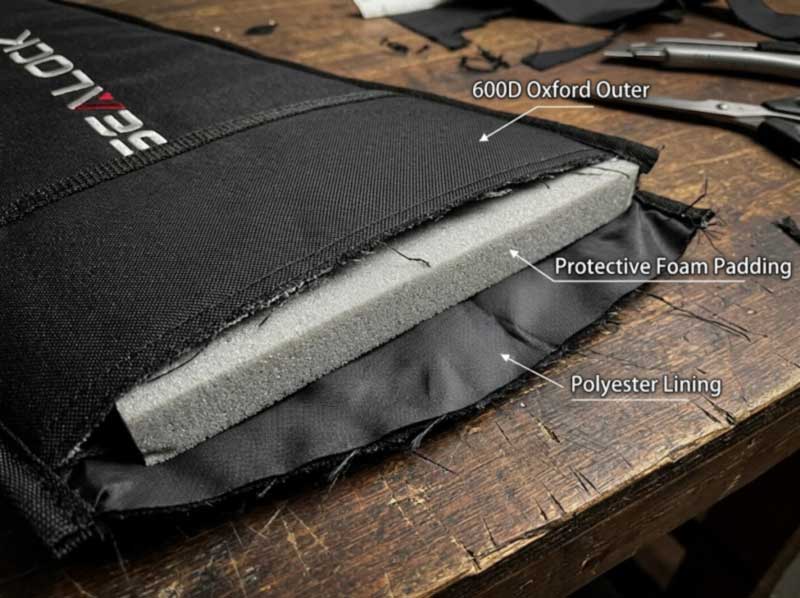
lose-up of a stitched padded gun case cut open to show 600D Oxford outer, foam layer and polyester lining
A stitched padded case in cross-section: outer fabric, foam and lining. Protection comes from the foam. Water resistance comes only from the fabric coating.

Waterproof and Floating Gun Cases

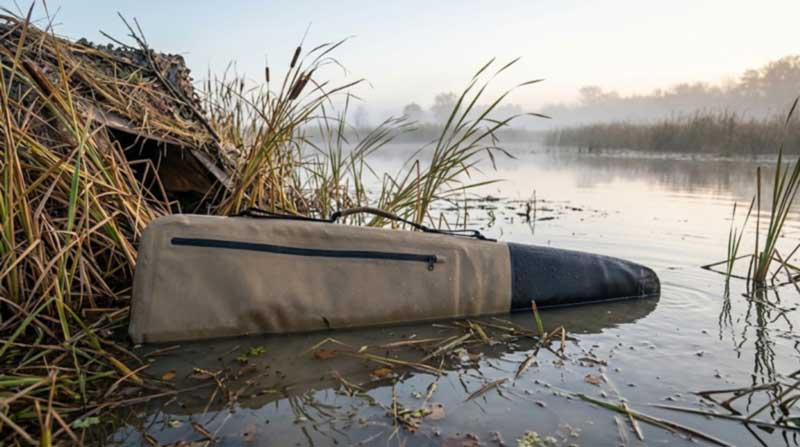
A waterproof gun case is built on a different principle. Instead of stitching panels together, the shell is TPU-laminated fabric whose seams are fused with high-frequency welding. Radio-frequency energy heats the TPU coating on two layers until they melt into each other under pressure, so the seam has no needle holes. The closure is either a roll-top, which works the same way as a dry bag, or an airtight zipper set into a welded seam.

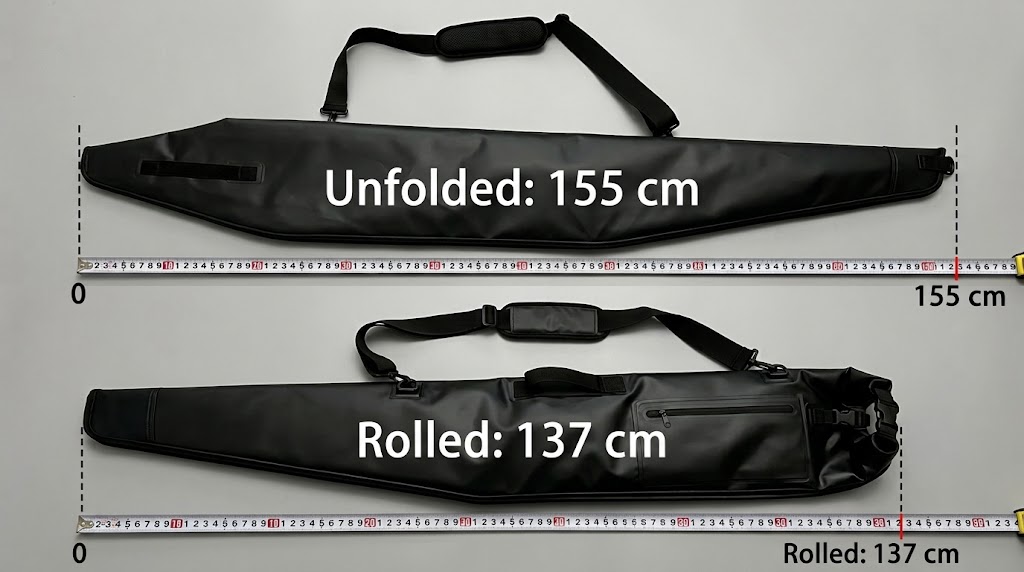
The roll-top is the more forgiving of the two. It has no moving parts that can clog with mud or ice. The trade-off is length: rolling the mouth uses up material. Sealock's SL-P857 roll-top case is 155 cm laid flat and 137 cm once sealed. The 18 cm difference is the roll itself, and it leaves room for firearms up to about 125–128 cm. A buyer who reads only the flat length will order a case that is too short.

A sealed zipper gives faster access, which matters to a waterfowler who has to get a shotgun out of the case quickly when birds come in. The SL-E603 marsh case uses a waterproof zipper welded into a one-piece 840D TPU body rated IPX7, with a welded waterproof pocket for chokes and licence and strap anchors on welded tabs rather than sewn through the shell. The cost of a zipper is maintenance. Sand and dried marsh mud in the teeth are what force a waterproof zipper open, and a forced zipper soon stops sealing.

Floating is a separate property. A welded case that is sealed with air inside will often sit on the water empty. Whether it stays up with a shotgun inside depends on how much buoyancy the case has against the weight of the gun. The cases sold specifically as floating gun cases usually get their buoyancy from a layer of closed-cell foam built into the walls, the same kind of foam used in life jackets, rather than from trapped air alone. When a case is marketed as floating, the specification should state the load it was tested with. The five ways water gets into a gun case, and how to check a waterproof claim yourself, are covered in Waterproof Gun Cases: What Actually Keeps Water Out.

Roll-top waterproof gun case shown flat at 155 cm and rolled and buckled at 137 cm, with a measuring tape along the body
A roll-top case has two lengths. The sealed length, not the flat length, decides which guns fit.

Blind Bags and Waterfowl Dry Bags

The blind bag holds everything a waterfowler needs to keep dry, except the gun: shells, calls, chokes, licence, phone, truck keys, and often a spare glove liner. It spends the morning on a muddy blind floor or in the bottom of a boat with water sloshing around it.

This is the category where the gap between water-resistant and waterproof causes the most disappointment. Many bags are waterproof only in part. A welded base is joined to a stitched or coated upper, so the bag survives standing in a puddle but leaks once spray or rain gets past the top. Field reviewers who dunk their blind bags report exactly this pattern, and an experienced hunter keeps the phone and camera out of a bag whose upper is not welded. A fully waterproof blind bag is welded TPU all the way round, with a welded-in waterproof zipper or a roll-top closure.

Game Bags

Game bags are the one hunting bag that should never be waterproof. Meat has to lose heat fast after the kill, and it needs a dry surface crust to keep flies and bacteria off. A breathable knit or woven bag allows both. A plastic or coated bag traps body heat against the meat, and that is how quarters spoil on a warm afternoon before they reach the truck. Treat any game bag sold as "waterproof" with suspicion.

Hunting Packs

Hunting packs are the largest part of the hunting-bag market by search volume, and the part where carry systems matter more than materials. They range from 20–30 litre daypacks for a treestand morning, to chest and waist packs for calls and a rangefinder, to frame packs that carry boned-out meat several miles. Fit, frame, noise and how the pack carries a rifle or bow matter more than whether the fabric is waterproof. Most packs use stitched nylon or polyester and rely on a rain cover or a dry bag inside when the weather turns.

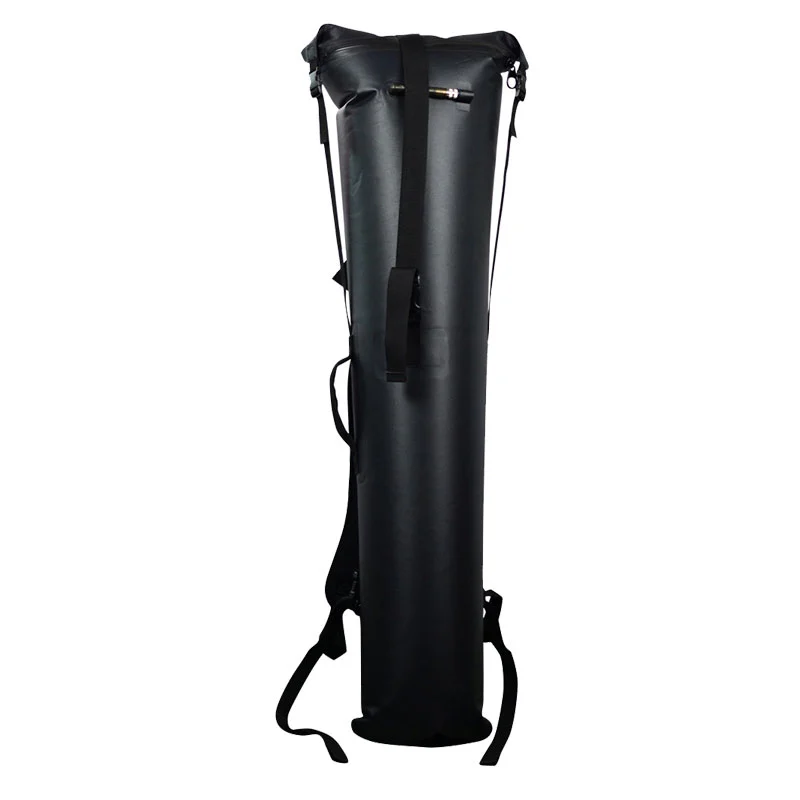
Where packs and gun cases overlap is the rifle backpack: a padded gun case with a backpack harness, for a long walk-in to a stand or a hunt across rough ground. Sealock's SL-C811 is built this way. It has a welded 840D TPU shell rated IPX6, 20–25 mm EVA padding, internal retention straps, and backpack straps alongside a detachable sling.

Duffels and Totes

Hunting duffels carry clothes, boots and camp gear to the cabin, the boat launch or the floatplane dock. The threats are rain in an open truck bed, spray, and being thrown around. The useful features are practical ones: a heavier fabric on the base than on the sides, tie-down points for securing the bag to a boat or ATV, and waterproof zippers. Welded duffels cost more and are the right choice when the bag travels by water. Stitched duffels in coated fabric are fine for a truck with a bed cover.

Materials: What the Shell Fabric Decides

Three shell materials cover most of the hunting bags on the market.

Polyester Oxford (typically 600D) is a woven fabric with a PU or similar coating on the back. It takes printing well, including camouflage, sews easily, folds quietly, and costs little. It resists water through its coating, and the coating wears with abrasion and age. It is the right shell for padded gun cases and most packs, and it cannot be made waterproof by stitching.

TPU-laminated fabric (commonly 420D to 840D nylon or polyester base) has a thermoplastic polyurethane film bonded to the base cloth. TPU welds cleanly, stays flexible in cold weather, resists abrasion and contains no plasticisers to leach out. It is the standard material for welded waterproof gun cases, blind bags and premium duffels. Sealock's welded gun cases use an 840D TPU laminate.

PVC-coated fabric also welds well and costs less than TPU. It is heavier, and it stiffens noticeably in hard cold, which matters on a December goose hunt. Its plasticisers also make it harder to place with brands that have chemical-compliance requirements. It is still a sound choice for dry bags and duffels aimed at warmer markets or tight price points.

Denier tells you the yarn weight, not the finished durability. An 840D laminate with a well-bonded film will outlast a heavier fabric with a poor coating, which is why a supplier's peel-strength and abrasion test results matter more than the denier figure on a quote.

Welded or Stitched: The Line Behind "Waterproof"

Whether a hunting bag is waterproof or water-resistant comes down to how it is joined, more than what it is made of. A TPU fabric that is stitched together is water-resistant, however good the fabric. A coated Oxford can never be welded into a waterproof shell, because the base cloth is not built for it.

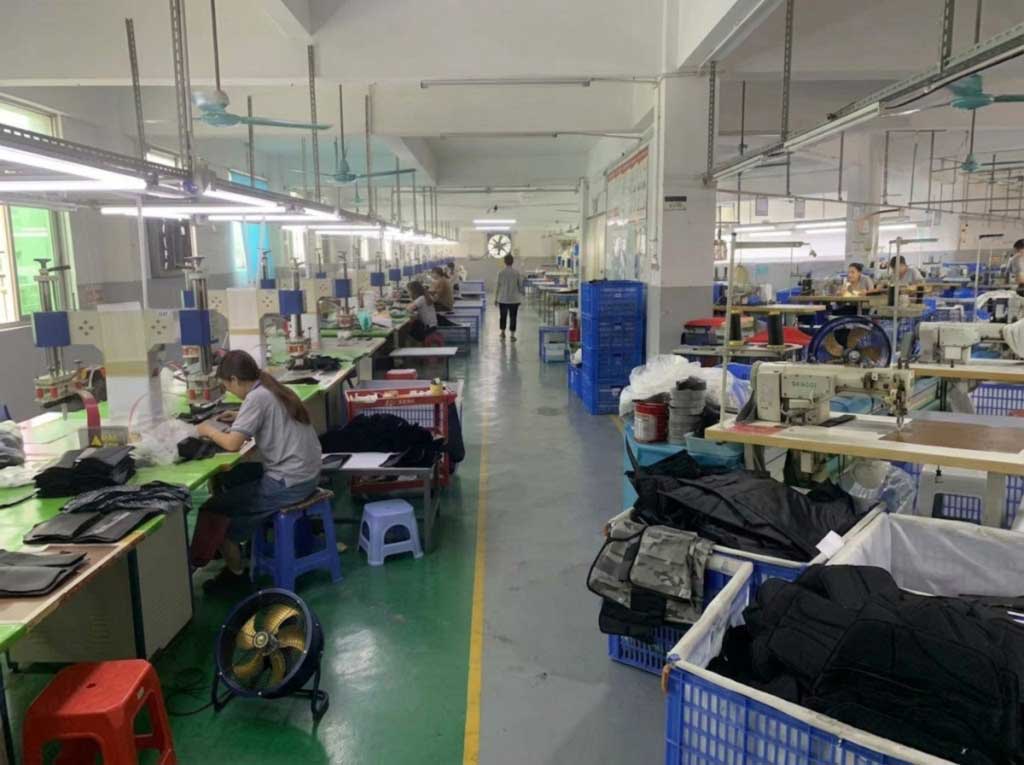
That does not make welding the better process across the board. Stitching is how you build padded, shaped, multi-panel products: foam layers, quilted linings, reinforced stock and barrel panels, braided handles, and pockets in places a welding die cannot reach. Welding is how you build a sealed shell. A supplier who can only weld will push every project towards a dry bag. A supplier who can only sew will offer "waterproof" fabric with stitched seams. Sealock runs both in-house, in both its Dongguan and Ho Chi Minh City plants, so the construction method can follow the product rather than the other way round.

Even a welded case needs care in the details. External attachments are where water usually gets in: MOLLE webbing, D-rings and strap anchors that are sewn through the shell create the very needle holes the welding was meant to eliminate. On the SL-C811, the MOLLE grid is laser-cut into a separate welded panel, and the D-rings are anchored on welded tabs, so the waterproof shell is never pierced.

Waterproof Ratings: What IPX6 and IPX7 Mean on a Gun Case

IP ratings come from the IEC 60529 standard. The second digit describes protection against water. IPX6 covers powerful water jets from any direction: heavy rain, spray off a boat's bow, or a hose. IPX7 covers temporary immersion, defined in the standard as one metre for 30 minutes.

For a hunter, the difference is clear. An IPX6 case stays dry in a storm and in spray. An IPX7 case stays dry if it goes over the side and is fished back out. Sealock tests IPX6 products with a heavy rain and water-jet test, and IPX7 products with a full water-immersion test lasting two hours or more, longer than the standard's 30 minutes. Stitched cases such as the SL-E899 and SL-P1076 carry no IPX rating at all, and saying so plainly avoids returns.

Matching the Bag to the Hunt

Hunt and setting Bag to choose Construction Sealock model
Upland birds, dry fields, long walking days Light padded shotgun case Stitched, 10 mm foam, water-resistant SL-E899 upland build
Waterfowl from a field blind or dry pit Padded shotgun case with glove-friendly zip Stitched, 15 mm foam, water-resistant SL-E899 waterfowl build
Marsh, flooded timber, boats and kayaks Waterproof gun case Welded TPU, IPX7 SL-E603 marsh case, SL-P857 roll-top
Truck transport and storage of a scoped rifle Heavily padded rifle case Stitched, 40 mm removable pad SL-P1076
Long walk-in, rough ground, foul weather Rifle backpack case Welded TPU, IPX6, EVA padding SL-C811
Meat recovery Breathable game bags Knit or woven, not waterproof —

Two of these choices are frequently confused. A water-resistant padded case is not a cheaper version of a waterproof case. It is a different tool, and for a dry field it is the better one: lighter, quieter and more protective against knocks. Equally, a waterproof case is not an upgrade for every hunter. Without foam, a welded roll-top protects against water and very little else.

Sourcing Hunting Bags for a Brand or Distributor

For a brand building its own line, a hunting bag specification starts with the firearm, not the bag. List the guns the case has to take: overall length, height at the scope or action, stock profile, and whether a suppressor or extended magazine stays fitted. Internal dimensions are worked out from that list, and the pattern follows. Next, decide the construction for the use, welded for water and stitched for padding. Then set the rating you are prepared to print on the label, and match the test method to it.

At Sealock, samples are usually ready within 7–15 days of a confirmed specification, and production runs 30–45 days. Minimum orders sit between 300 and 500 pieces per model depending on construction, and colour and logo can vary within one order. Fully new designs that need new welding moulds or patterns take longer than modifications to an existing model, and that time is planned in from the start. The same model can be built in Dongguan or Ho Chi Minh City, depending on the buyer's tariff exposure and shipping plan.

Testing is part of the specification, not something added after shipment: load testing to more than 1,500 cycles, zipper fatigue to 3,000 cycles, seam bonding and tensile strength, salt spray on metal hardware, abrasion, colour fastness, and immersion testing for every waterproof model. Incoming, in-process and outgoing inspection run on every order, with SGS or QIMA third-party inspection available on request. For welded cases, the customer inspection procedure we run is unboxing, vacuum extraction, a 24-hour static rest, then the air-leak check. A leak shows up as a case that has re-inflated overnight. The factories hold ISO 9001, BSCI, SMETA, GRS, Higg and SCAN certifications, and our long-term partners include outdoor and shooting brands such as Benelli and ORVIS.

Frequently Asked Questions

Why does the zipper on my soft gun case keep splitting near the muzzle end?

Because the barrel bears on the zipper chain every time the gun goes in or comes out. Well-designed cases stop the zipper short of the muzzle, or put a reinforced end cap there, so the barrel rests against fabric and foam instead of zipper teeth. If the case is also slightly too short for the gun, the problem gets much worse.

Why did my shotgun rust inside its case?

The case trapped moisture that came in with the gun. Open-cell foam and fabric linings hold dampness against the metal, especially in a warm vehicle or a closed cupboard. Wipe the gun down and let it dry before casing it after a wet hunt, open the case to air it, and don't use a soft case for storage between seasons.

Is a waterproof gun case also a floating gun case?

Not necessarily. A welded case sealed with air inside often floats when empty. Whether it floats with a gun inside depends on its buoyancy compared with the weight of that gun. Cases sold specifically as floating usually build in closed-cell foam for flotation. If flotation matters to you, ask what load the case was tested with.

Can I fly with my rifle in a soft case?

Not on its own. US airline rules require firearms to travel unloaded, in a locked, hard-sided container, as checked baggage. A soft case can travel inside the hard case and carry the gun in the field at the other end, but it cannot replace the hard case at the airport.

My rifle is 48 inches long. Will it fit a 48-inch case?

Probably not comfortably. Soft and roll-top cases lose length to padding, end forming and, on roll-tops, the roll itself. Choose a case whose stated internal or sealed length is at least an inch or two longer than the gun, measured with the optic and any muzzle device fitted.

Does camouflage printing hold up on a welded case?

It does when the pattern is printed on the TPU laminate before welding and the weld settings are calibrated for printed fabric. Print and plain fabrics behave slightly differently in the welding die. Check pattern scale on a sample first, because a camo designed for clothing can look too large or too small on a narrow gun case.

What is the minimum order for a private-label hunting bag, and can we add our logo?

Minimum orders are 300–500 pieces per model, depending on construction. Logos can be screen-printed, heat-transferred, embroidered, or applied as woven labels or rubber patches, and colours and logos can vary within one order. Price depends on the material, construction, padding and order quantity, so the fastest route to an accurate quote is a short list of the firearms the case must take and the conditions it will be used in.

Start a Hunting Bag Project

Sealock has built waterproof and padded carry products for over 20 years, with high-frequency welding and industrial sewing under one roof. Browse the waterproof floating hunting bags and soft gun cases, or send your firearm list and target market through the contact page or to info@sealock.com.hk. We will come back with a construction recommendation, material options and a sample plan.

Related News
Leave me a message
X
We use cookies to offer you a better browsing experience, analyze site traffic and personalize content. By using this site, you agree to our use of cookies. Privacy Policy
RejectAccept