Products
HF-Welded Gun Case
  • HF-Welded Gun CaseHF-Welded Gun Case

HF-Welded Gun Case

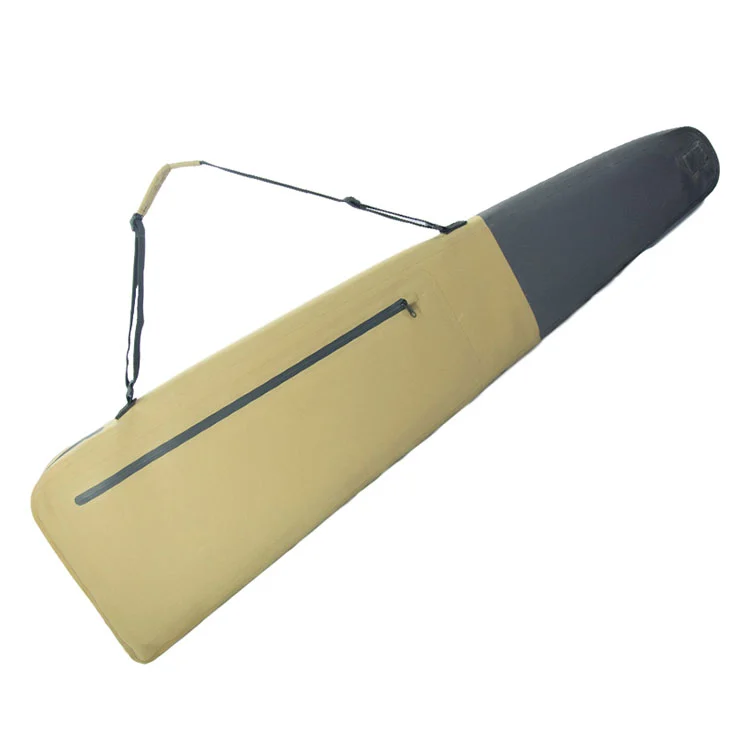
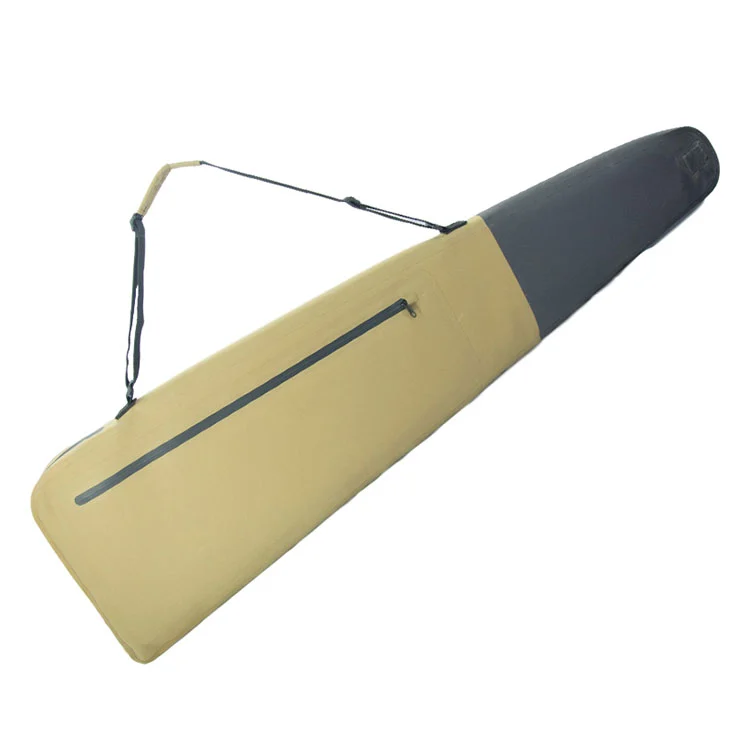
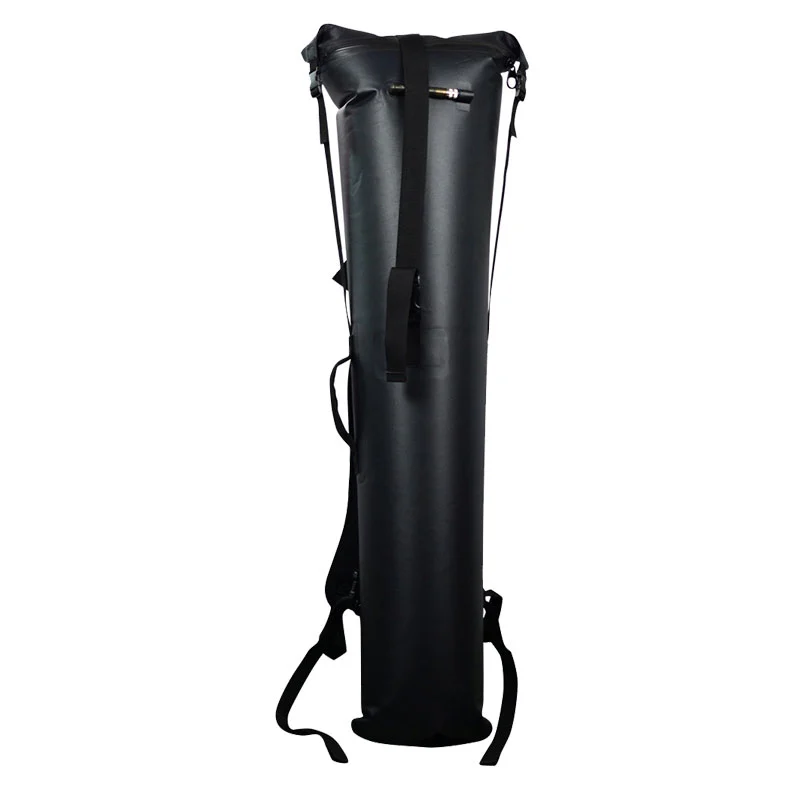
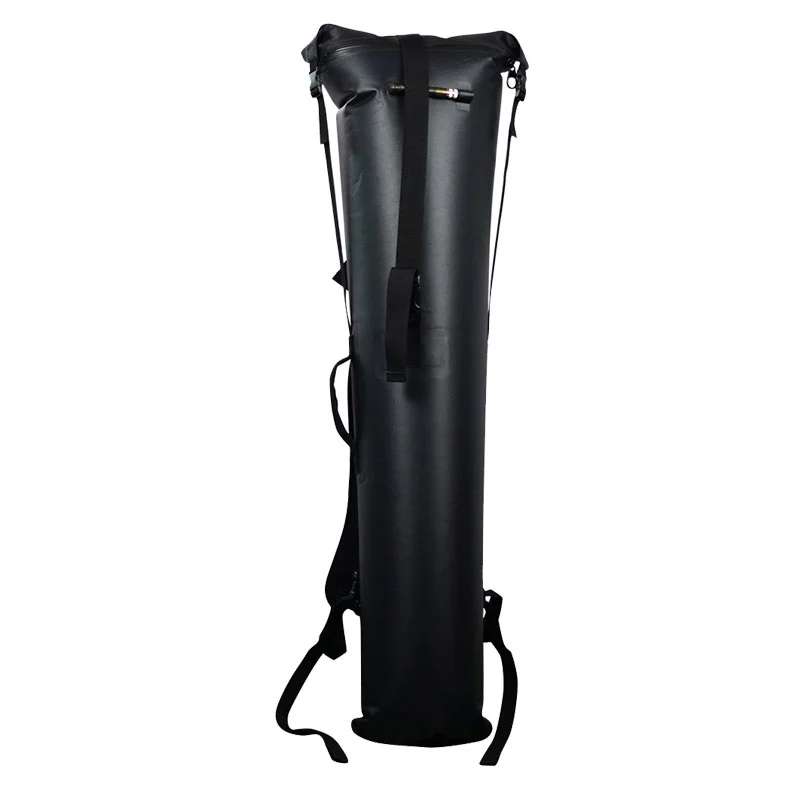
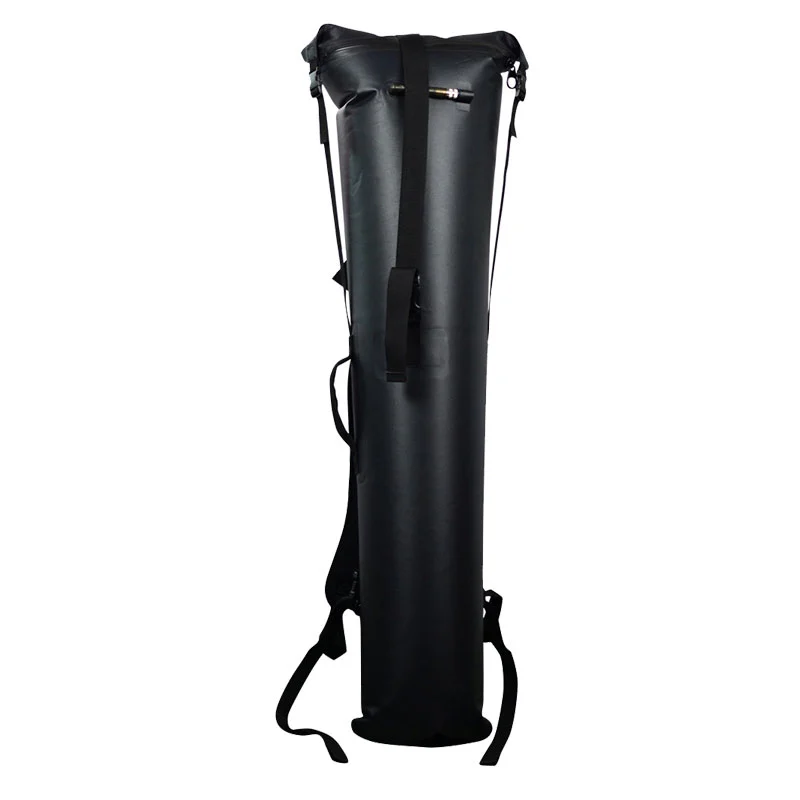
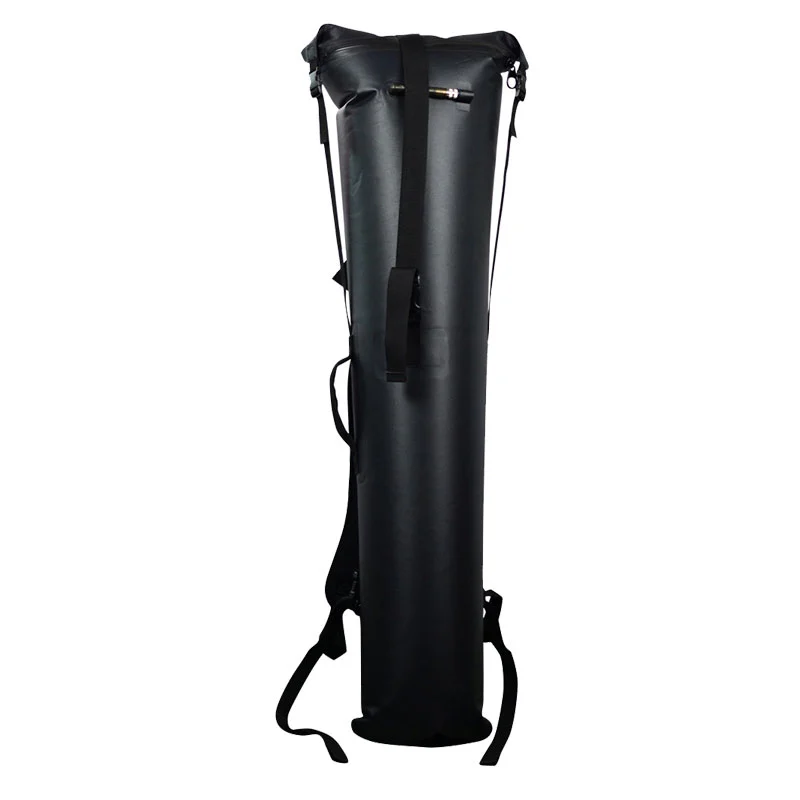
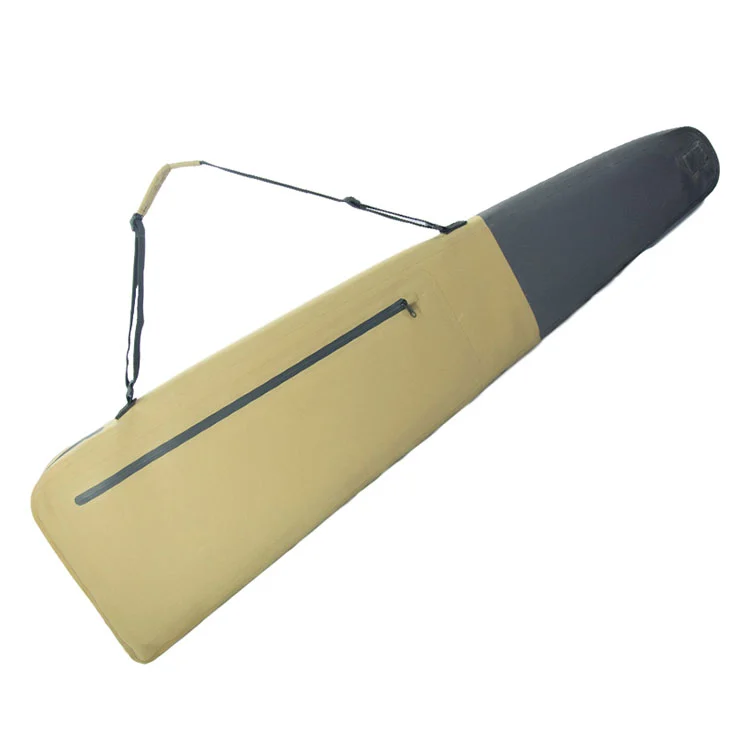
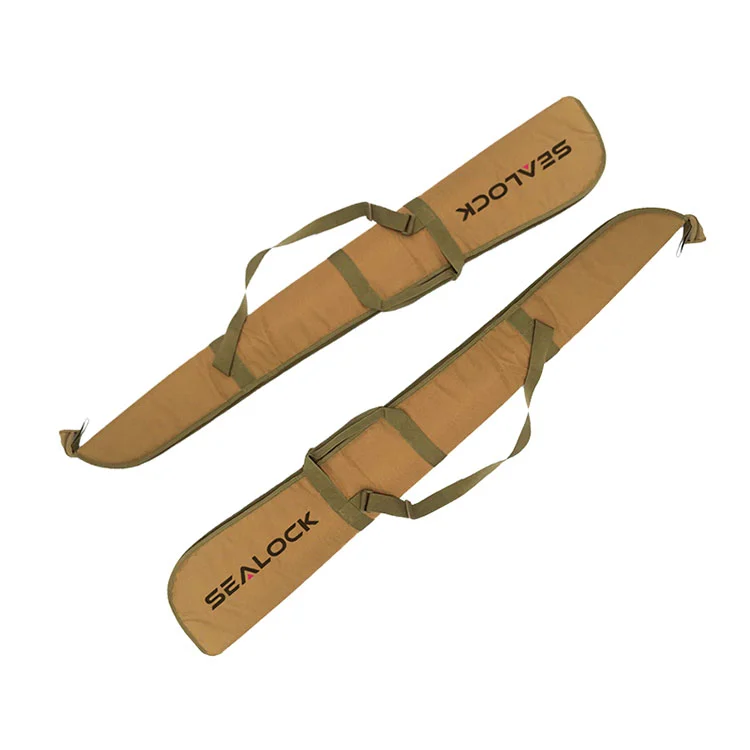
The SL-E603 HF-Welded Gun Case measures 122 × 30 × 8 cm at approximately 1.1 kg with an internal capacity of approximately 25–30 L. The 840D TPU laminated shell is formed on dedicated electrode tooling at 27.12 MHz as a one-piece body with a rounded buttstock chamber and a tapered barrel chamber, closed by a sealed zipper welded into the body seam and rated IPX7. Welding runs in-house at Dongguan, China and Ho Chi Minh City, Vietnam. MOQ 300 pcs, samples in 7–10 days.

Welding parameters — power, electrode pressure and dwell time — are set and recorded for each incoming fabric batch, and a first-article sample is destructively peel-tested at the start of every production run. Curved welds at the buttstock radius are peel-tested as a separate section. Parameter records are available for OEM quality files.

Weldability depends on molecular polarity. TPU and PVC weld cleanly; polyethylene and polypropylene are non-polar and cannot be RF welded; uncoated nylon or polyester requires a weldable laminate. The 840D woven base carries abrasion resistance and the TPU laminate provides both the waterproof barrier and the weldable layer.

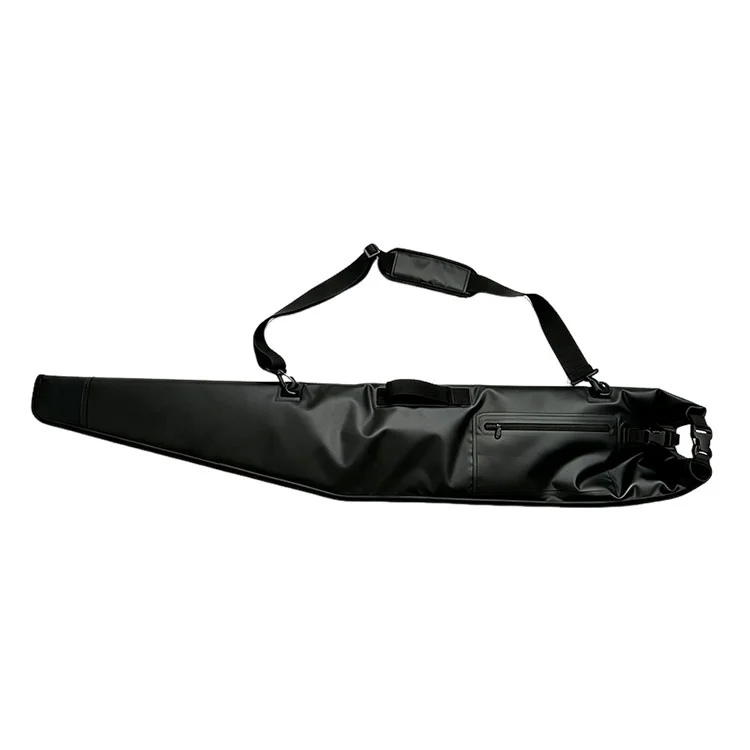
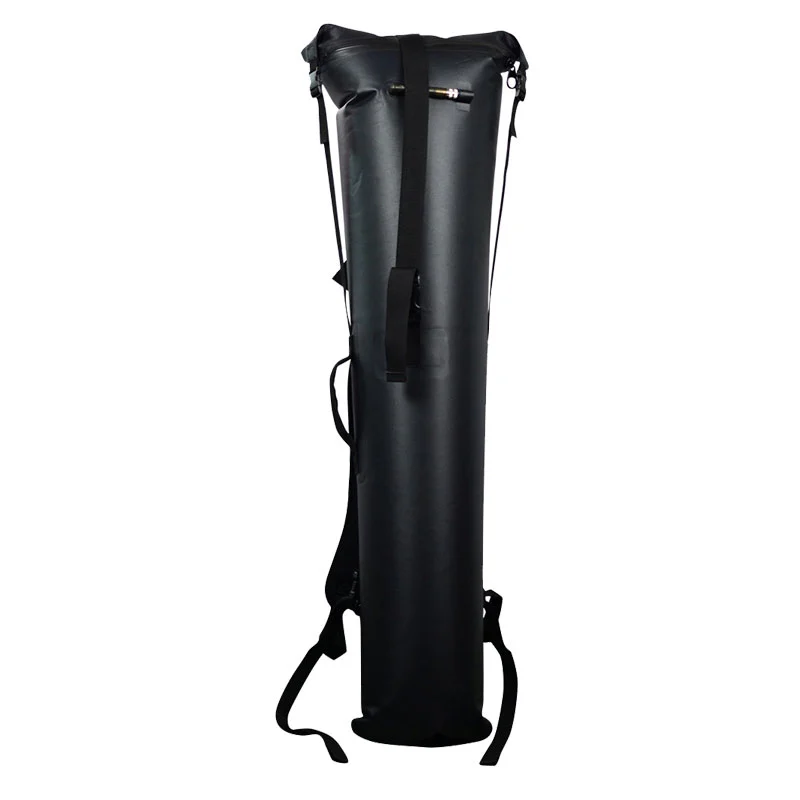
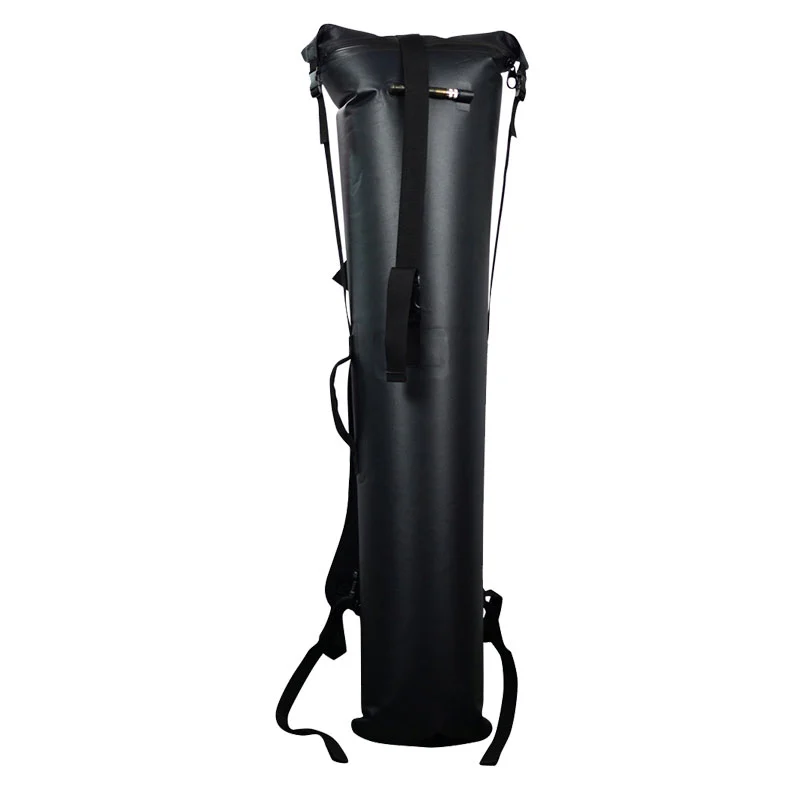
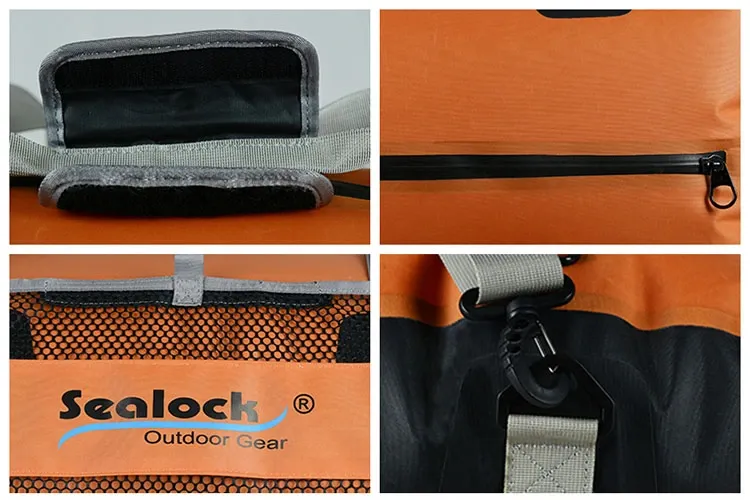
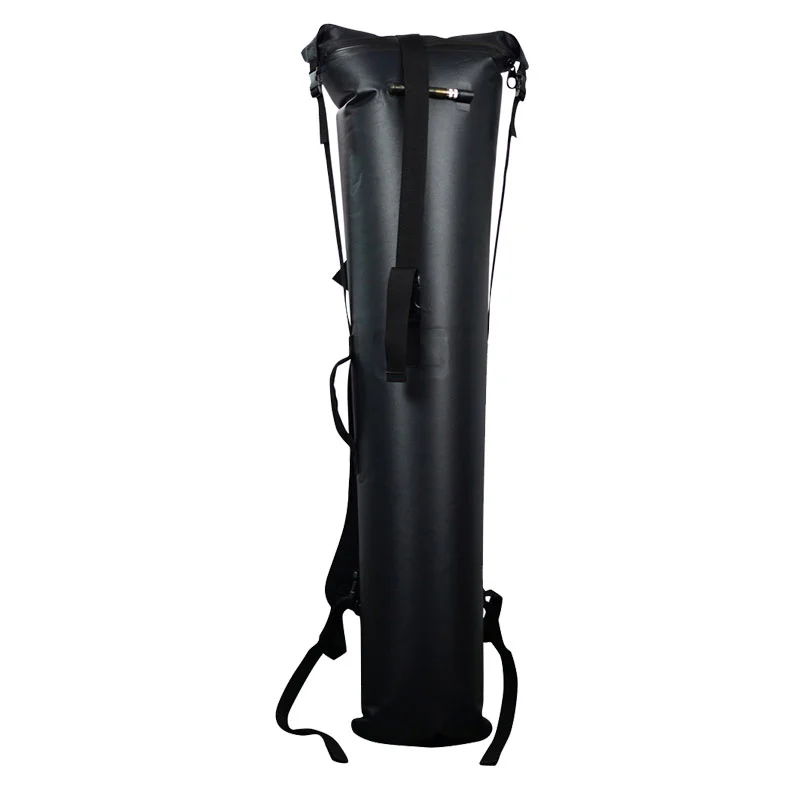
HF Welded Gun CaseOne-piece welded shell showing the chambered profile and welded pocket
What Makes This Shell Harder to Weld Than a Tube

A cylindrical dry bag is a straight seam repeated. A chambered gun case is not.

Feature Welding Consequence
Rounded buttstock chamber Curved weld path; electrode tooling shaped to the radius
Tapered barrel chamber Weld width must stay constant as the panel narrows
Flat 8 cm profile Two large faces meeting at a narrow edge weld rather than a rolled tube
Welded accessory pocket A second weld operation onto an already welded face
Zipper welded into the seam Dissimilar materials joined in the same operation
Strap anchor patches Hybrid welding at point-load positions

Each of those is a separate tooling and parameter decision. It is why a chambered HF-Welded Gun Case carries higher development cost than a tube and why we quote tooling explicitly rather than folding it into a unit price.

The Three Variables

Frequency is fixed by the equipment. Everything an operator can get wrong sits in three settings, established for each incoming fabric batch and recorded.

Variable Function If Set Too Low If Set Too High
Power Rate of heat generation in the joint Under-fused; seam separates cleanly Material burns or thins at the weld
Electrode pressure Forces softened layers together Incomplete fusion across the weld width Material displaced; weld thins
Dwell time Total energy into the joint Cold weld with poor bond strength Overheating and embrittlement

Cooling under pressure is the fourth step and the one most often skipped in low-cost production. Releasing the electrode before the fused polymer re-solidifies leaves a joint that looks correct and peels apart under load.

Why Only Some Materials Weld

The process depends on molecular polarity. A polymer with a dipole responds to the alternating field and heats internally; a non-polar polymer does not respond at all, whatever power is applied.

Material RF Weldable Note
TPU Yes Strongly polar; welds cleanly — the SL-E603 shell
PVC Yes Strongly polar; welds well, lower cost, heavier
PU coated Varies Depends on coating formulation and thickness
Polyethylene No Non-polar; needs hot-air or ultrasonic methods
Polypropylene No Non-polar; not RF weldable
Uncoated nylon or polyester No Base fabric alone cannot be welded

This is why the shell is specified as TPU-laminated rather than as a woven fabric. The 840D woven base carries abrasion resistance; the TPU laminate is both the waterproof barrier and the layer that makes welding possible.

The Acceptance Criterion

Destructive peel test:on a correctly welded sample the parent fabric tears before the weld separates. A seam that opens cleanly along the weld line indicates insufficient energy into the joint and triggers a parameter review before production continues. This runs at the start of every production run, and the records are available for OEM quality files.

What Welding Removes From the Failure List

Failure Mode on a Stitched Case On a Welded Shell
Seam tape lifts after heat and wash cycles No tape present
Needle perforations reopen as adhesive ages No perforations exist
Stitching works loose under vibration No stitching in the waterproof body
Pocket seam leaks after being sewn through the shell Pocket welded onto a continuous face
Strap anchors pierce the barrier Anchors welded to reinforcement patches
Aggressive cleaning lifts a tape edge Shell can be scrubbed and hosed

Specification

Item Specification
Model SL-E603
Product type Fully welded waterproof rifle case
Size 122 × 30 × 8 cm (estimated)
Weight approx. 1.1 kg (estimated)
Internal capacity approx. 25–30 L
Shell material 840D TPU laminated fabric
Construction RF welded, one-piece body
Seam type High-frequency welded, heat-sealed edges
Waterproof rating IPX7
Closure Waterproof zipper
Accessory pocket 1 welded waterproof zippered pocket
Profile Rounded buttstock chamber, tapered barrel chamber
Carry Adjustable removable shoulder strap + reinforced handle
Colourways Khaki / Black / Army Green, two-tone
Firearm compatibility Hunting, bolt-action, tactical rifles; shotguns
MOQ 300 pcs
Sample lead time 7–10 days
Production lead time 30–45 days
OEM / ODM Supported
Origin China

Welded Development Options

Option Notes
Custom body length New electrode tooling developed as required
Chamber profile Buttstock radius and barrel taper adjustable
Shell material 840D TPU standard; 500D PVC tarpaulin alternative
PVC-free specification TPU construction throughout
Welded logo patch Applied without piercing the shell
Pocket configuration Size, position, or a second welded pocket
Colour split Two-tone welded panels in any combination
Parameter documentation Welding records supplied for quality files

Production Sequence

1. Incoming fabric inspection and weldability trial on the batch

2. Welding parameter setup — power, pressure, dwell recorded per batch

3. First-article weld sample and destructive peel test

4. Precision cutting of panels to the chambered development

5. RF welding of the buttstock chamber radius

6. RF welding of the tapered barrel chamber and edge seams

7. Welded attachment of the accessory pocket and zipper seam

8. Hybrid welding of strap anchors and handle mounts

9. Immersion verification against the IPX7 condition

10. Final inspection and export packing

Weld Inspection

Check Method Frequency
Material weldability Trial weld on incoming batch Every batch
Parameter record Power, pressure, dwell logged Every batch
First-article peel Destructive peel on a sample weld Start of every run
Weld appearance and edge definition Visual, in process Continuous
Weld width consistency Measured against approved sample Sampling
Curved-section weld Visual at the buttstock radius 100%
Finished water integrity Immersion check Per approved sampling plan

Weld Trials

Trial Method Outcome
Seam peel Destructive peel on a welded sample Parent fabric tore before seam separation
Curved weld integrity Peel test at the buttstock radius specifically Held equally to straight-section welds
IPX7 immersion Sealed case immersed to 1 m for 30 minutes No ingress at any welded seam
Seam flex fatigue Repeated flexing at the weld line No cracking or separation
Hydrolysis resistance Extended warm humid exposure No seam softening or delamination
Low-temperature integrity Flexed after 12 hours at -20 °C Seams intact; no brittle fracture
Scrub and hose Repeated aggressive cleaning of seam areas No degradation; no tape edge to lift
Anchor patch pull Sustained load at welded strap patches No separation of the welded patch

Manufacturing Capability

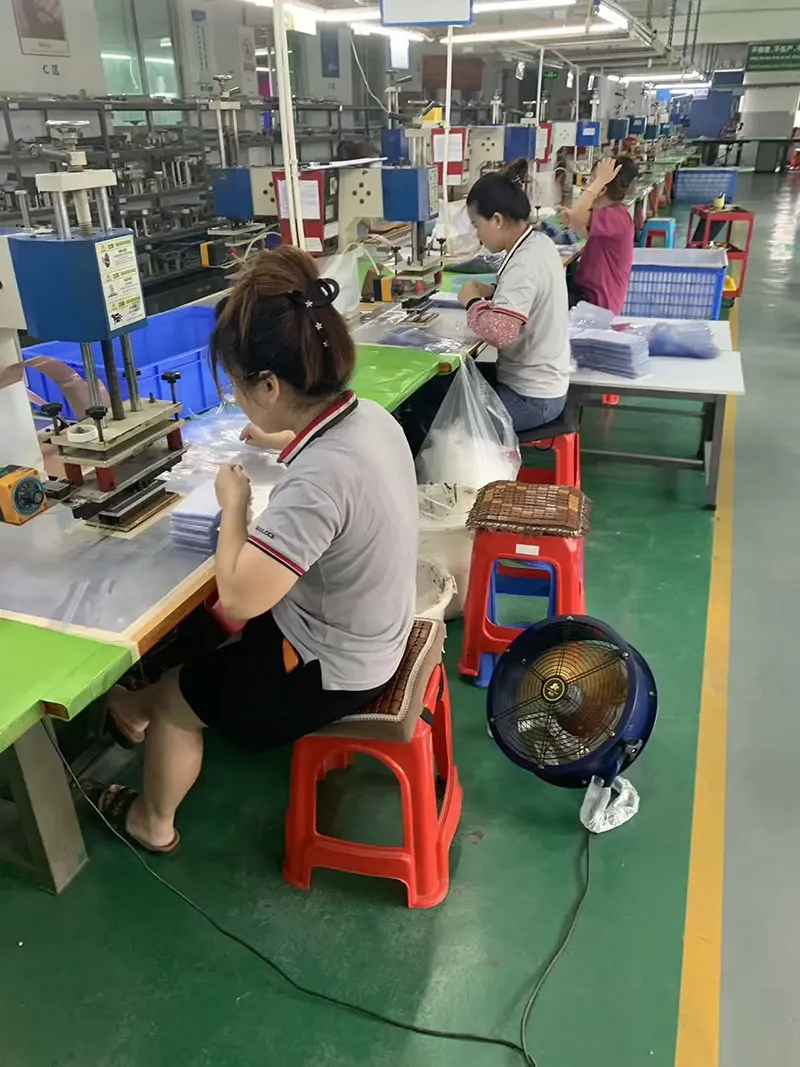
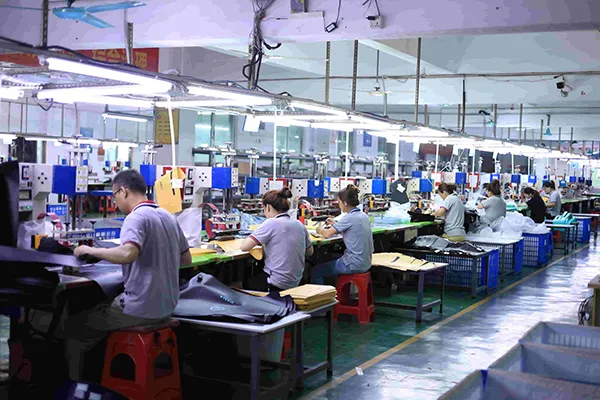
High-frequency welding is capital equipment rather than a subcontracted operation. Our welding lines run in-house at Dongguan, China and Ho Chi Minh City, Vietnam, electrode tooling is developed in-house for custom shapes, weldability is trialled on every incoming batch, and the welding line and inspection process are open to buyer audit.

Recent Work

Canada — hunting brand tooling project

The brand wanted a deeper buttstock chamber for guns with adjustable combs, which changed the weld radius rather than just a dimension. We developed new electrode tooling for the revised curve and peel-tested the curved section specifically before approval, since a curved weld is where tooling error shows first. 450 pcs, 47 days including tooling.

Netherlands — importer quality file

Their compliance team required welding parameter records per batch alongside the immersion report, having previously accepted a supplier's verbal assurance. We supplied logged power, pressure, and dwell figures with the shipment and the first-article peel results. 600 pcs, 43 days.

Japan — PVC-free specification

Market requirements ruled out PVC entirely. The standard 840D TPU construction was already compliant, and we confirmed material composition documentation through the supply chain rather than substituting anything. 350 pcs, 42 days.

What Buyers Told Us

“Curved welds are where a supplier gets found out. You tested that section on its own and showed us the result.”

— Product Engineer, Hunting Brand

“Parameter records per batch turned a claim into a document. Our compliance team stopped asking questions after that.”

— Quality Manager, Importer

“If the fabric tears before the seam, there is nothing left to argue about. That was the test that convinced us.”

— Sourcing Lead, Outdoor Equipment Distributor

1. What is high-frequency welding?

An electromagnetic field at 27.12 MHz reverses polarity roughly 27 million times a second. Polar molecules in the TPU attempt to realign with each reversal, and the internal friction generates heat through the full thickness of the joint at once. Under electrode pressure the softened layers fuse and re-solidify as one continuous section.

2. Why is a chambered case harder to weld than a tube?

A tube is a straight seam repeated. This shell has a curved buttstock chamber requiring tooling shaped to the radius, a tapered barrel chamber where weld width must stay constant as the panel narrows, a welded pocket applied to an already welded face, and a zipper welded into the seam. Each is a separate tooling and parameter decision.

3. How do you know a weld is good?

Destructive peel testing. On a correct weld the parent fabric tears before the seam separates. A clean separation along the weld line means insufficient energy and triggers a parameter review before production continues.

4. What are the process variables?

Power, electrode pressure, and dwell time, set per incoming fabric batch and recorded. Cooling under pressure is the fourth step and the one most often skipped in low-cost production — releasing the electrode early leaves a joint that looks correct and peels apart under load.

5. Can any waterproof fabric be RF welded?

No. The process needs molecular polarity. TPU and PVC weld well; polyethylene and polypropylene are non-polar and cannot be RF welded at all. Uncoated nylon or polyester requires a weldable laminate. Weldability is trialled on every incoming batch.

6. Do you weld in-house?

Yes, on our own lines at Dongguan, China and Ho Chi Minh City, Vietnam, with electrode tooling developed in-house. The welding line and inspection process are open to buyer audit.

7. What does welding remove from the failure list?

Seam tape lifting, needle perforations reopening as adhesive ages, stitching working loose under vibration, pocket seams leaking where sewn through the shell, and strap anchors piercing the barrier. None of those failure modes exist on a welded shell.

8. Can HF-Welded Gun Case be scrubbed or hosed?

Yes. With no seam tape to lift, welded seams tolerate cleaning that would damage a taped case — useful after salt, silt, or blood exposure.

9. Do welded seams crack in cold?

No. After twelve hours at -20 °C the seams remained intact and flexible with no brittle fracture at the weld line.

10. Is a PVC-free build available?

Yes. The standard 840D TPU construction is PVC-free, and material composition documentation can be supplied through the supply chain for markets requiring it.

11. Can you develop a custom shape?

Yes. Electrode tooling is developed in-house for custom lengths, chamber profiles, welded reinforcement, and logo patches. Tooling is quoted explicitly rather than folded into the unit price.

12. What are the commercial terms?

MOQ 300 pcs, samples in 7–10 days, production in 30–45 days, quoted EXW, FOB, or CIF, with tooling development quoted per project and welding parameter documentation available for quality files.

Send Inquiry
Contact Info
Send your inquiry to Sealock, submit your requirements here. We provide prompt response support services for hunting equipment brands worldwide.
X
We use cookies to offer you a better browsing experience, analyze site traffic and personalize content. By using this site, you agree to our use of cookies. Privacy Policy
RejectAccept