Search "gun backpack" or "rifle backpack" and you get three different products mixed together. One is a padded rifle case with backpack straps, which encloses the whole gun. One is a hunting pack with a rifle holder or boot, which carries the gun on the outside of a pack full of gear. And one is a compact backpack built to hold a folding or takedown carbine out of sight. Each suits a different kind of walk, and a hunter who buys the wrong one either cannot get to the rifle when a deer stands up, or arrives with a scope that has been bouncing off branches for two miles.
This guide separates the three, explains when an enclosed backpack case is the right answer, and covers what to look for in the harness, length, padding and weather protection. It ends with the specification points for brands developing a rifle backpack case.
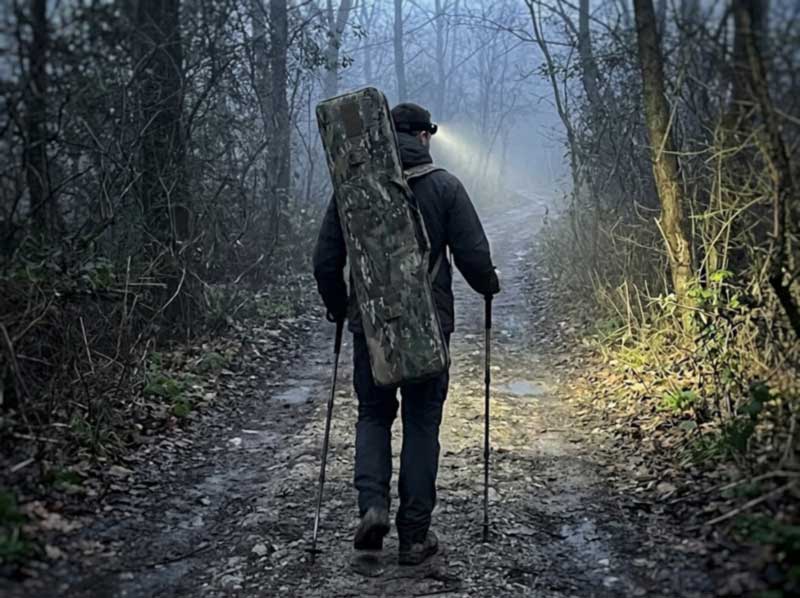
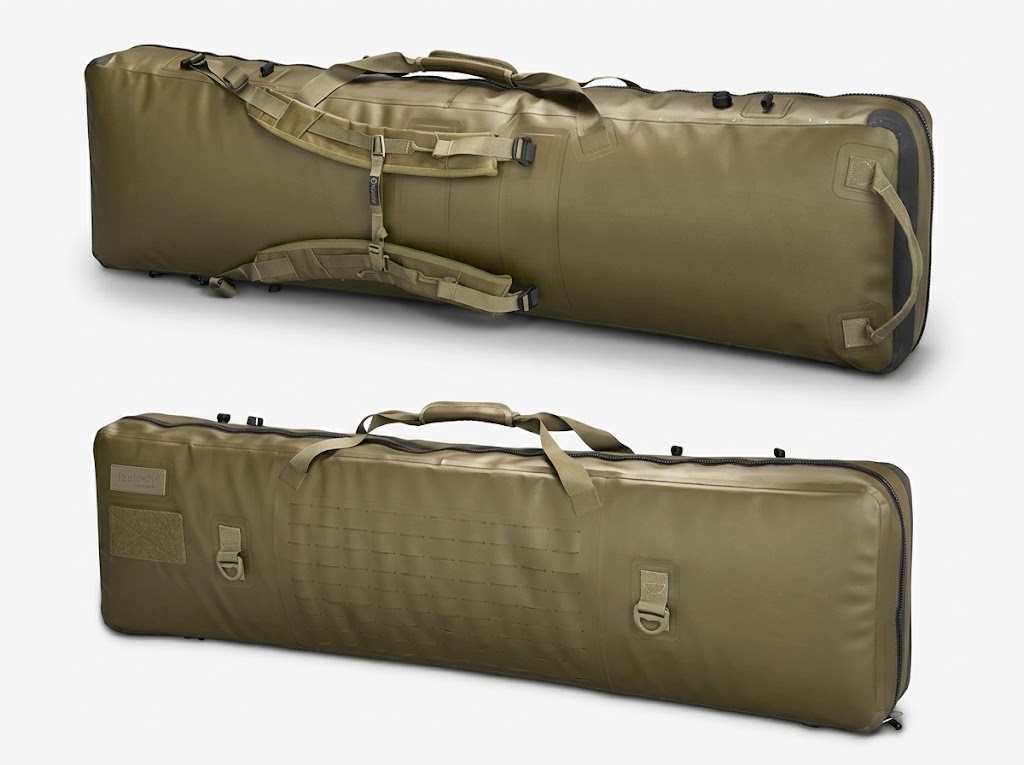
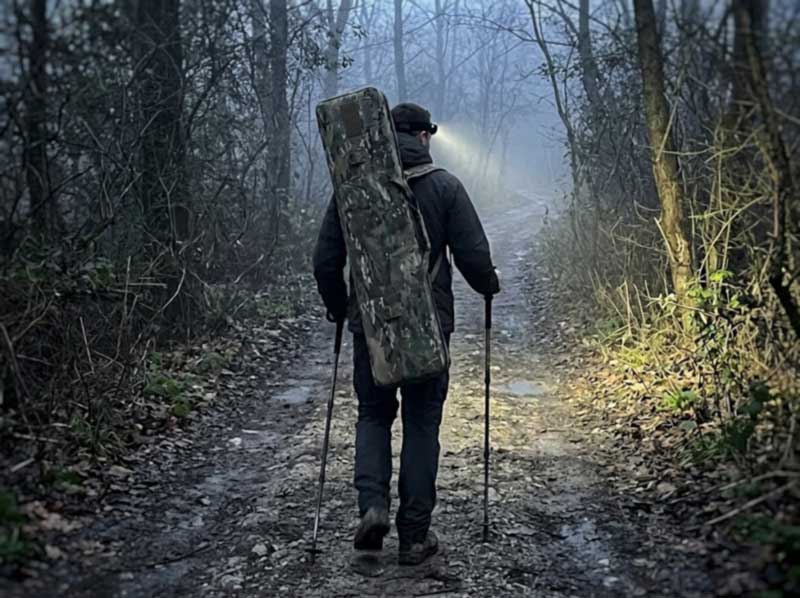
A rifle case with a backpack harness. The gun is fully enclosed in a padded case, and the case carries on the back like a pack. It gives the best protection for the rifle and optic, and the least access: the case has to come off and open before the gun can be used. Sealock's SL-C811 is built this way.
A hunting pack with a rifle holder. A regular hunting pack, often a frame pack, carries the rifle on the outside, usually with the butt in a boot or pocket at the bottom and the barrel strapped near the top of the pack. The pack carries the gear and the rifle rides along. Access is quicker than with a case, and the rifle is still hands-free, but it is exposed to brush, weather and knocks.
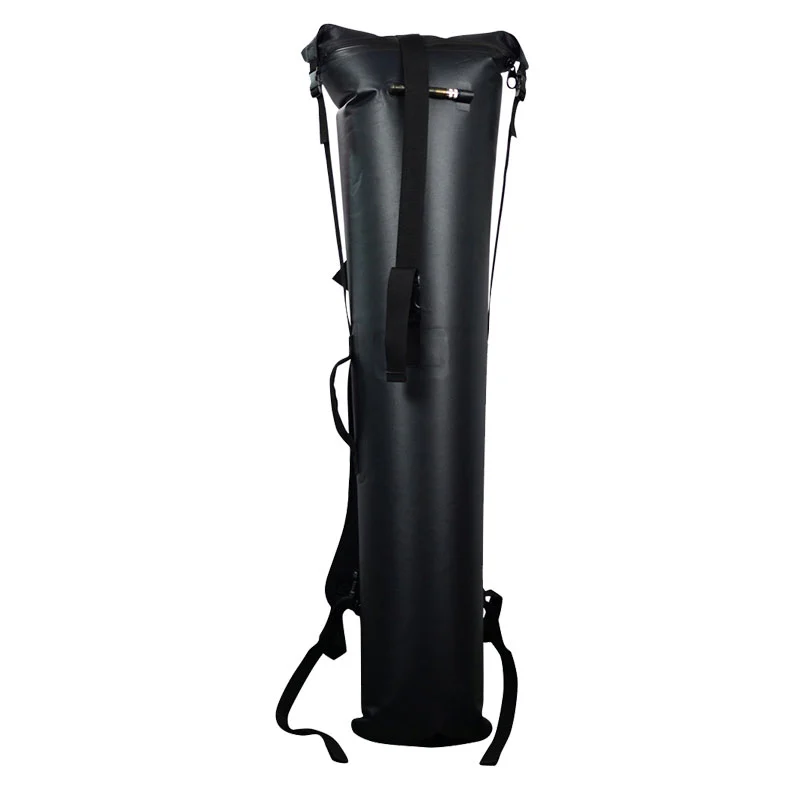
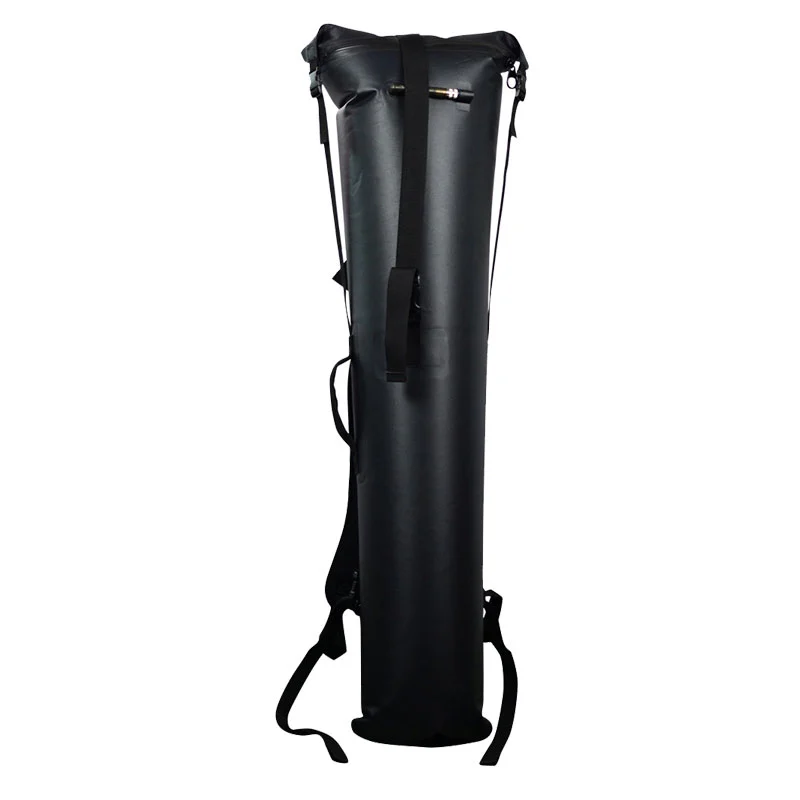
A backpack for a compact carbine. Some carbines are designed to fold or break down small enough to fit in an ordinary backpack. The Kel-Tec SUB-2000, for example, folds from 29.5 inches to 16 inches. Backpacks built around these guns prioritise a low profile over hunting function. Carrying a firearm concealed in a bag is regulated differently from state to state, so this category comes with legal homework that the other two usually do not.
Hunters on backcountry forums have argued over rifle carry for years, and the experience they describe is consistent. A rifle on the pack frees the hands for trekking poles and climbing, and it is the only sensible way to carry a gun alongside a heavy load of meat or camp. But it has three recurring problems during the hunt itself.
The first is access. Hunters who carry the rifle on the pack while still-hunting describe the same frustration: the rifle is out of reach when a deer jumps. Many end up carrying in the hand, or on a sling, whenever they might shoot. The second is brush. A barrel sticking up above the pack catches on every branch, and in thick cover the hunter cannot easily change how the rifle sits. The third is exposure. The optic and action are open to rain, dust and impact if the hunter falls. Some hunters move to covered scabbards for exactly that reason, so the rifle stays clean and dry on the way in.
Put simply, a rifle holder on a pack suits a hunter who wants to carry gear and gun together and shoot within seconds. An enclosed backpack case suits a hunter who will not shoot on the way, and wants the rifle protected until he does.
A large share of hunting walks fit that description. The walk in to a treestand or ground blind before legal shooting light, when the rifle stays cased in the dark anyway. The hike from the truck to a glassing knob or a long-range shooting position. A ride on an ATV or side-by-side over rough tracks. Crossings of creeks, marsh edges or wet country where rain or spray is a given. The move from the airport to camp on a flying hunt. And any trip where several people, a dog and their gear share a vehicle with the rifle.
In each of these, a backpack case keeps both hands free, keeps the rifle off the hunter's shoulder and out of the brush, and protects the optic. A scope that has been knocked on the walk in is a scope whose zero is in doubt for the rest of the day.
Backpack straps should be padded, adjustable, and anchored to the case at reinforced points that take the load of the rifle on every step. A sternum strap keeps the shoulder straps from sliding off. Detachable straps keep the case neat when it goes into a truck or a gun cabinet. A shoulder sling as well as backpack straps gives a second option for short carries.
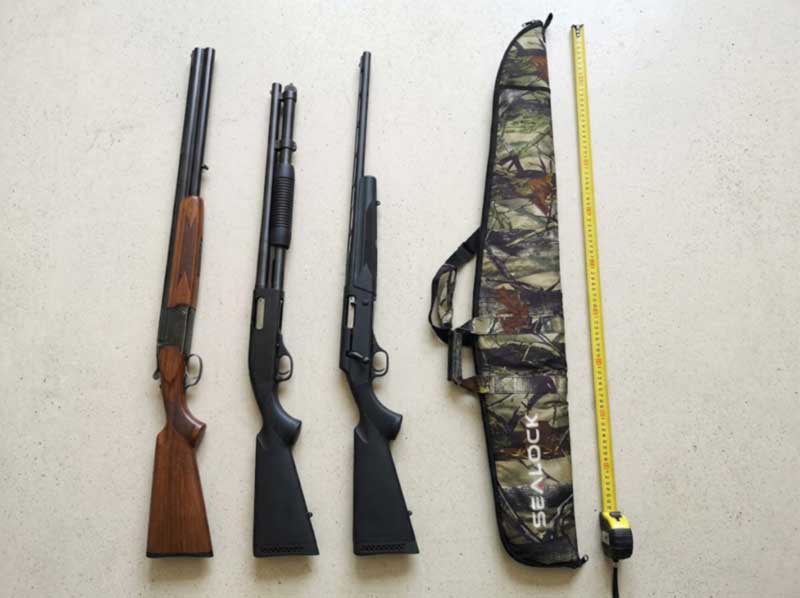
A full-length case on a hunter's back sticks up well above the head and down past the backside. That is fine on an open trail and awkward in timber, under low branches or climbing into a stand. Shorter cases carry better. For AR-pattern rifles and compact bolt-actions, a 36- or 42-inch case rides much more like a normal pack than a 52-inch one. How to size a case for each rifle is covered in Soft Rifle Cases: What to Check Before You Trust One With a Rifle and AR-15 Cases: 36, 42 or Longer.
Walking moves a case in a way that a truck bed does not: it rocks with every step. A rifle that can slide inside will shift with each stride, rub its finish against the lining and knock the optic against the wall. Internal retention straps, rather than fit alone, hold the rifle still, and they let one case carry rifles of different lengths.
On the back, the side of the case against the hunter is cushioned by the hunter. The outer face takes the knocks from branches, rocks and door frames. The thickest padding belongs over the optic and on the outer face. Closed-cell foam, such as EVA, keeps its shape and does not take up water. Why that matters is covered in Gun Case Foam.
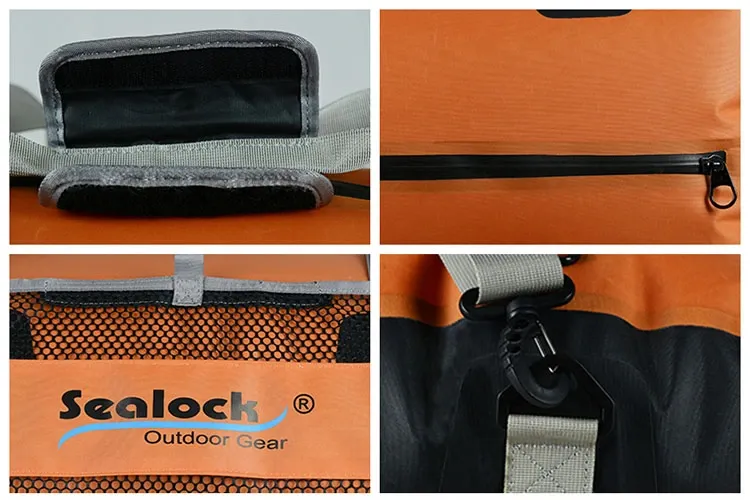
A backpack case is often carried in exactly the conditions that ruin a stitched case: long walks in rain, wet brush, creek crossings. A welded TPU shell with a waterproof zipper keeps the rifle dry where a stitched shell would soak through. External load-carrying should not compromise that, which means MOLLE laser-cut into a welded panel rather than sewn through the shell.
A loaded backpack case is the case plus the rifle, optic and anything in the pouches. A 2.6 kg case with a 3.5 kg scoped rifle puts around 6 kg on the hunter's back. That is easy to carry on two shoulders, and tiring to carry for a mile by one handle.
The SL-C811 combines a welded waterproof shell, EVA padding and a backpack harness. It comes in a standard full-length version and, for AR-pattern rifles and compact bolt-actions, in shorter lengths that carry better on the back.
| Image | Model | Fits firearms up to | Dimensions (L × H × W) | Weight | Construction | Use |
|---|---|---|---|---|---|---|
|
SL-C811 (standard) |
About 125–127 cm 49–50 in |
132 × 33 × 10 cm 52 × 13 × 3.9 in |
2.6 kg | Welded 840D TPU, IPX6, 10–25 mm EVA, laser-cut MOLLE, backpack straps | Full-size and suppressed rifles; standard length |
|
SL-C811 (42 in) |
About 102–104 cm 40–41 in |
107 × 33 × 10 cm 42 × 13 × 3.9 in |
2.2 kg | Welded 840D TPU, IPX6, 10–25 mm EVA, laser-cut MOLLE, backpack straps | 16 in AR with stock extended, 18 in rifles, compact bolt-actions |
|
SL-C811 (36 in) |
About 86–88 cm 34–35 in |
91 × 33 × 10 cm 36 × 13 × 3.9 in |
2.0 kg | Welded 840D TPU, IPX6, 10–25 mm EVA, laser-cut MOLLE, backpack straps | 16 in AR with stock collapsed; shortest back carry |
Every SL-C811 uses an 840D TPU shell joined by high-frequency welding, rated IPX6, with a full-length two-way waterproof zipper. EVA padding runs 20–25 mm in the lid over the optic, 15 mm in the base and 10 mm at the sides, with six to eight adjustable retention straps inside. The laser-cut MOLLE panel, two D-rings and a hook-and-loop patch sit on welded mounts, so none of them pierce the shell. The backpack straps and shoulder sling both detach, and the case also has a reinforced carry handle. Standard colours are grey, brown and camouflage.
Brands building a rifle backpack case usually work through the same decisions. Case lengths: one standard and one short, or a full length run. Harness level: shoulder straps and sternum strap, or a hip belt and frame sheet for heavier loads. Padding by zone. External load system and pouch set. Weather rating: a stitched water-resistant build for dry markets, or a welded build for wet ones. Colour and logo complete the brief.
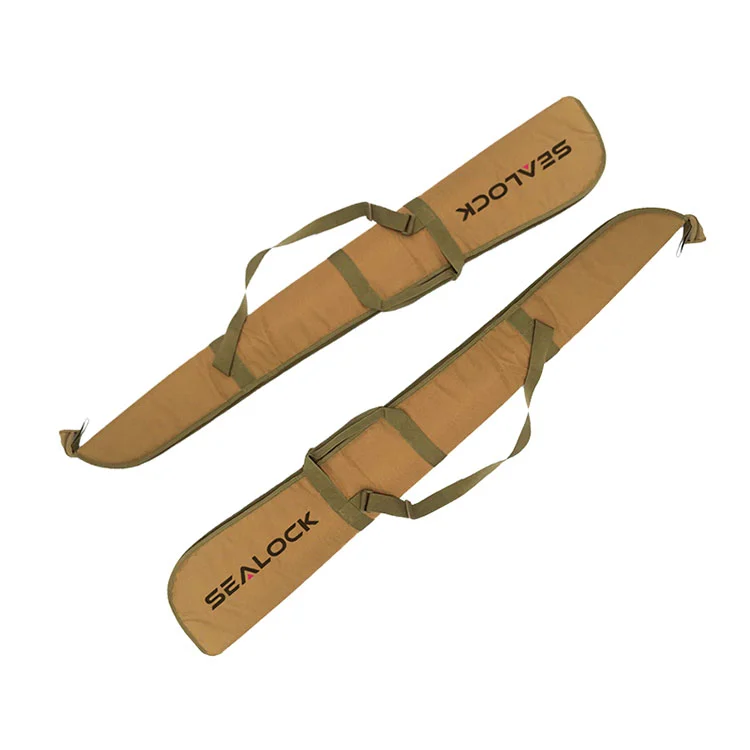
Sealock builds both stitched and welded rifle cases in-house, in Dongguan and Ho Chi Minh City, so the same harness and pouch system can carry across an entry-level and a waterproof line. The SL-C811 is available from 300 pieces per model, with samples in 7–10 days from a confirmed specification and production in 30–45 days. Short lengths are built on the existing construction. New patterns or harness systems take longer than changes to an existing model, and that time is planned in from the first quote. Strap anchors are load-tested to more than 1,500 cycles and zippers fatigue-tested to 3,000 cycles, and every welded case is checked with a heavy rain and water-jet test to its IPX6 rating.
For the wider comparison of case types, see Soft vs Hard Gun Cases, and for waterproof construction, Waterproof Gun Cases: What Actually Keeps Water Out.
If you might shoot on the way, carry the rifle on a sling or a pack holder, where you can reach it. If you will not shoot until you reach a stand, blind or shooting position, a backpack case protects the rifle and optic better and keeps it out of the brush and weather.
Yes. Look for extra height at the receiver for the optic, thick padding over it, and internal straps that stop the rifle shifting with each step.
The shortest one that fits the rifle as you carry it. Shorter cases ride better on the back and snag less in timber. For AR-pattern rifles and compact bolt-actions, 36 or 42 inches is usually enough. Full-size and suppressed rifles need a full-length case.
Only if the shell is welded and the zipper is waterproof. Stitched cases are water-resistant. The SL-C811 is welded 840D TPU, rated IPX6 against heavy rain and spray.
It depends on where you are and how the gun is carried. Transport, concealment and loaded-carry rules vary by state and locality. Check local law, and keep a cased firearm unloaded in transport.
Minimum orders are 300 pieces per model. Standard, 42-inch and 36-inch lengths are available, and colours and logos can vary within an order. Pricing depends on length, harness level, pouch set and quantity, so send your reference rifles for a quote.
See the SL-C811 tactical waterproof rifle case and the rifles and tactical gear range, or send your reference rifles, lengths and harness requirements to info@sealock.com.hk or through the contact page.
-