Products
Sling Rifle Dry Bag
  • Sling Rifle Dry BagSling Rifle Dry Bag

Sling Rifle Dry Bag

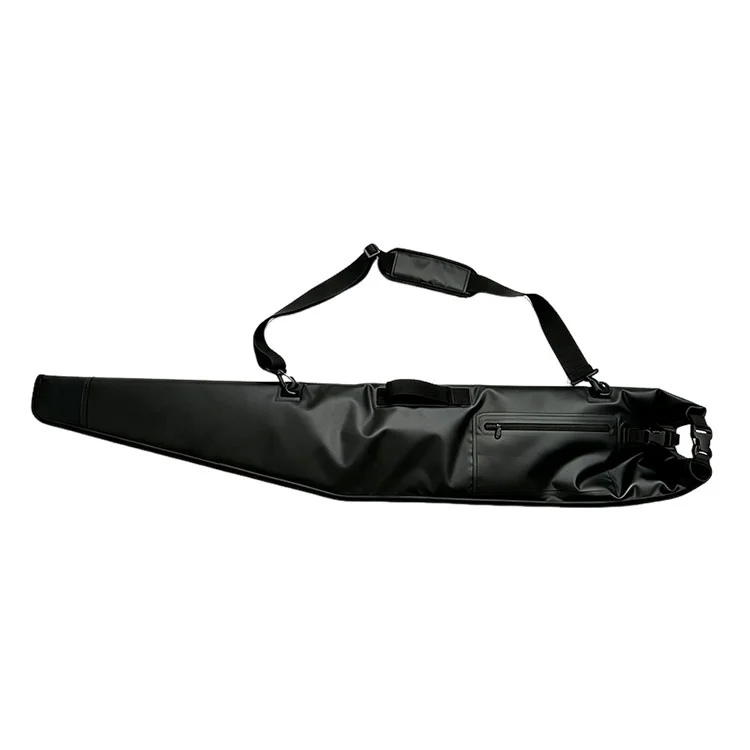
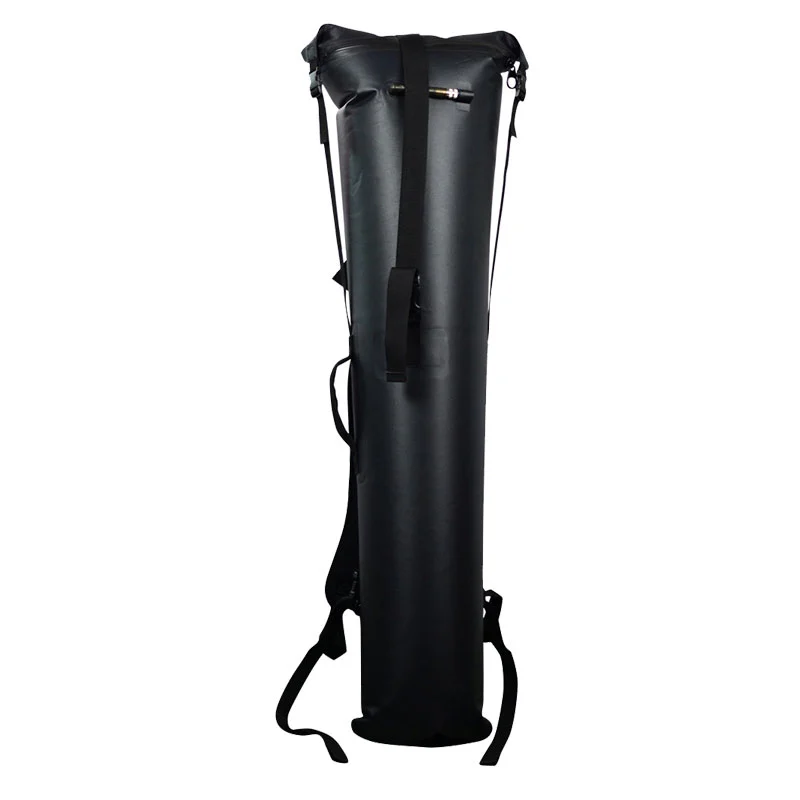
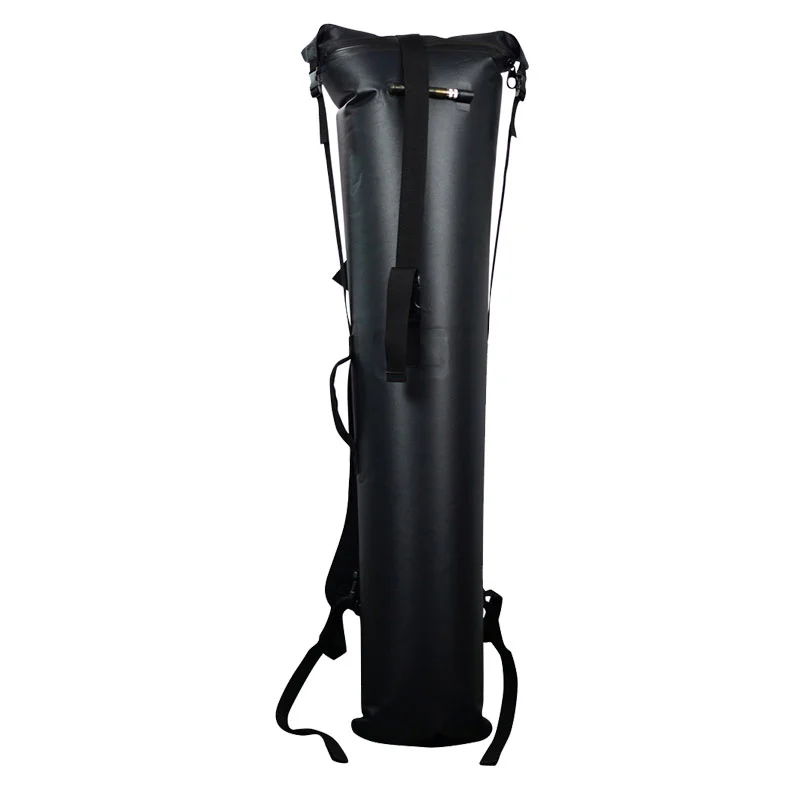
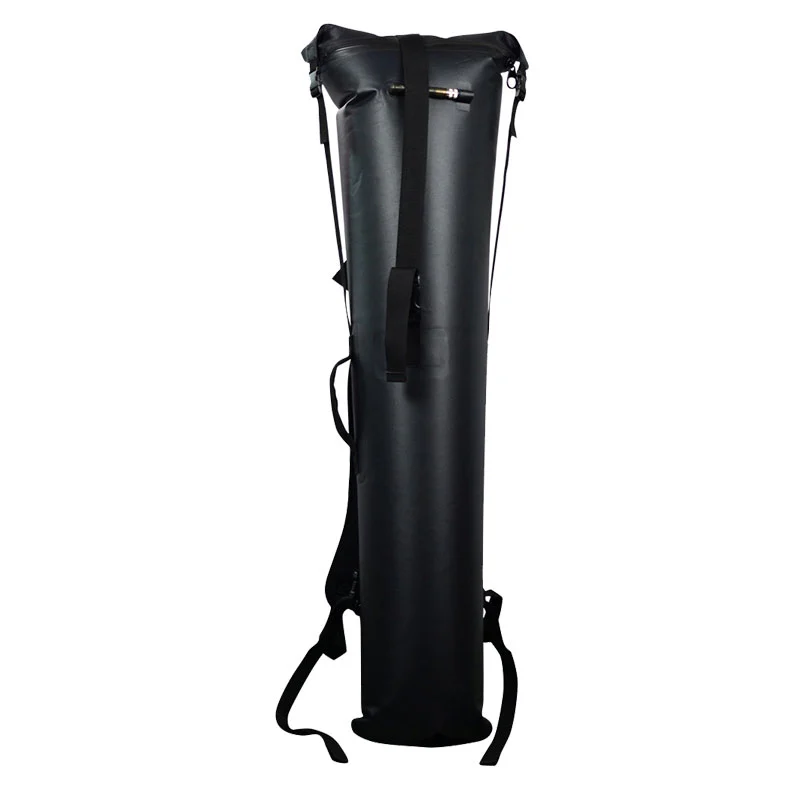
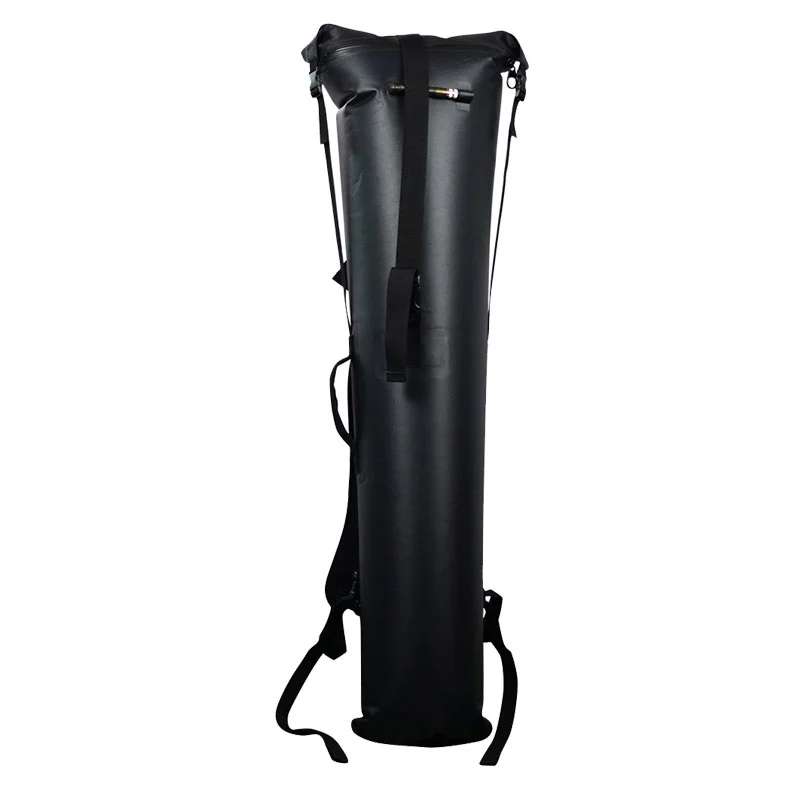
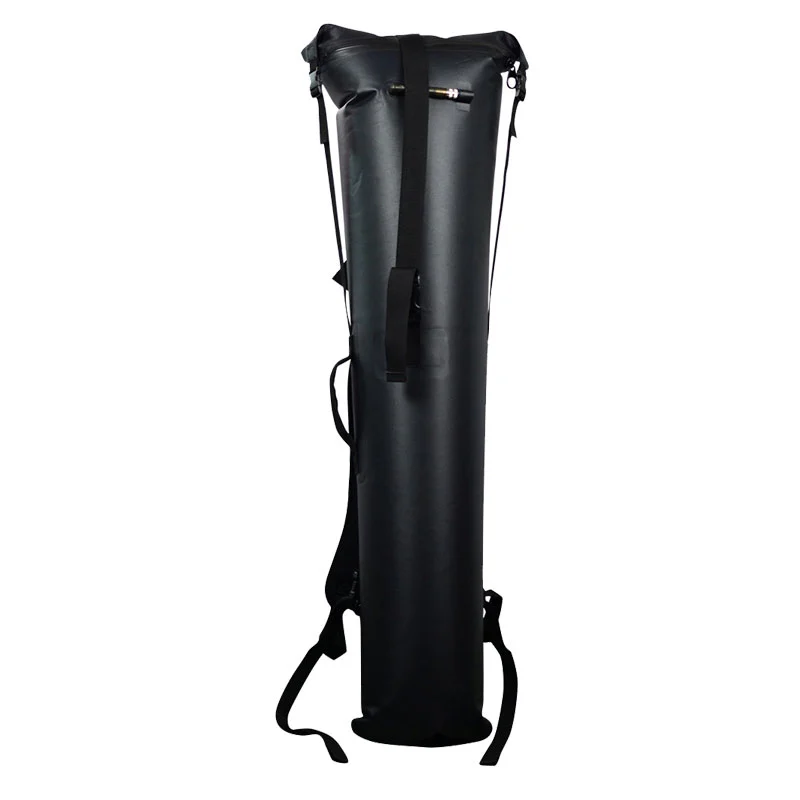
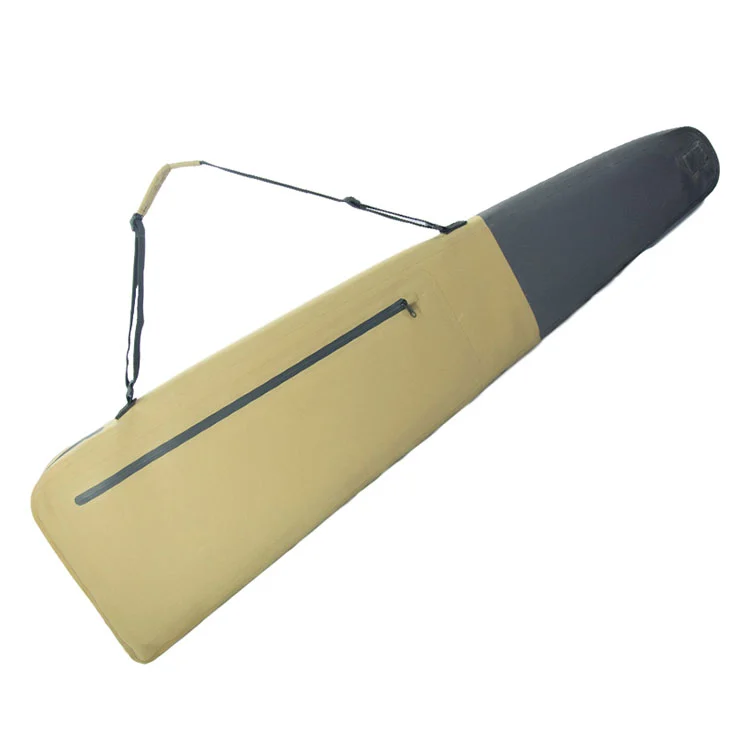
The SL-E302 sling rifle dry bag carries 5.35 kg on a single shoulder or 2.67 kg across two, on a 130 × 25 cm IPX7 welded body. Resellers comparing unit price and line sheets can source EXW or FOB from Sealock, a welded-case producer running dual-base supply.

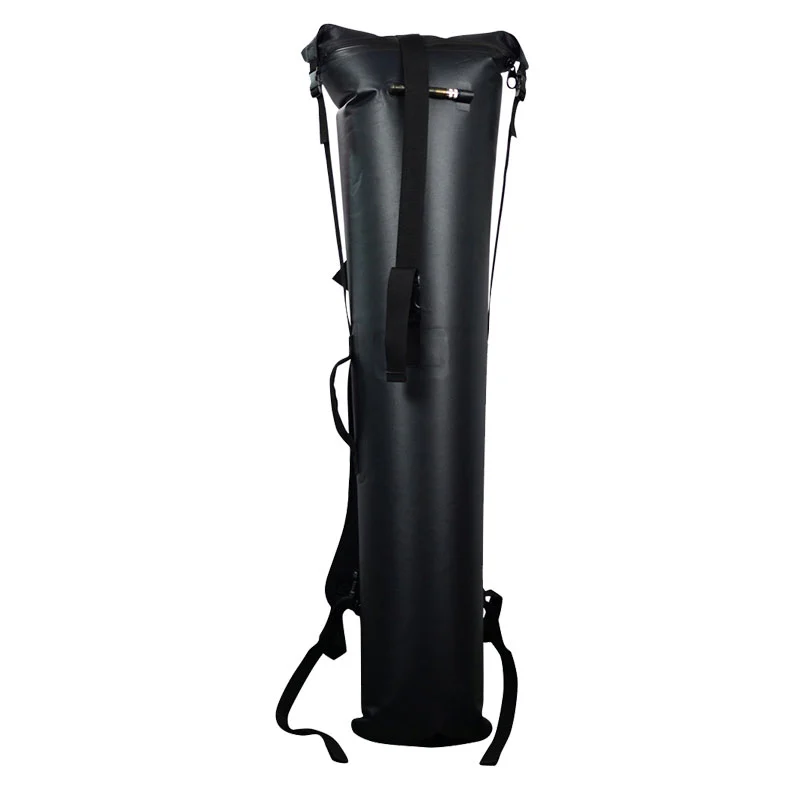
The SL-E302 sling bag can be switched shoulder-to-shoulder without removing it, and the POM adjuster holds its setting under load so the strap does not lengthen mid-carry. Sling anchors mount to welded reinforcement patches, so the IPX7 shell is never pierced. Backpack straps are included for long approaches. 1.35 kg, 60 L, 130 × 25 cm, RF welded 840D TPU.

Sling Rifle Dry BagSL-E302 in single-shoulder sling carry
Load Figures

Specification Value
Model SL-E302
Primary Carry Adjustable removable single-shoulder sling
Secondary Carry Backpack straps included
Load on One Shoulder 5.35 kg (case 1.35 kg + 4 kg rifle)
Load per Shoulder, Backpack Mode 2.67 kg
Waterproof Rating IPX7 — immersion to 1 m for 30 minutes
Dimensions / Capacity 130 × 25 cm / 60 L
MOQ / Sampling / Production 300 pcs / 7–10 days / 30–45 days

Transition Cost

Carrying comfort gets specified in detail; transition time almost never does. A sling reduces the seconds, the movement, and the number of items that must be set down before the bag can come off.

Variable Sling Carry Backpack Carry
Motions to remove One, over the head or shoulder Two arms, sequential
Clearance required Minimal; workable while seated Needs room behind and beside
Shoulder switching Possible without removing the bag Not applicable
Access while wearing Bag swings to the front Must be removed first
Load per shoulder 5.35 kg on one side 2.67 kg each side
Fatigue over distance Higher, asymmetric Lower, balanced
Hands-free stability Moderate; can swing when moving fast High; stays flat to the back

A trip with one long walk favours the backpack straps. A trip with twenty short transitions favours the sling. Both configurations ship in the box, so the choice is made in the field rather than at purchase.

Switching Shoulders Without Removing the Bag

Single-shoulder carry loads one side at 5.35 kg. Switching sides periodically is the standard remedy, and the sling allows it without taking the bag off.

1. Grip the sling webbing at chest height with the opposite hand

2. Lift the strap over the head while the bag rotates behind

3. Settle the strap onto the other shoulder and release

4. Adjust length if the two shoulders sit at different heights under clothing

Switching every ten to fifteen minutes extends comfortable single-shoulder carry distance substantially. Most users endure one-sided fatigue rather than switching, which is why the procedure is printed on the instruction card.

Working in Confined Spaces

Boats, blinds, treestands, and vehicle cabs share one characteristic: there is no clearance behind the user's shoulders.

Environment Constraint Why Sling Carry Suits It
Small boat or kayak Seated; no clearance behind Removed and stowed without standing
Treestand or platform Elevated; movement is risky Handled seated, one hand free to hold on
Layout or pit blind Confined, low ceiling No overhead room needed to remove
Vehicle cab Seated with seatbelt Slipped off without exiting
Dense timber Frequent stops and ducking Fast to shift or reposition on the move
Portage between waters Repeated load and unload Minimises time at each transition

One-Handed and Task-Sharing Carry

Field work often happens with one hand already occupied — a paddle, a light, a call, a rail, or a dog lead.

• Shouldering and unshouldering can be completed with one hand

• The bag is held stable against the body by pressing an elbow rather than a hand

• Length adjustment is reachable while wearing the bag

• Sealed to IPX7, the bag can be set down in mud or shallow water while a task is completed

The last point connects the carry system to the seal: because the bag is rated for immersion to 1 m for 30 minutes, setting it in standing water during a retrieve carries no consequence, so no dry ground has to be found first.

Sling Geometry

Variable Effect Specification
Strap length range Sets carry height and clearance over bulky clothing Adjustable across layered and unlayered wear
Anchor point spacing Determines the hang angle of the 130 cm tube Positioned so the body hangs parallel to the back
Strap width and padding Controls pressure on a single shoulder Wider bearing area at the shoulder contact zone

Anchor spacing is the variable most often specified poorly. Anchors set too close together let the tube hang nose-down and swing; correctly spaced, the body hangs parallel and stays where it is put.

When to Use the Backpack Straps Instead

Stated plainly:single-shoulder carry is not the right configuration for long approaches, steep or scrambling terrain, or any situation needing both hands for balance. At 5.35 kg on one side it produces asymmetric fatigue that no strap design eliminates. The included backpack straps halve the per-shoulder load to 2.67 kg — the two configurations are complementary rather than a good option and a lesser one.

Specification

Product Data

Item Specification
Model Number SL-E302
Product Name Sling Rifle Dry Bag
Primary Carry Adjustable removable shoulder sling
Sling Anchor Welded reinforcement patches
Adjuster Hardware POM slider and buckle
Shell Material 840D TPU laminated (500D PVC / 420D TPU optional)
Seam Construction RF welded
Closure Roll-top, three folds minimum, POM side-release buckles
Waterproof Rating IPX7 — immersion to 1 m for 30 minutes
Dimensions 130 × 25 cm
Usable Capacity 60 L
Net Weight 1.35 kg ± 0.15 kg
Max Firearm Length 50 in (127 cm)
Carrying Style Hand / Shoulder / Backpack
OEM / ODM Supported

Sling Options

Option Available Notes
Sling Length and Adjustment Range ✔ Extended range for layered cold-weather markets
Anchor Point Spacing ✔ Sets the hang angle
Strap Width and Padding ✔ Adjusts single-shoulder contact pressure
Quick-Release Sling Hardware ✔ For guided and boat-based operations
Tube Diameter and Length ✔ Matched to target firearm range
Camouflage or High-Visibility Colourway ✔ Pantone matched
Carry and Sealing Instruction Card ✔ Multilingual available
Packaging / Private Label ✔ Colour box, printed carton, hang tag

Where Transitions Are Frequent

Guided waterfowl mornings with frequent transitions, boat and kayak hunting, treestand and platform access, layout and pit blind use, portage routes between waters, short walk-in access from vehicles, dog handling and retrieve work, and guide and outfitter fleet use.

Build Sequence

5. 840D TPU fabric inspection and weldability confirmation

6. Welding parameter setup and first-article peel test

7. Precision cutting of cylindrical body panels

8. RF welding of the airtight shell

9. Welded reinforcement patch application at sling anchors

10. Sling and backpack strap assembly

11. Closure edge reinforcement and forming

12. Sling load test and immersion verification

13. Final quality inspection and export packing

Anchor and Adjuster Checks

Inspection Item Standard
Incoming Material Inspection (IQC) Every batch
First-Article Weld Peel Test Start of every run
Welded Seam Integrity 100%
Sling Anchor Patch Bonding 100%
Adjuster Function Check 100%
Roll-and-Seal Function 100%
Immersion Verification (IPX7 condition) Per approved sampling plan
Packaging Inspection (OQC) 100%

Sling Trials

Test Item Method Result
Sling Suspended Load 1,500+ cycles on the sling anchor pair No deformation or anchor separation
Anchor Patch Peel Sustained load at welded sling patches No separation of the welded patch
Hang Angle Check Loaded bag suspended and observed at rest Body hung parallel; no nose-down rotation
Shoulder Transfer Cycle Repeated shoulder switching while loaded Adjuster held setting; no slippage
Adjuster Slip Under Load Sustained load at set length Length setting retained
IPX7 Immersion Sealed and immersed to 1 m for 30 minutes No ingress at seams, closure, or sling anchors
Salt-Water Exposure Immersion in salt water, rinsed and dried No hardware corrosion
Low-Temperature Adjustment Adjusted after 12 h at -20°C Slider and buckle operated normally

Packaging and Commercial Terms

Item Specification
Individual packing PE protective bag
Carton 132 × 32 × 32 cm, 4 pcs, 5.4 kg net
Volume per unit 0.0338 m³
MOQ 300 pcs
Sample lead time 7–10 days
Production lead time 30–45 days
Trade terms EXW / FOB / CIF
Certifications ISO 9001, BSCI, SMETA, GRS (material dependent)

In the Box

Included Item Quantity
Sling Rifle Dry Bag (SL-E302) 1
Adjustable Removable Shoulder Sling 1
Backpack Straps 1 set
Carry and Sealing Instruction Card 1
PE Protective Bag 1

Service and Support

• 12-month warranty against manufacturing defects, including sling anchors and seams

• Replacement slings and adjuster hardware for dealer service programmes

• Sling geometry consultation for layered cold-weather markets

• Immersion and load test documentation for OEM quality files

• Multilingual carry and sealing instruction cards

Fleet Project

Project:

Transition-Optimised Fleet for a Guided Boat Hunting Operation

A guided operation moving clients by boat found that backpack-only harnesses were slowing every transfer. Clients had to stand in an unstable boat to remove them, which cost time and created a safety concern the guides raised repeatedly.

The operation specified a lengthened sling range to clear bulky cold-weather layers and quick-release sling hardware, retaining the backpack straps for the walk-in sections of the same trips.

• Initial order: 380 pcs

• Customized features: Extended sling range for layered clothing, quick-release hardware, marsh camouflage, printed carry card

• Sample lead time: 8 days

• Production lead time: 41 days

• Outcome: Boat transfers completed seated; repeat order placed the following season

What Buyers Told Us

“Nobody stands up in the boat anymore. That alone was worth the changeover, before we even got to the waterproofing.”

— Head Guide, Boat Hunting Operation

“Having both the sling and the backpack straps in the box ended the debate. Different clients want different things on the same trip.”

— Retail Buyer, Outdoor Chain

“Once crews started switching shoulders every ten minutes the complaints about one-sided ache stopped.”

— Operations Lead, Waterfowl Outfitter

Buyer Questions

1. Is a sling just a cheaper alternative to a backpack harness?

No. It optimises for a different variable. A backpack halves the per-shoulder load to 2.67 kg and minimises fatigue over distance; a sling minimises the time and space needed to get the bag on and off. Both ship in the box.

2. Can I switch shoulders without taking the bag off?

Yes. Grip the strap at chest height with the opposite hand, lift it over your head while the bag rotates behind, and settle it on the other shoulder. Switching every ten to fifteen minutes substantially extends comfortable carry distance.

3. Why is sling carry better in a boat?

There is no clearance behind your shoulders when seated. A sling comes off in one motion without standing, which matters for both speed and stability in a small craft.

4. When should I use the backpack straps instead?

Long approaches, steep or scrambling terrain, fast movement over rough ground, and any time both hands are needed for balance. At 5.35 kg on one side, single-shoulder carry produces asymmetric fatigue no strap design removes.

5. Does the sling attachment affect the waterproof rating?

No. Sling anchors mount to welded reinforcement patches rather than stitching through the shell, so the body stays airtight. IPX7 immersion performance is verified with the sling fitted.

6. Can I set the bag down in water while I work?

Yes. Rated for immersion to 1 m for 30 minutes, setting it in mud or shallow water during a task has no consequence — no dry ground has to be found first.

7. Will the strap slip or lengthen under load?

No. The POM adjuster is tested to hold its setting under sustained load, and length can still be changed while wearing the bag.

8. Why does anchor spacing matter?

It sets the hang angle. Anchors too close together let the tube hang nose-down and swing while walking. Correctly spaced, the body hangs parallel and stays put. This is adjustable for OEM projects.

9. Can the sling be lengthened for heavy winter clothing?

Yes, and it is a common OEM request. Cold-weather markets specify an extended adjustment range so the bag clears bulky layers without riding high.

10. Is quick-release hardware available?

Yes, as an OEM option. Guided and boat-based operations frequently specify it to speed transfers further.

11. Can Sling Rifle Dry Bag be swung to the front for access?

Yes. Rotating the bag forward is a practical advantage of sling carry, though the roll-top still takes time to open — this is a transport product rather than a rapid-access one.

12. What are the commercial terms?

MOQ 300 pcs, samples in 7–10 days, production in 30–45 days, quoted EXW, FOB, or CIF. Full OEM and ODM development is supported including sling length, anchor spacing, padding, hardware, size, and packaging.

Send Inquiry
Contact Info
Send your inquiry to Sealock, submit your requirements here. We provide prompt response support services for hunting equipment brands worldwide.
X
We use cookies to offer you a better browsing experience, analyze site traffic and personalize content. By using this site, you agree to our use of cookies. Privacy Policy
RejectAccept