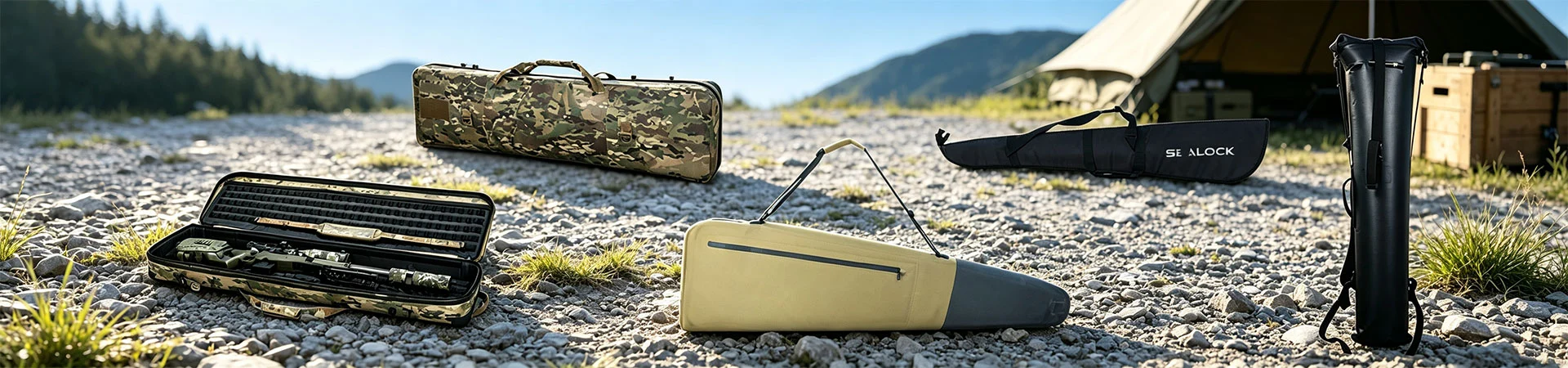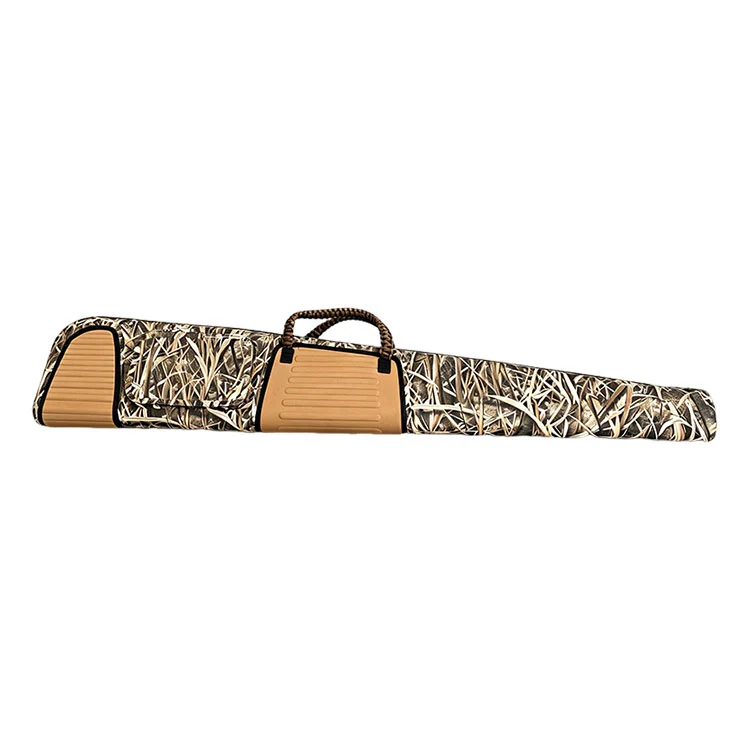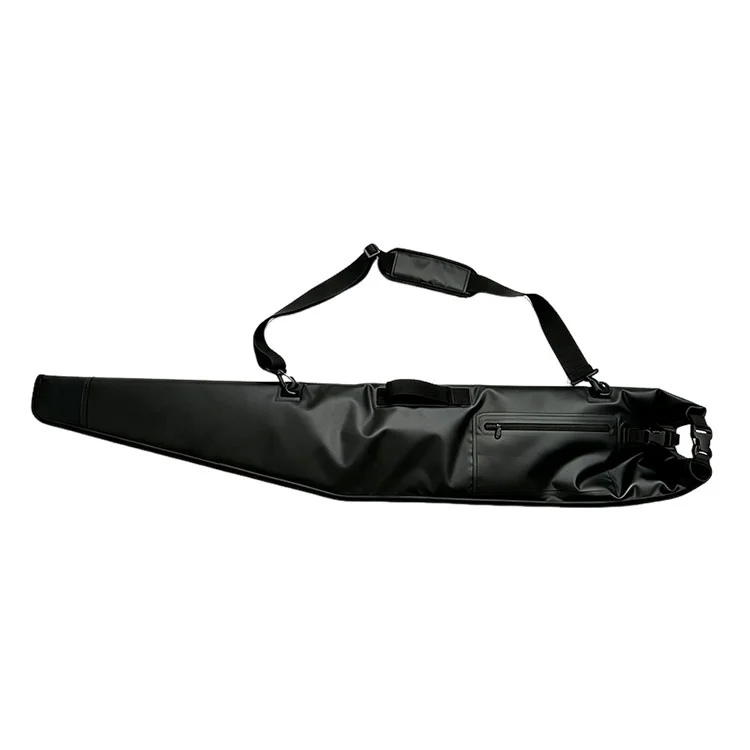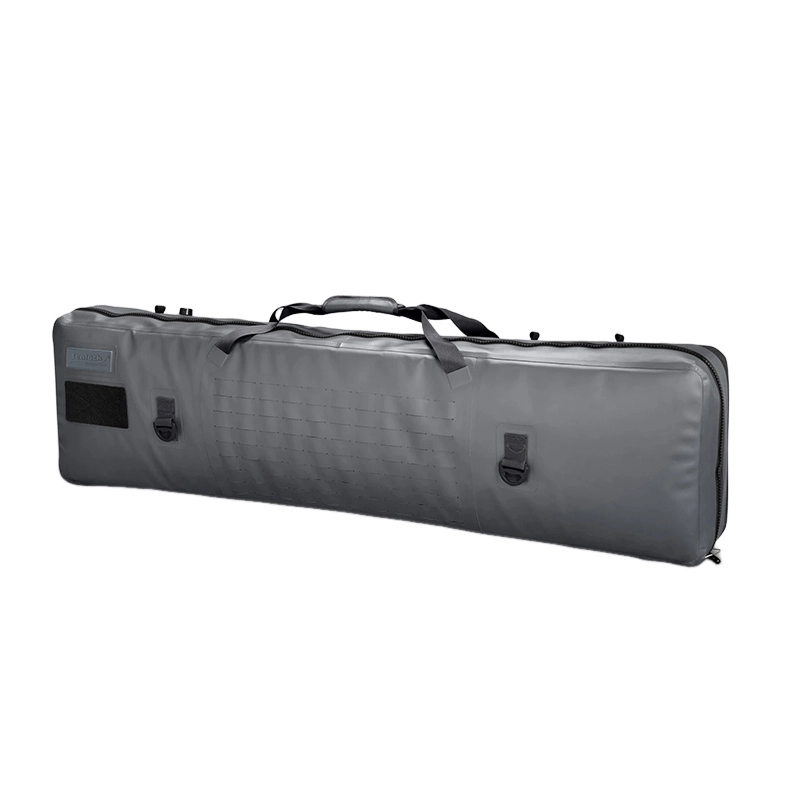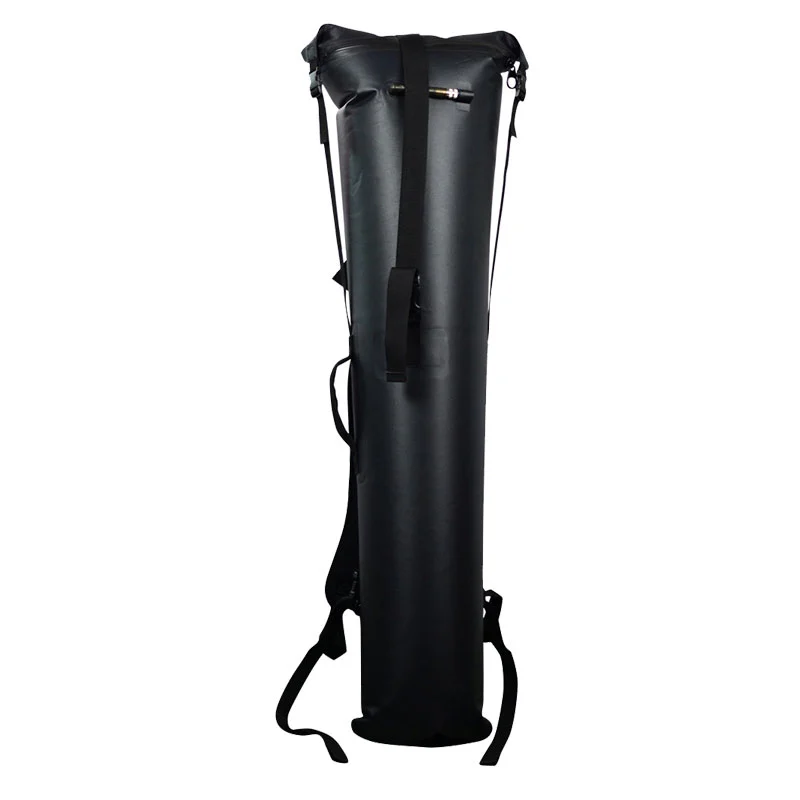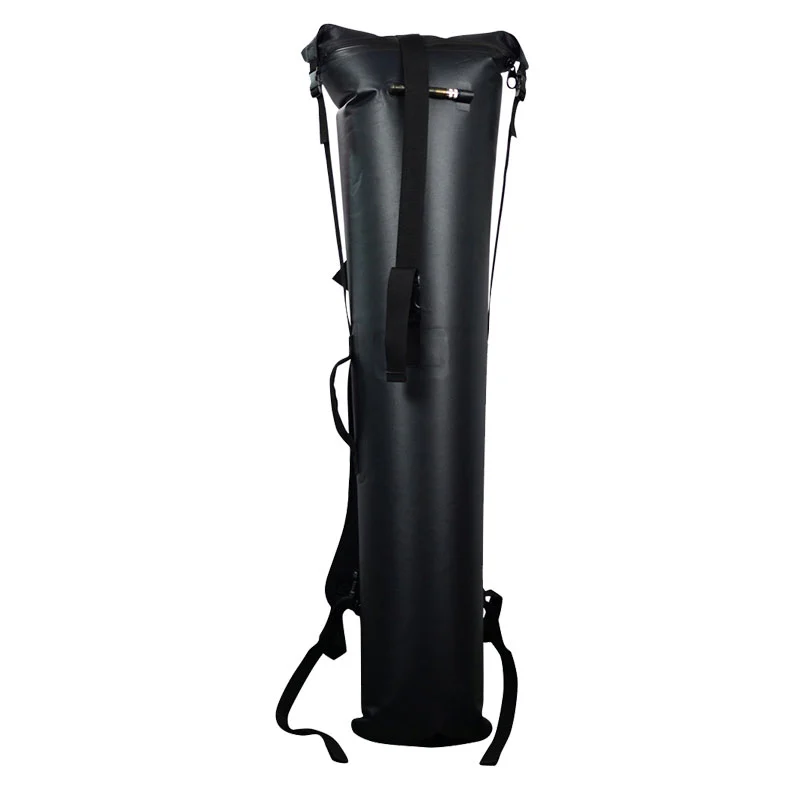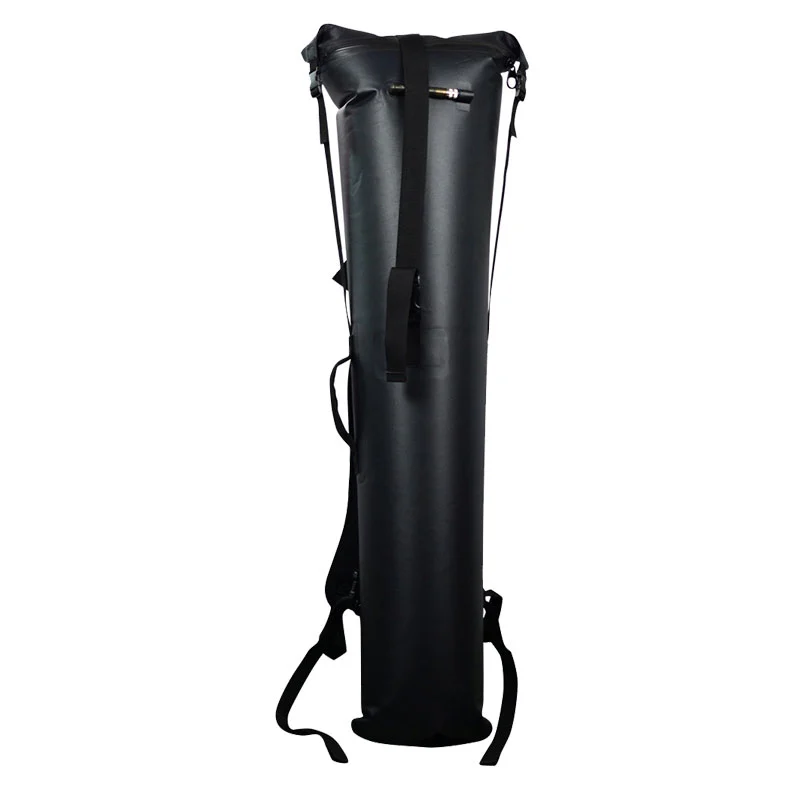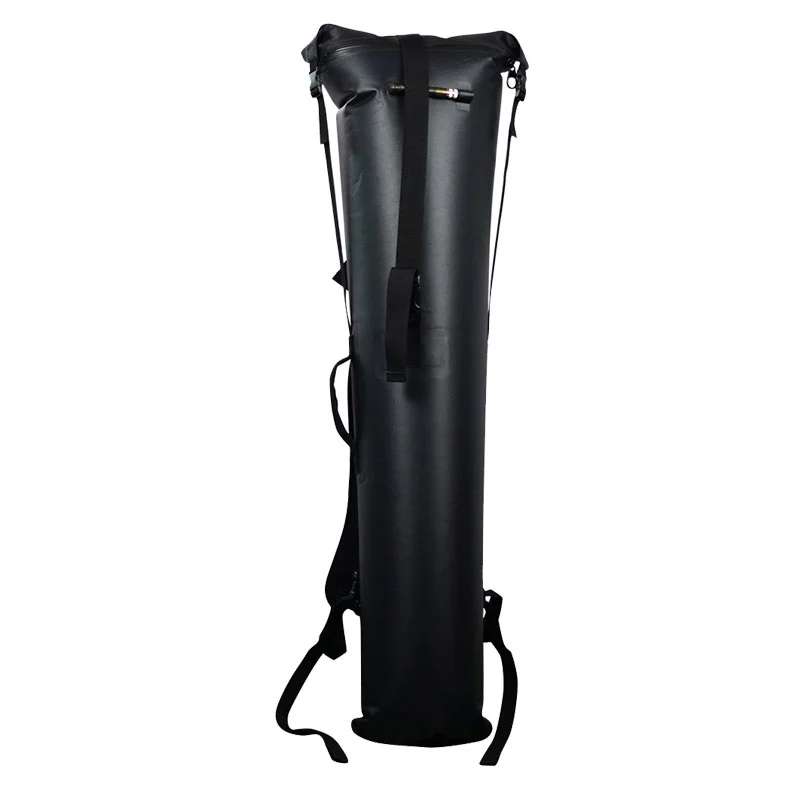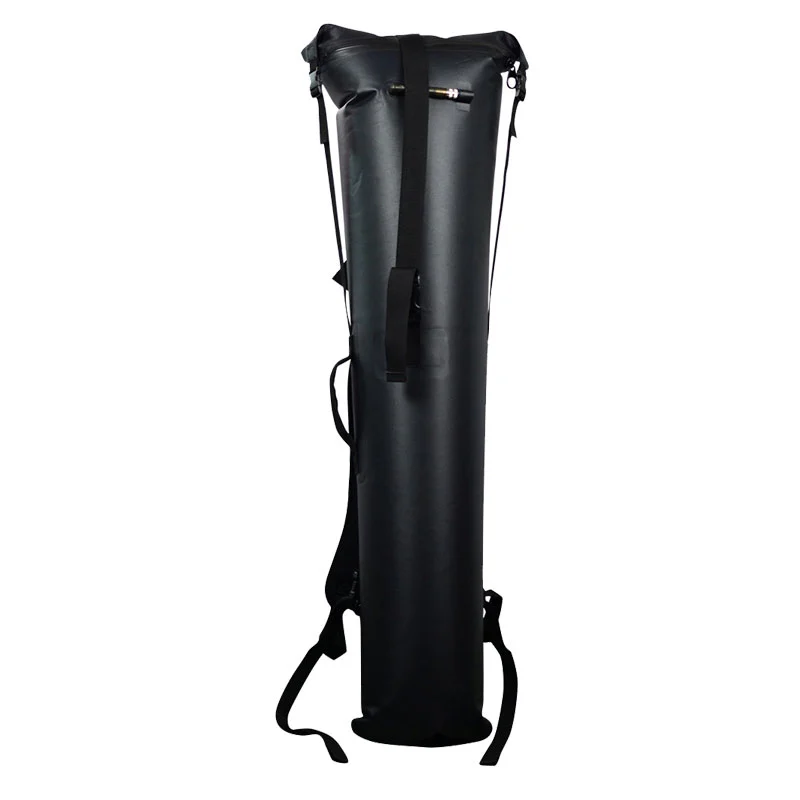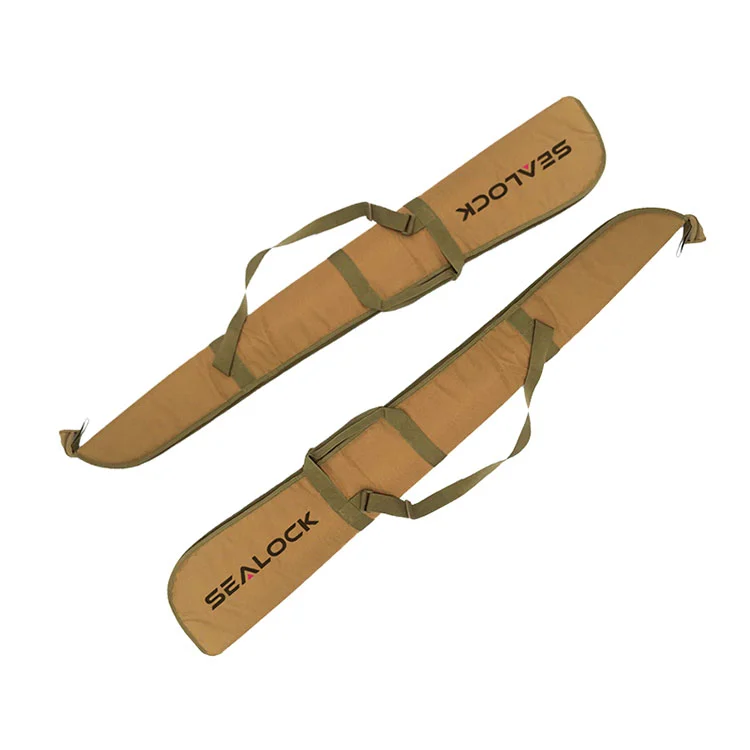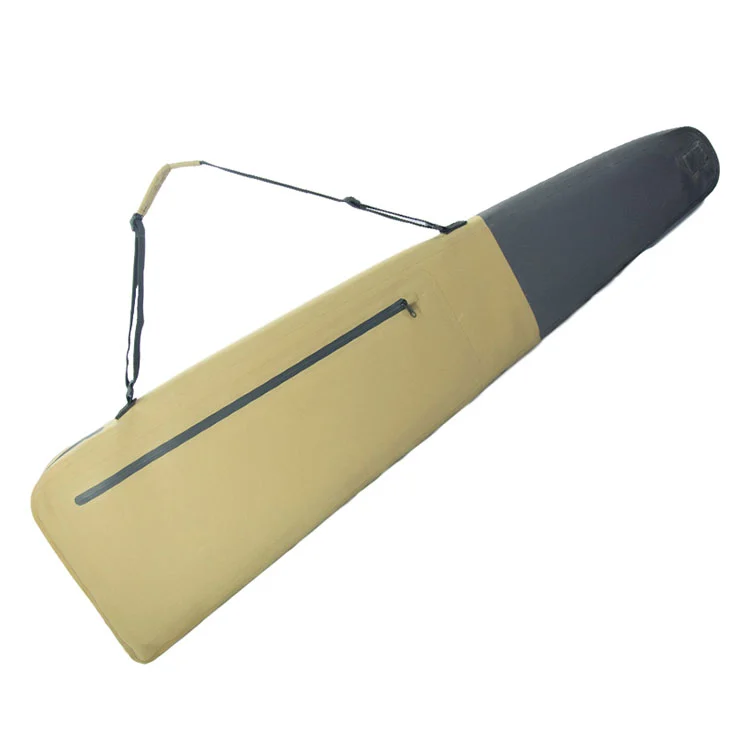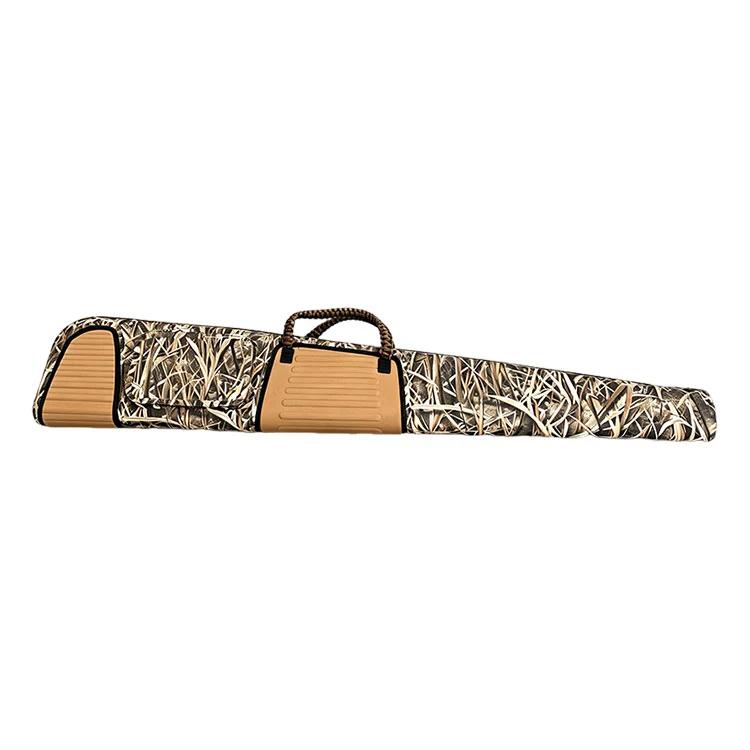
The SL-E302 is a single waterproof rifle bag body configured for hand, sling, or backpack carry. One multi-mode line replaces two single-mode SKUs per colourway, shared welded anchor points keep the third mode's added cost low, and common POM hardware across all modes reduces dealer spare-part numbers. IPX7, 60 L, 1.35 kg, RF welded 840D TPU, 130 × 25 cm.
SL-E302 with hand, sling, and backpack carry from one body
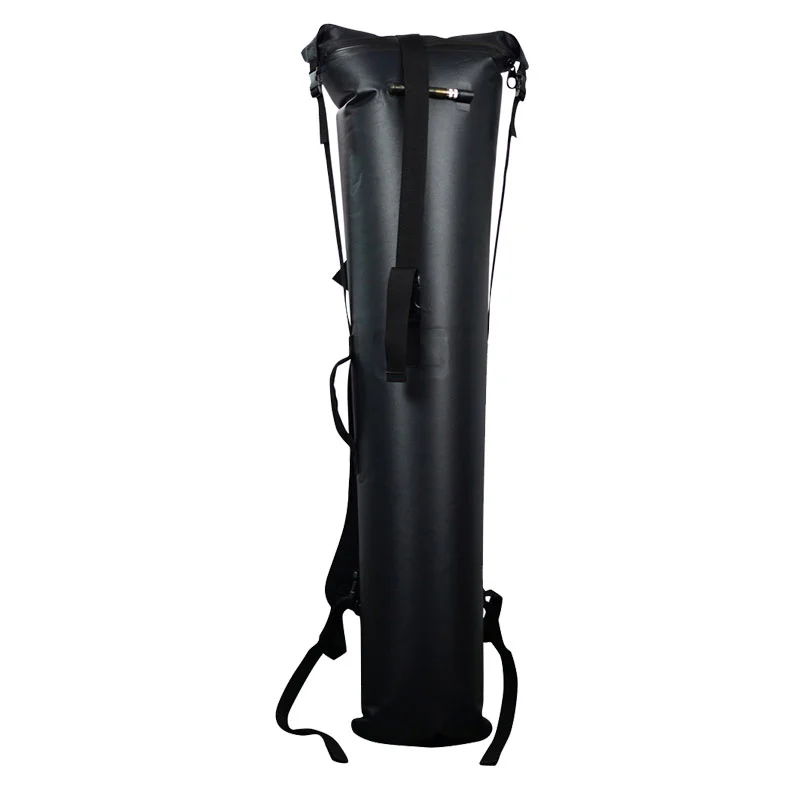
| Specification | Value |
| Model | SL-E302 |
| Carry Modes | Hand / sling / backpack (configurable) |
| Mode Switching | Tool-free; no components detached |
| Strap Attachment | Shared welded reinforcement patches |
| Hardware | Common POM across all modes |
| Waterproof Rating | IPX7 — immersion to 1 m for 30 minutes |
| Dimensions / Weight | 130 × 25 cm / 1.35 kg |
| MOQ / Sampling / Production | 300 pcs / 7–10 days / 30–45 days |
Each additional carry mode adds material, hardware, and labour. Knowing where that cost sits lets a buyer negotiate configuration rather than accept a price.
| Cost Driver | Where It Sits | How It Is Contained |
| Webbing and padding | Material cost, scales with strap length | Lightweight webbing; padding specified to market |
| Hardware count | Buckles, sliders, adjusters per unit | Common POM parts shared across all modes |
| Anchor points | Welding time and reinforcement material | Shared anchors serve more than one mode |
| Assembly labour | Strap attachment and adjustment setting | Sequenced so modes share attachment operations |
| Inspection | Each load path requires verification | Grouped load testing rather than separate cycles |
| Packing volume | Straps add bulk to the carton | Straps stow flush; body still rolls flat at 0.0338 m³ |
| The variable that matters most:shared anchor points. A design where each mode carries its own dedicated hardware multiplies material, welding time, and inspection cost across three systems. Sharing welded reinforcement patches adds a third mode for a fraction of the incremental cost, which is why the price gap between our two-mode and three-mode configurations is smaller than buyers usually expect. | ||
| Factor | Two Single-Mode Lines | One Multi-Mode Line |
| SKUs per colourway | 2 | 1 |
| SKUs across three colourways | 6 | 3 |
| Demand forecasts to maintain | 2 per colourway | 1 per colourway |
| Safety stock held | Duplicated across both variants | Single pool |
| Shelf facings required | 2 | 1 |
| Reorder decisions per season | 2 per colourway | 1 per colourway |
Two variants of the same product do not split demand evenly or predictably. A buyer holding both carries safety stock against the uncertainty of each, and that uncertainty does not halve when demand does.
The familiar outcome is one variant selling through while the other sits, and the sale lost anyway because the customer wanted the configuration that ran out. Consolidating to one multi-mode SKU pools the demand and removes the wrong-variant stockout.
• Demand pooling reduces total safety stock for the same service level
• Wrong-variant stockouts are eliminated rather than reduced
• End-of-season markdown exposure concentrates on one line instead of two
• Reorder decisions halve across a multi-store group
• Slow-moving colourways are easier to identify without carry-variant noise
Carry-related returns fall into distinct categories. Multi-mode capability removes some completely and leaves others untouched, and being precise prevents overstating the benefit.
| Return Reason | Multi-Mode Effect | Comment |
| Customer wanted the other carry configuration | Eliminated | Both are in the box; the decision moves to the field |
| Configuration unsuitable for the customer's terrain | Eliminated | User switches rather than returns |
| Gift purchased in the wrong configuration | Eliminated | Recipient chooses after opening |
| Sizing or diameter mismatch | Unaffected | Addressed by specifying diameter correctly |
| Waterproof performance complaint | Unaffected | Addressed by the sealing instruction card |
| Hardware damage in use | Unaffected | Addressed by the service parts programme |
The first three rows are the ones worth quantifying against your own return data — they are removed structurally rather than by improving quality.
Because hardware types are common across all three modes, a dealer stocking spares holds fewer part numbers.
| Service Item | Part Numbers Required |
| POM side-release buckles | One type across all modes |
| Adjusters and sliders | One type across all modes |
| Sling strap assembly | Single part |
| Backpack strap set | Single part |
• Fewer part numbers to forecast, order, and store at dealer level
• A damaged buckle is replaceable rather than a warranty write-off
• Common hardware simplifies counter-staff training
• Replacement straps can be sold as an accessory line
Mode count is a lever rather than a fixed specification. Buyers working to a price point can adjust configuration instead of compromising elsewhere in the build.
| Configuration | Modes Included | Typical Fit |
| Three-mode | Hand carry, sling, backpack | Retail programmes prioritising SKU consolidation; tactical and agency buyers |
| Two-mode | Hand carry, sling | Price-sensitive volume programmes; boat and guided markets |
| Two-mode | Hand carry, backpack | Backcountry-focused brands where sling demand is low |
| Reduce mode count before specification:we advise against reducing shell material or hardware grade to reach a price, since both affect the IPX7 performance the product is sold on. Adjusting mode count changes carrying convenience without touching the waterproof specification. | ||
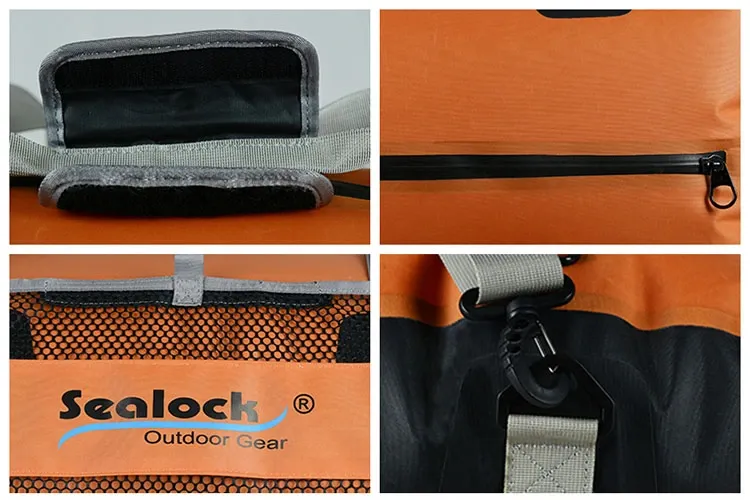
All carry hardware mounts to high-frequency welded reinforcement patches rather than stitching through the shell. The load path runs into the welded patch and spreads across the surface while the shell remains continuous and airtight. IPX7 immersion performance is verified with the full three-mode system fitted rather than on a stripped sample.
| Item | Specification |
| Model Number | SL-E302 |
| Product Name | Shoulder-Carry Waterproof Gun Case |
| Carry Modes | Hand / sling / backpack (configurable) |
| Strap Attachment | Shared welded reinforcement patches |
| Hardware | Common POM across modes |
| Shell Material | 840D TPU laminated (500D PVC / 420D TPU optional) |
| Seam Construction | RF welded |
| Closure | Roll-top, three folds minimum, POM side-release buckles |
| Waterproof Rating | IPX7 — immersion to 1 m for 30 minutes |
| Dimensions | 130 × 25 cm |
| Usable Capacity | 60 L |
| Net Weight | 1.35 kg ± 0.15 kg |
| Max Firearm Length | 50 in (127 cm) |
| Carrying Style | Hand / Shoulder / Backpack |
| OEM / ODM | Supported |
| Option | Available | Notes |
| Mode Configuration (2 or 3 modes) | ✔ | Primary cost lever |
| Strap Padding and Adjustment Range | ✔ | Regional torso-size differences |
| Quick-Release Hardware | ✔ | Guided and agency programmes |
| Anchor Placement | ✔ | Sets shoulder load angle |
| Tube Diameter and Length | ✔ | Matched to firearm range |
| Camouflage or High-Visibility Colourway | ✔ | Pantone matched |
| Logo Printing / Welded Patch | ✔ | Applied without piercing the shell |
| Packaging / Private Label | ✔ | Colour box, printed carton, hang tag |
Retail groups consolidating carry SKUs, multi-store chains with split demand forecasting, distributors serving mixed hunting and marine markets, tactical and agency procurement, private-label programmes targeting a fixed landed cost, fleet buyers requiring service part commonality, importers consolidating container loads, and brands reducing carry-related return rates.
1. 840D TPU fabric inspection and weldability confirmation
2. Welding parameter setup and first-article peel test
3. Precision cutting of cylindrical body panels
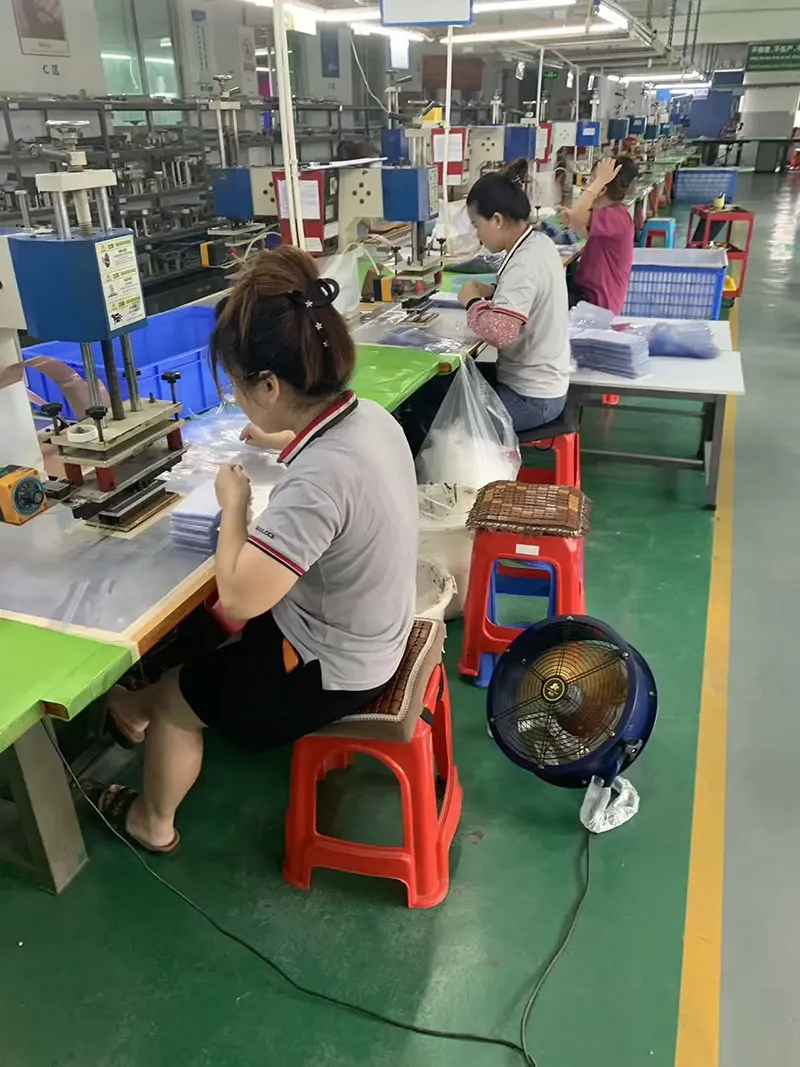
4. RF welding of the airtight shell
5. Shared reinforcement patch welding at anchor positions
6. Carry hardware assembly per specified mode configuration
7. Closure edge reinforcement and forming
8. Grouped multi-mode load test and immersion verification
9. Final quality inspection and export packing
| Inspection Item | Standard |
| Incoming Material Inspection (IQC) | Every batch |
| First-Article Weld Peel Test | Start of every run |
| Welded Seam Integrity | 100% |
| Shared Anchor Patch Bonding | 100% |
| Grouped Carry Load Verification | Sampling |
| Roll-and-Seal Function | 100% |
| Immersion Verification (IPX7 condition) | Per approved sampling plan |
| Packaging Inspection (OQC) | 100% |
| Test Item | Method | Result |
| Grouped Carry Load | Load cycles applied across all fitted modes | No webbing or anchor failure |
| Shared Anchor Peel | Sustained load across multi-mode anchors | No separation of the welded patch |
| IPX7 Immersion | Sealed and immersed to 1 m for 30 minutes | No ingress at seams, closure, or any anchor |
| Hardware Cycle | Repeated buckle and adjuster operation | Settings retained; no cracking |
| Stowed Strap Snag | Loaded carry through brush with straps stowed | No snagging; straps remained flush |
| Salt-Water Exposure | Immersion in salt water, rinsed and dried | No hardware corrosion |
| Low-Temperature Operation | Hardware operated after 12 h at -20°C | Buckles and adjusters functioned normally |
| Mode Switch Cycle | Repeated switching between all fitted modes | No wear; nothing detached |
| Item | Specification |
| Individual packing | PE protective bag |
| Carton | 132 × 32 × 32 cm, 4 pcs, 5.4 kg net |
| Volume per unit | 0.0338 m³ |
| MOQ | 300 pcs |
| Sample lead time | 7–10 days |
| Production lead time | 30–45 days |
| Trade terms | EXW / FOB / CIF |
| Certifications | ISO 9001, BSCI, SMETA, GRS (material dependent) |
| Included Item | Quantity |
| Shoulder-Carry Waterproof Gun Case (SL-E302) | 1 |
| Adjustable Removable Shoulder Sling | 1 (per configuration) |
| Backpack Straps | 1 set (per configuration) |
| Carry Mode and Sealing Instruction Card | 1 |
| PE Protective Bag | 1 |
• 12-month warranty against manufacturing defects, including anchors and seams
• Service parts programme with common hardware across modes
• Replacement straps available as a dealer accessory line
• Mode configuration consultation against target landed cost
• Immersion and load test documentation for OEM quality files
Project:
Carry SKU Consolidation for a Regional Outdoor Retail GroupA retail group stocked separate sling and backpack firearm cases in three colourways each — six SKUs covering one product function. Demand split unpredictably between the variants, safety stock was duplicated, and sales were lost whenever the configuration a customer wanted had run out.
Consolidating onto the multi-mode SL-E302 reduced the range to three SKUs, pooled demand into one forecast per colourway, and moved the carry decision from point of purchase to the field.
• Initial order: 900 pcs
• Customized features: Three colourways, printed carry mode card, retail hang tag, logo printing
• Sample lead time: 8 days
• Production lead time: 44 days
• Outcome: Carry SKUs reduced from six to three; wrong-variant stockouts eliminated; carry-related returns fell markedly
“Halving the SKUs while covering more customers is the kind of result a buying team can take to a board meeting.”
— Category Buyer, Outdoor Retail Group
“The service parts side sold it to our operations team. One buckle type across the whole range instead of three.”
— Supply Chain Manager, Distributor
“You told us to cut a mode rather than cut the material. That advice kept the waterproof rating intact and still hit our price.”
— Sourcing Lead, Private Label Programme
Less than most buyers expect, because modes share welded anchor points and common POM hardware rather than each carrying dedicated components. Exact figures are quoted per project against your configuration and volume.
Separate sling-only and backpack-only products require two SKUs per colourway. A multi-mode line covers both from one, so a three-colourway range drops from six SKUs to three.
It genuinely reduces it. Two variants require safety stock against the demand uncertainty of each, and that uncertainty does not halve when demand is split. Pooling demand into one SKU lowers total stock for the same service level.
Three categories: customers who wanted the other configuration, configurations unsuitable for their terrain, and gifts bought in the wrong configuration. It does not affect diameter mismatch, waterproof complaints, or hardware damage.
Yes. Hand carry plus sling suits price-sensitive volume and boat markets; hand carry plus backpack suits backcountry brands with low sling demand.
Mode count, not shell material or hardware grade. Reducing modes changes carrying convenience; reducing the 840D TPU shell or POM hardware affects the IPX7 performance the product is sold on.
No. All hardware mounts to welded reinforcement patches rather than stitching through the shell. IPX7 immersion is verified with the full three-mode system fitted, not on a stripped sample.
Slightly, against a stripped single-mode case. Straps stow flush and the shell still rolls flat at 0.0338 m³ per unit, and the relevant comparison is against shipping two single-mode lines separately.
Fewer than with separate lines. Buckles and adjusters are a single common POM type across all modes, with the sling and backpack strap sets as single parts each.
Yes, and several customers do. It creates aftermarket revenue and converts some hardware damage from warranty write-offs into parts sales.
Yes, subject to configuration minimums. Buyers serving both boat and backcountry markets sometimes run a two-mode and a three-mode variant from the same body.
MOQ 300 pcs, samples in 7–10 days, production in 30–45 days, quoted EXW, FOB, or CIF. Full OEM and ODM development is supported including mode configuration, padding, anchor placement, size, and packaging.
Address
No. 88, Fenggang Section of Dongshen Road, Fenggang Town, Dongguan City, Guangdong Province, China
Tel