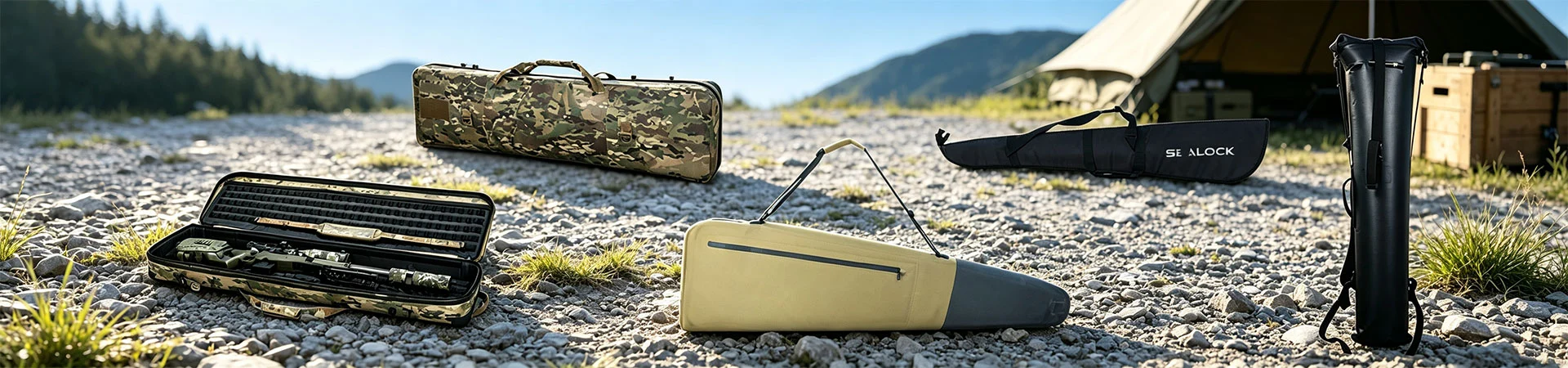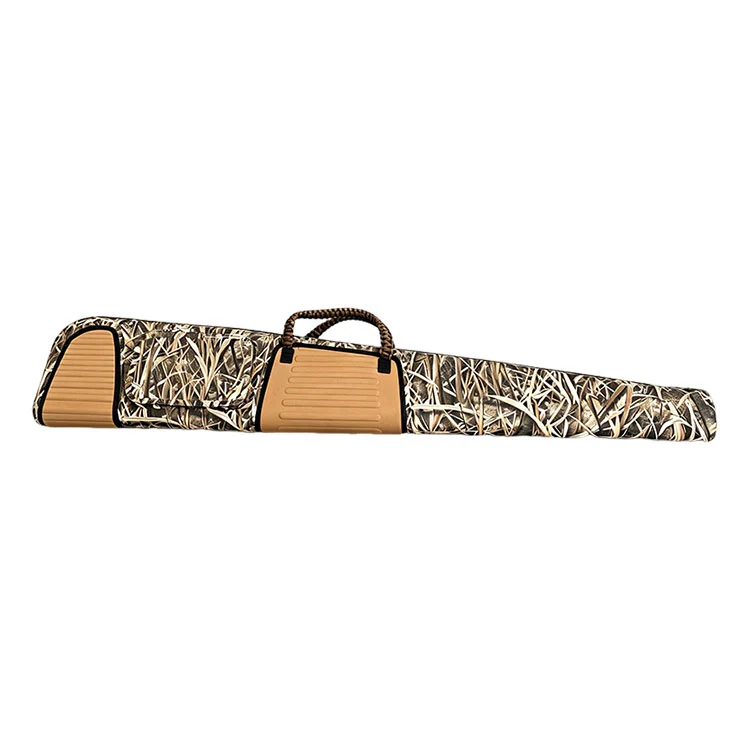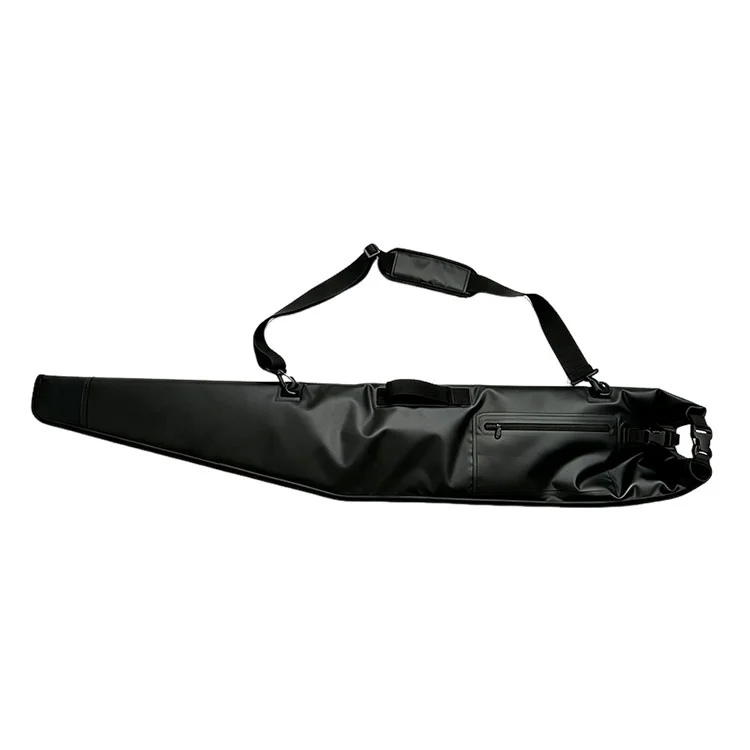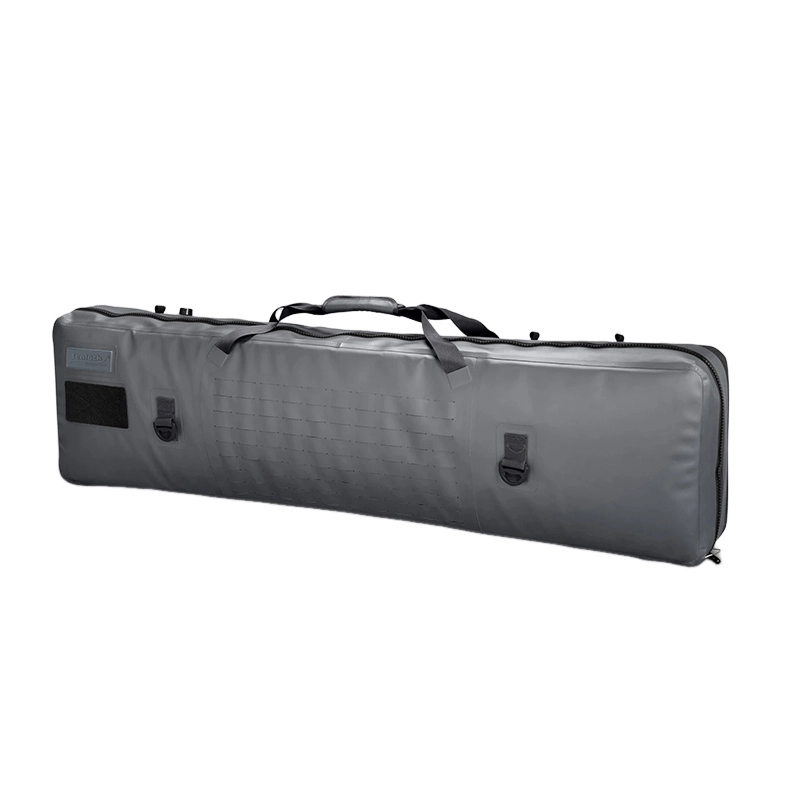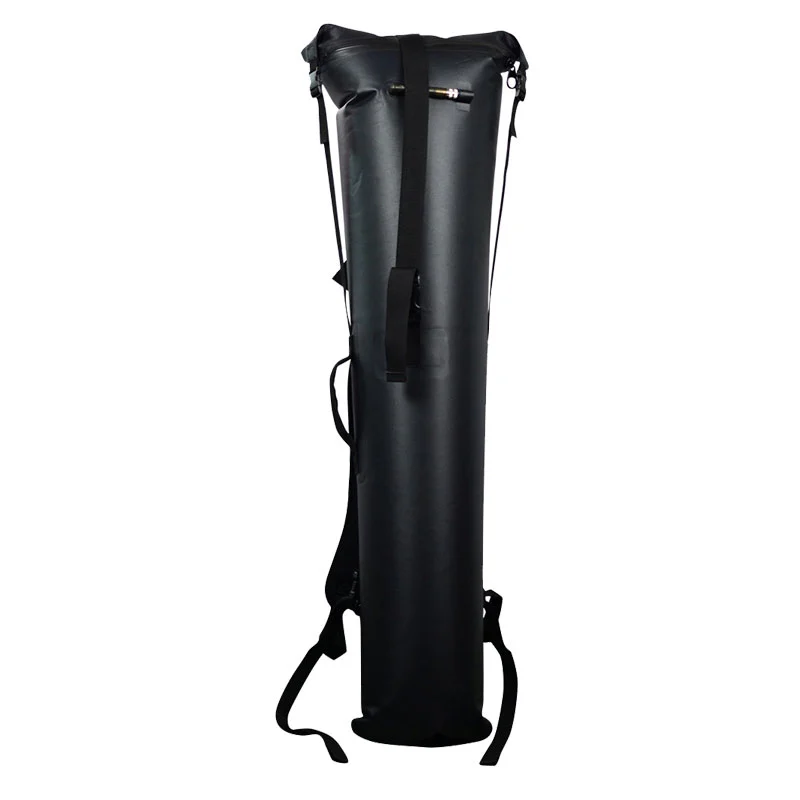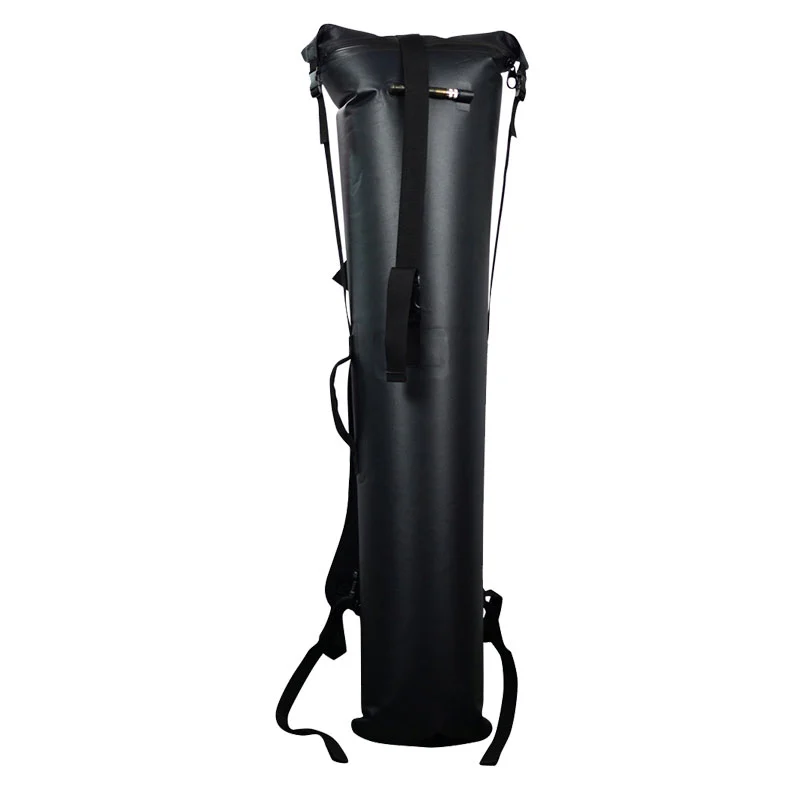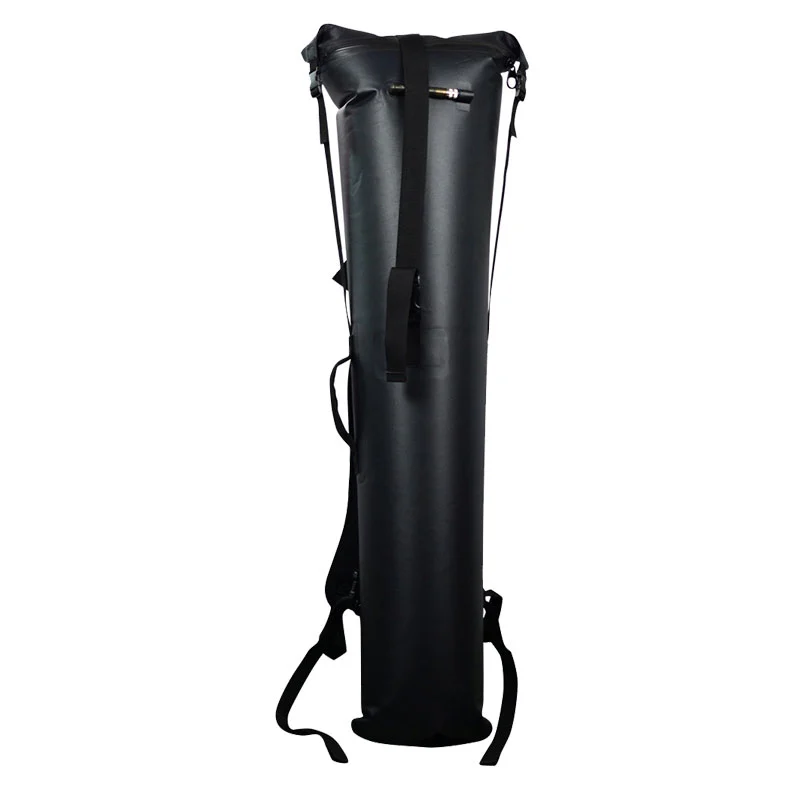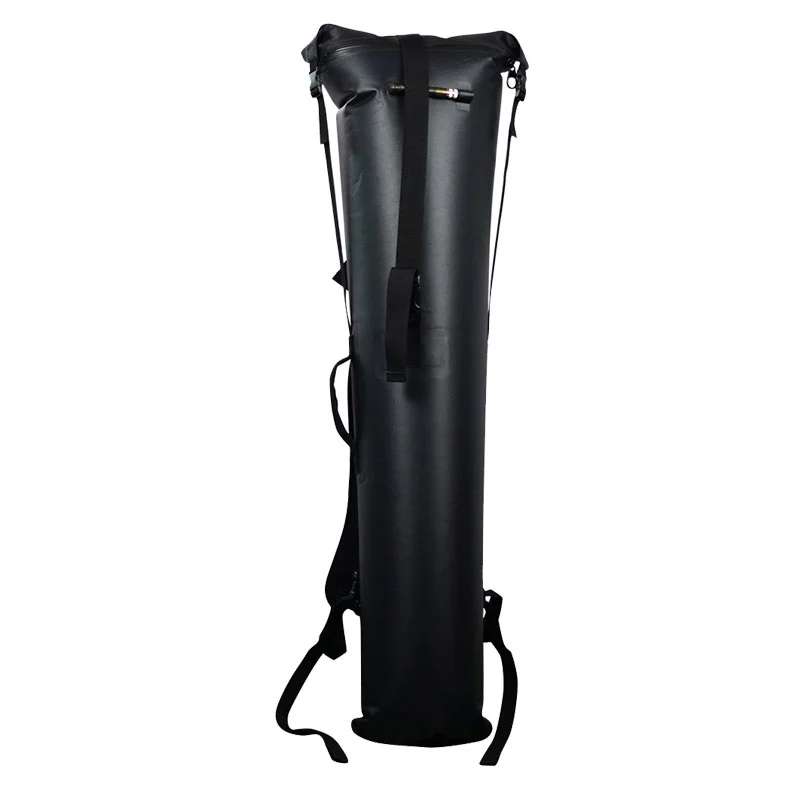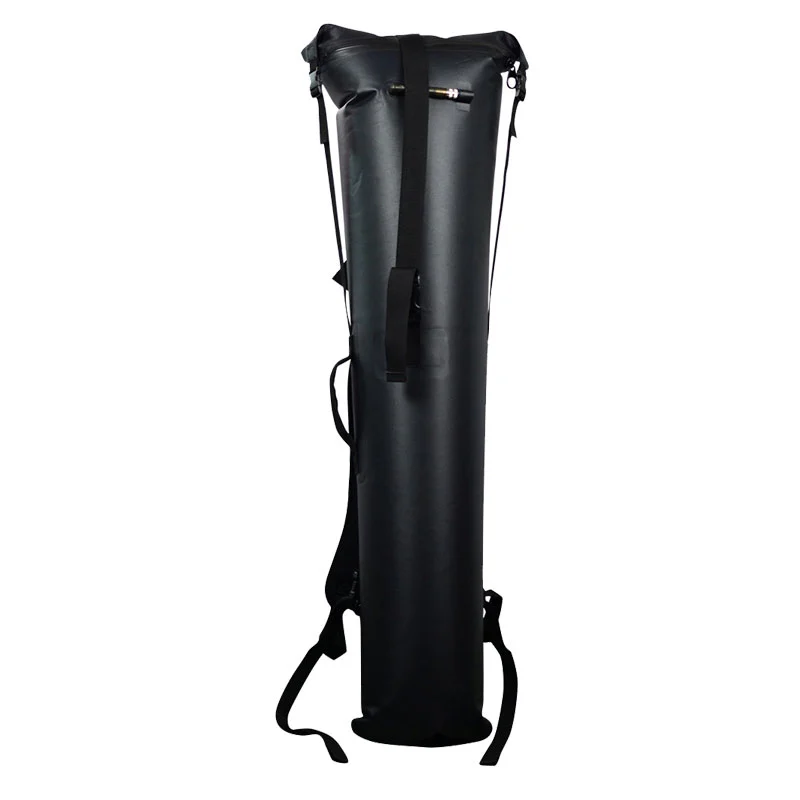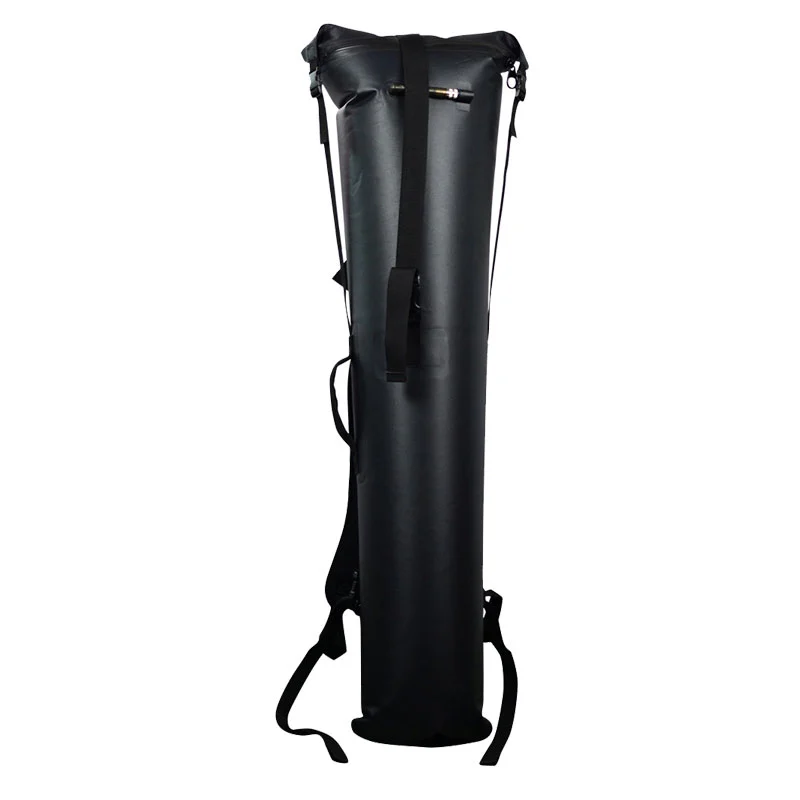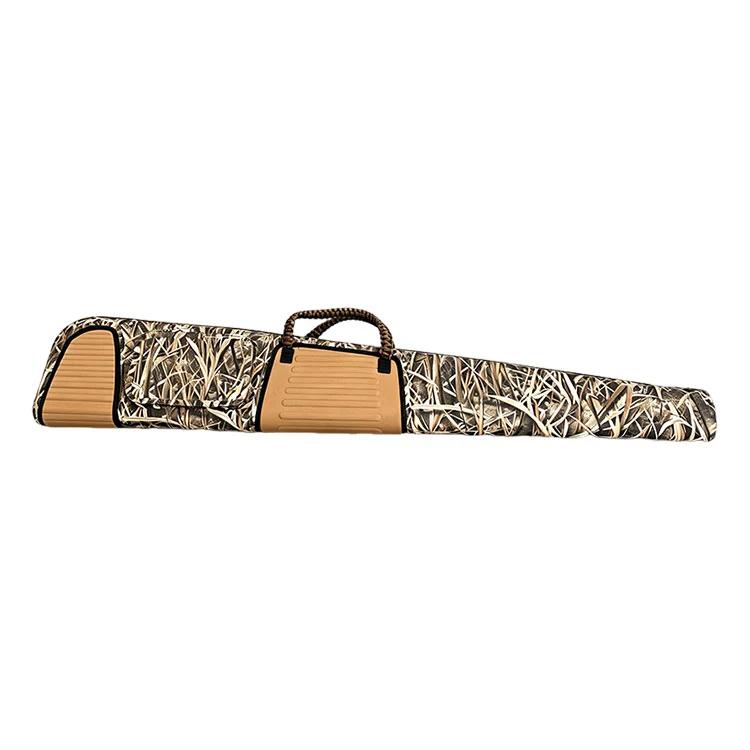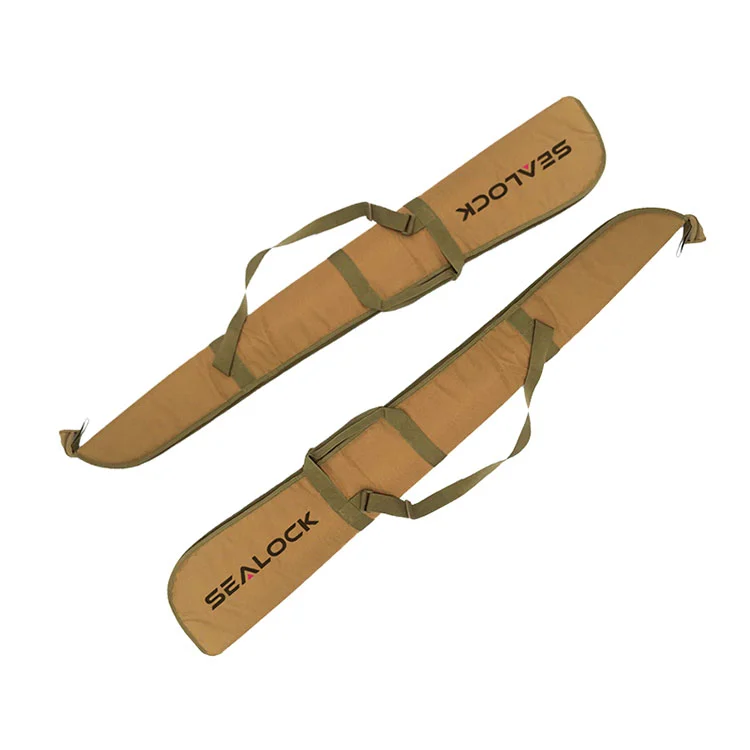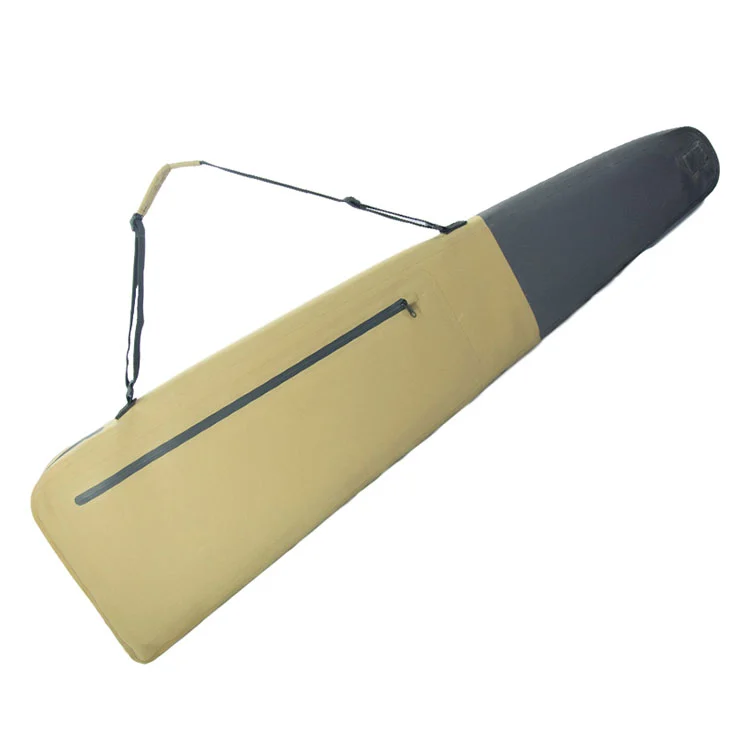
The SL-E603 contoured waterproof gun case measures 122 × 30 × 8 cm with an internal capacity of approximately 25–30 L at approximately 1.1 kg. The 840D TPU laminated shell is RF welded with a rounded buttstock chamber and a tapered barrel chamber formed on dedicated electrode tooling, closed by a sealed zipper welded into the body seam and rated IPX7. Chamber radius, taper angle and depth are set against a customer reference firearm. MOQ 300 pcs, samples in 7–10 days.
Chamber profile is dimensioned from a physical reference gun supplied by the customer, measured at the stock width, receiver depth and overall dressed length. A sample is produced and test-fitted against that firearm before the profile is committed to production tooling, because a profile change on a welded shell is a tooling change rather than a pattern adjustment.
A rectangular case of the same length and width encloses approximately 40 L against 25–30 L for the chambered shell. The difference is volume the firearm does not occupy, concentrated at the muzzle end where a rectangle retains full width and the contoured chamber tapers with the barrel.
Rounded buttstock chamber and tapered barrel chamber
Where the Volume Goes
A gun is wide at the stock and narrow at the muzzle. A rectangle sized to the widest point carries that width all the way to the end.
Measure
Contoured SL-E603
Rectangle of the Same Length and Width
Internal capacity
approx. 25–30 L
approx. 40 L
Volume occupied by the firearm
Most of it
Roughly two thirds
Dead space at the muzzle end
Minimal — the chamber tapers with the barrel
Full width retained to the end
Room for the firearm to shift
Limited
Substantial at the muzzle
External bulk carried
Follows the gun outline
Squared off; wider silhouette
The dead space is the point. Volume a firearm does not occupy is volume it can move within, and movement inside a case is what produces contact wear at the muzzle end on generic rectangular bags.
The Two Chambers
The rounded buttstock chamber
A stock is the widest and most awkward part of a long gun, and squaring the case around it leaves two corners that fill with grit and hold water after cleaning. A radiused chamber gives the stock room without creating those corners, and on a welded shell the radius is formed by tooling rather than folded from flat panel.
The tapered barrel chamber
The taper follows the barrel down toward the muzzle, removing width where the gun no longer needs it. Contoured Waterproof Gun Case reduces both the case volume and the external silhouette, which is what makes the case slide into a rack or behind a seat rather than needing a rectangular slot.
What Contouring Costs
Stated plainly:a contoured case fits its intended firearm profile closely and other profiles less well. A rectangle accommodates almost anything of the right length. Buyers with a wide firearm range across one SKU should weigh that — we recommend confirming the chamber profile against the widest and the most heavily dressed gun in the intended range before tooling is cut.
Tooling is the other cost. Chamber profiles are welded on dedicated electrode tooling, so a profile change is a tooling change rather than a pattern adjustment. We quote it explicitly at the development stage rather than folding it into a unit price.
Confirming Fit Before Tooling
1. Send the widest and longest gun in the intended range, dressed as the user carries it
2. We measure stock width at the comb and butt, receiver depth, and overall dressed length
3. Chamber radius and taper are set against those figures with working clearance
4. A sample is produced and test-fitted against the reference gun before tooling is finalised
5. Only then does the profile go to production tooling
Working from a drawing rather than a gun is where contoured cases go wrong, because drawings omit slings, recoil pads, and mounted optics.
Deeper chambers for adjustable combs and mounted optics
Body length
48 in and 52 in quoted; custom lengths tooled
Shell material
840D TPU standard; 500D PVC tarpaulin alternative
Pocket position
Placed to suit the contour of the chosen profile
Colour split
Two-tone welded panels following the chamber division
Reference gun test fit
Included in sampling for contoured programmes
Production Sequence
6. Reference gun measurement and chamber profile confirmation
7. Electrode tooling development for the buttstock radius and barrel taper
8. Incoming fabric inspection and weldability trial
9. Welding parameter setup and first-article peel test
10. Precision cutting of panels to the chambered development
11. RF welding of the buttstock chamber and tapered barrel section
12. Sealed zipper and welded pocket attachment
13. Test fit against the reference gun profile
14. Immersion verification and final inspection
Fit and Weld Checks
Check
Method
Frequency
Chamber dimensions
Measured against approved tooling
Sampling
Buttstock radius weld
Visual at the curved section
100%
Taper consistency
Weld width measured along the taper
Sampling
Test fit
Against reference gun profile
Sampling
Zipper-to-shell weld
Full-run inspection
100%
Immersion verification
IPX7 condition on a finished unit
Per approved sampling plan
Profile Trials
Trial
Method
Outcome
Dressed-gun fit
Cased with a slinged rifle and mounted optic
Closed without forcing at the specified chamber depth
Internal movement
Loaded case carried and transported over uneven ground
Firearm held position; no muzzle-end travel
Corner retention
Case rinsed and inverted after immersion
Radiused chamber drained; no water held in corners
Curved weld integrity
Peel test at the buttstock radius
Held equally to straight-section welds
Silhouette check
Case slid into a vehicle rack and shelf slot
Tapered profile cleared where a rectangle did not
IPX7 immersion
Finished unit, 1 m for 30 minutes
No ingress at any welded seam or the closure
Suited To
Brands building around a defined firearm range rather than a universal case; vehicle rack and gun room programmes where external silhouette decides fit; guided fleets carrying a consistent gun type; markets where a case is judged on how it looks alongside the firearm; and any programme prepared to invest in tooling for a closer fit.
Recent Work
Austria — bolt-action rifle brand
The brand's rifles carry adjustable combs, which sit higher than a standard stock and would not clear a chamber tooled to a conventional profile. We measured a supplied reference rifle at the comb rather than the butt and set the chamber depth accordingly before cutting tooling. 400 pcs, 46 days including tooling.
Texas — vehicle rack programme
The rack slot was rectangular but shallow, and the deciding factor was external silhouette rather than internal volume. The tapered barrel chamber cleared the slot where a full-width rectangle would not, and we adjusted the taper angle slightly at sampling to gain the last centimetre. 550 pcs, 44 days.
Finland — guided operation
A consistent fleet gun type made a contoured case worthwhile, since every case would carry the same profile. We test-fitted against two fleet rifles before tooling and confirmed the chamber suited both. 350 pcs, 45 days.
What Buyers Told Us
“Adjustable combs are taller than a drawing suggests. Measuring the actual rifle at the comb is why the first sample worked.”
— Product Engineer, Rifle Brand
“The rack decided it. A rectangle of the same capacity simply did not go in.”
— Programme Manager, Vehicle Rack Brand
“Rinsing it out after a wet day, the rounded end actually drains. Our old square-cornered case held water in the corners.”
— Head Guide, Guided Operation
1. Why contour a Contoured Waterproof Gun Case rather than make it rectangular?
A gun is wide at the stock and narrow at the muzzle, so a rectangle carries full width to the end and encloses roughly 40 L against 25–30 L for the contoured shell. That extra volume is dead space the firearm can move within, and movement is what produces contact wear at the muzzle end.
2. What does the rounded buttstock chamber do?
It gives the stock room without creating square corners that fill with grit and hold water after cleaning. On a welded shell the radius is formed by dedicated tooling rather than folded from flat panel.
3. What does the tapered barrel chamber do?
It removes width where the gun no longer needs it, reducing both internal volume and external silhouette. That is what lets the case slide into a rack or behind a seat rather than needing a rectangular slot.
4. What is the downside of a contoured case?
It fits its intended profile closely and other profiles less well, where a rectangle accommodates almost anything of the right length. Buyers covering a wide firearm range on one SKU should weigh that carefully.
5. How do you set the chamber profile?
Against a reference gun sent by the customer, dressed as the user carries it. We measure stock width at the comb and butt, receiver depth, and overall dressed length, then set radius and taper with working clearance.
6. Can you work from a drawing instead?
We advise against it. Drawings omit slings, recoil pads, and mounted optics, which is where contoured cases usually go wrong. A physical reference gun is the reliable route.
7. Will it fit a rifle with an adjustable comb?
With the chamber depth set for it, yes. Adjustable combs sit higher than a standard stock, so we measure at the comb rather than the butt when that is the intended range.
8. Is tooling an extra cost?
Yes, and we quote it explicitly rather than folding it into the unit price. A chamber profile change is a tooling change, not a pattern adjustment, because the shell is welded rather than sewn.
9. Does the contour affect waterproofing?
No. The chamber is formed by welding, and curved welds are peel-tested at the buttstock radius specifically, since that is where tooling error would show first. Immersion is verified on finished units.
10. Does the shape help with drainage?
Yes. A radiused chamber drains when inverted after rinsing, where square corners hold water — a practical difference after wet days.
11. Can the pocket position follow the contour?
Yes. Pocket size and position are set to suit the chosen profile rather than fixed, since a welded pocket is applied to the shell face during production.
12. What are the commercial terms?
MOQ 300 pcs, samples in 7–10 days, production in 30–45 days, quoted EXW, FOB, or CIF, with tooling quoted per project and reference gun test fitting included in contoured programmes.
We use cookies to offer you a better browsing experience, analyze site traffic and personalize content. By using this site, you agree to our use of cookies. Privacy Policy