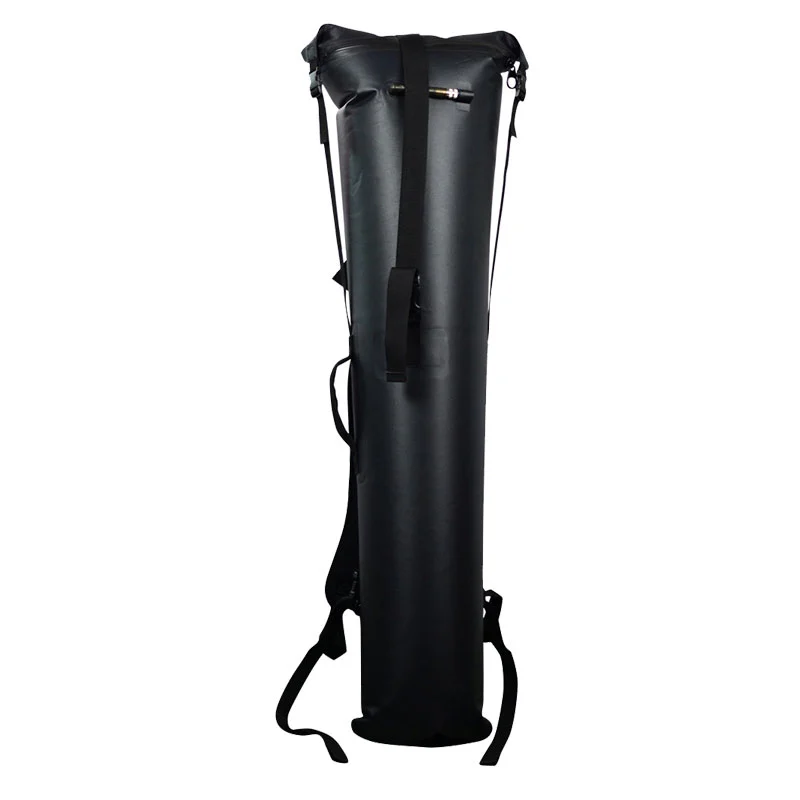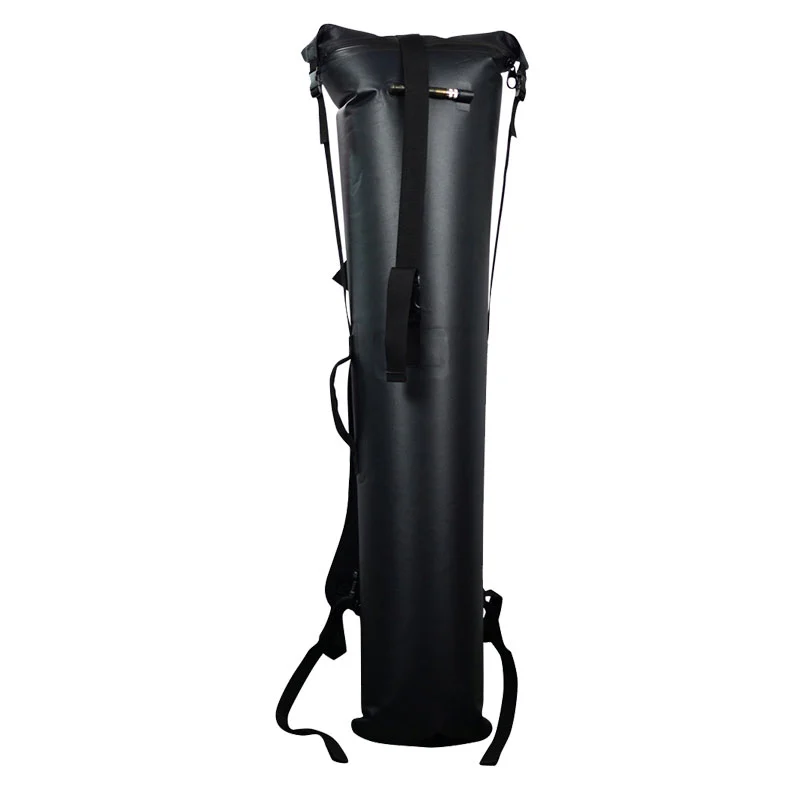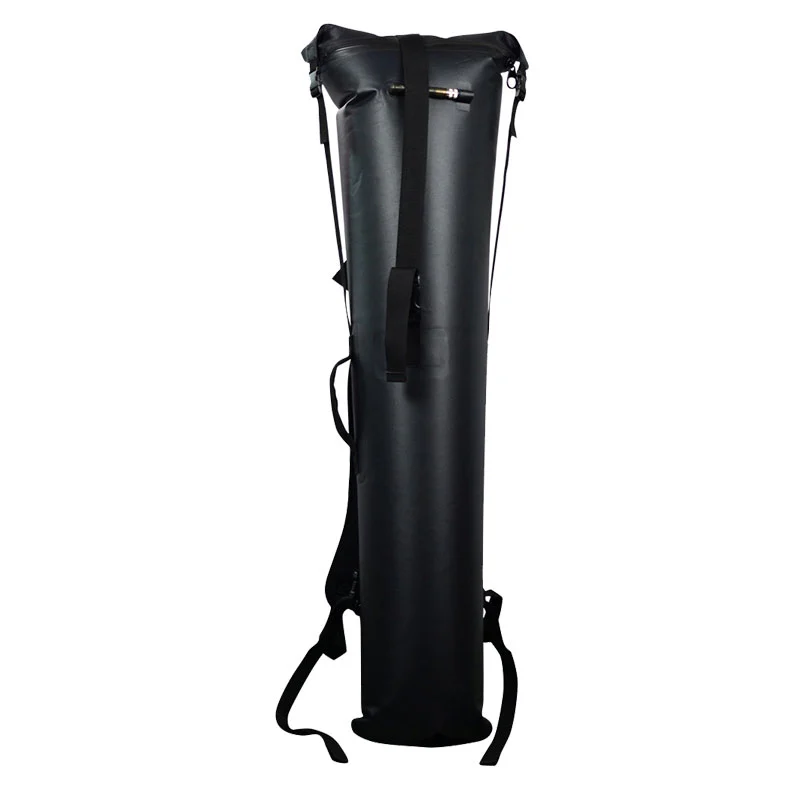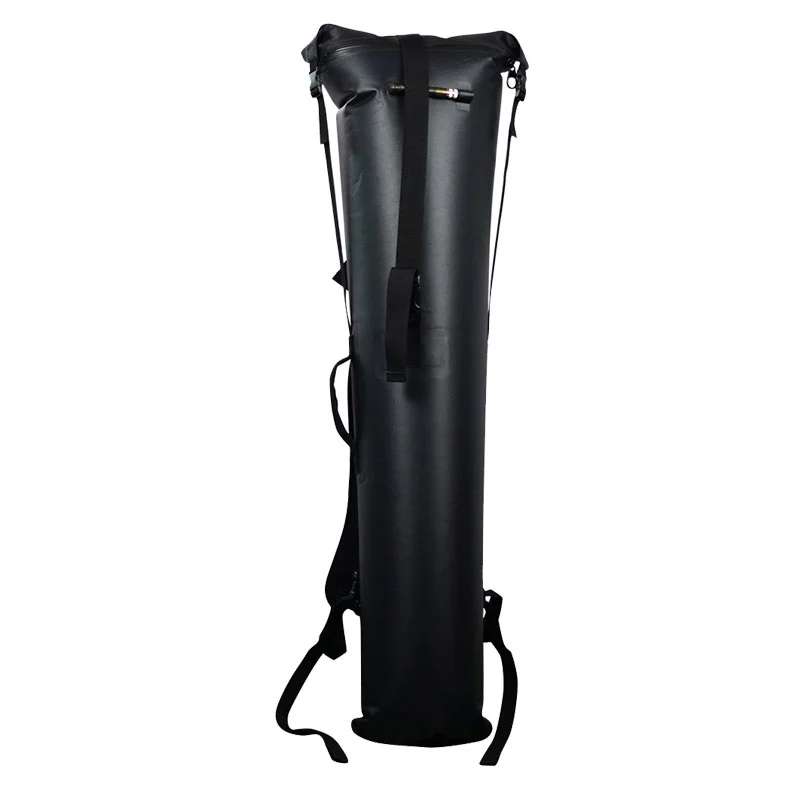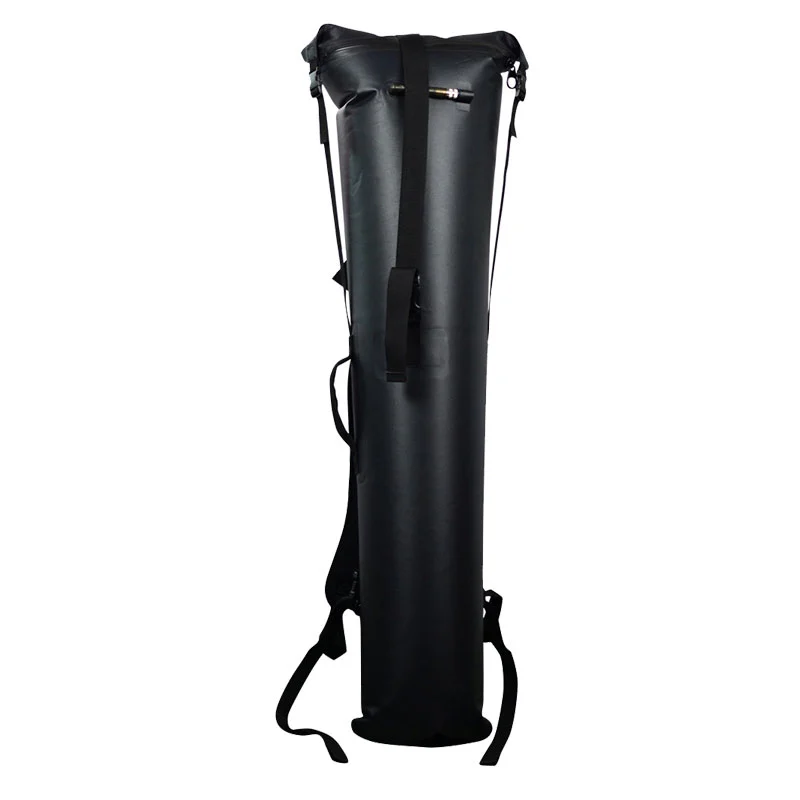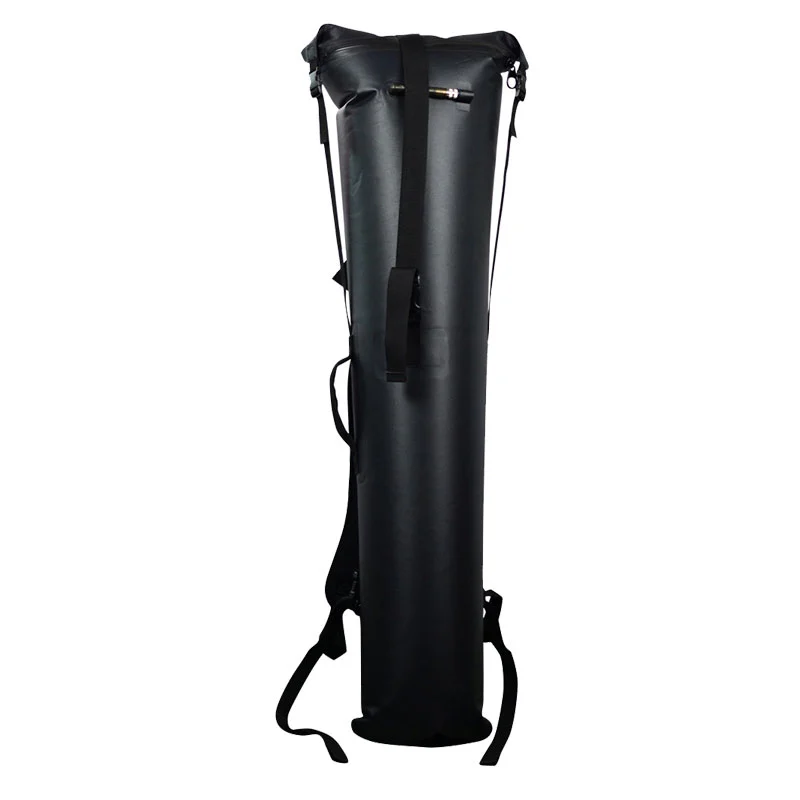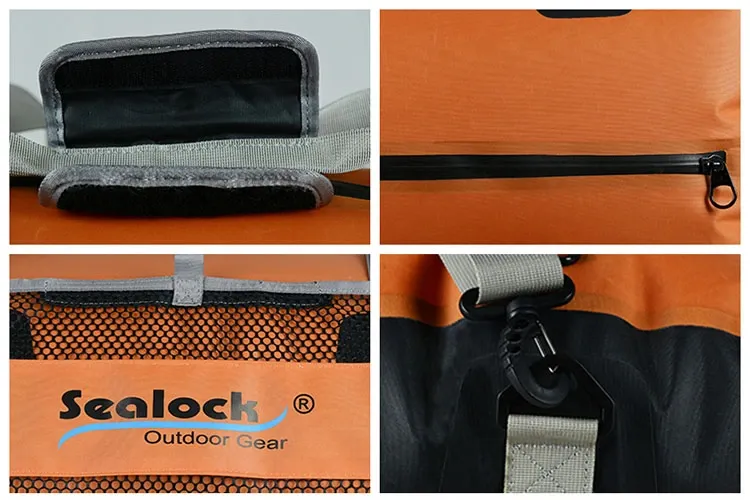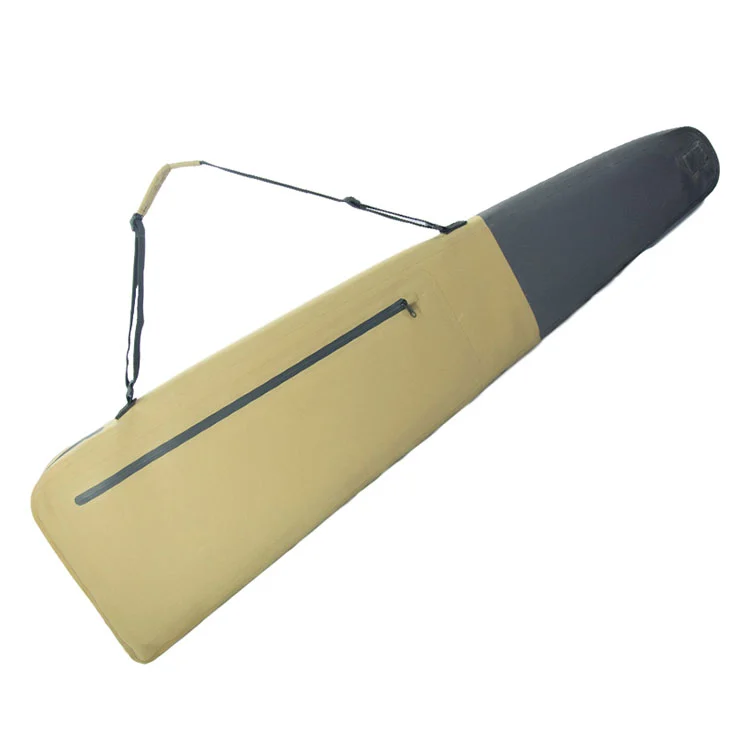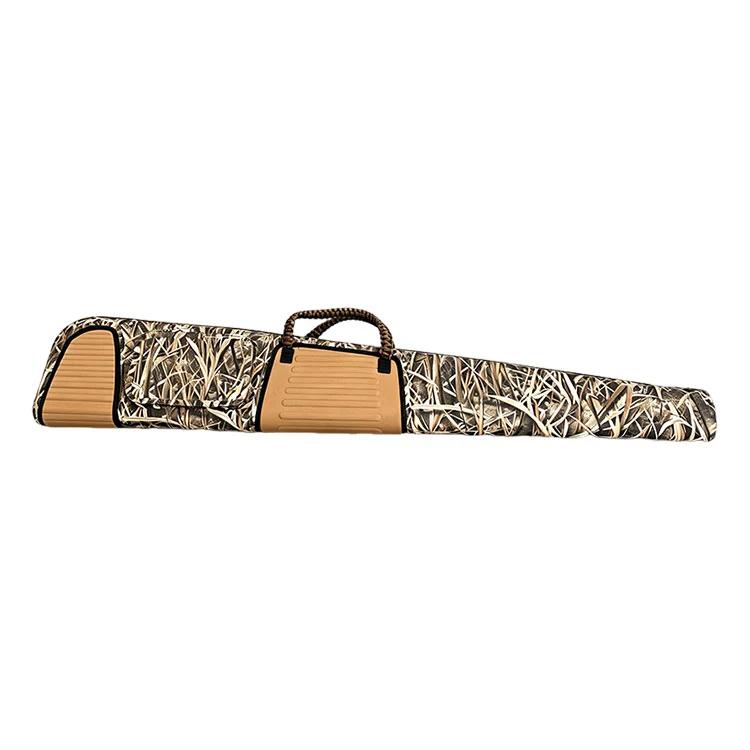
Product listings usually present a dry bag as an accumulation of features: tubular, plus roll-top, plus waterproof. In this construction the three are not additive. The cylinder is what allows the roll-top to fold evenly, the roll-top is what allows the air inside to be retained, and the retained air is what presses outward on the roll and holds the seal closed.
Relationship between cylindrical body, roll-top seal, and sealed air volume
| Specification | Value |
| Model | SL-E302 |
| Body Section | Circular, 25 cm diameter |
| Flattened Opening Width | 39.3 cm, uniform across full width |
| Sealing Contact Area (3 folds) | approx. 590 cm² |
| Sealing Contact Area (4 folds) | approx. 785 cm² |
| Sealed Volume | 60 L usable |
| Waterproof Rating | IPX7 — immersion to 1 m for 30 minutes |
| Net Weight | 1.35 kg ± 0.15 kg |
| MOQ / Sampling / Production | 300 pcs / 7–10 days / 30–45 days |
| Element | What It Provides | What It Requires |
| Cylindrical body | An opening of uniform circumference, folding to an even two-layer strip | The roll-top to close and regulate its volume |
| Roll-top seal | Compressed sealing contact across the full opening width | The cylinder for consistent folding geometry |
| Sealed air volume | Outward pressure holding the roll closed; buoyancy | The welded tube and roll-top to contain it |
Each element solves a problem created by the other two, which is why the combination is specified together rather than as optional additions.
A roll-top requires a consistent folding surface. On a tapered or contoured opening, the circumference changes across the mouth, so folding it flat produces material bunching at the narrow points and thin sections at the wide ones. Those bunched corners are where a roll-top seal fails first.
Fold behaviour: tapered opening compared with uniform cylindrical opening
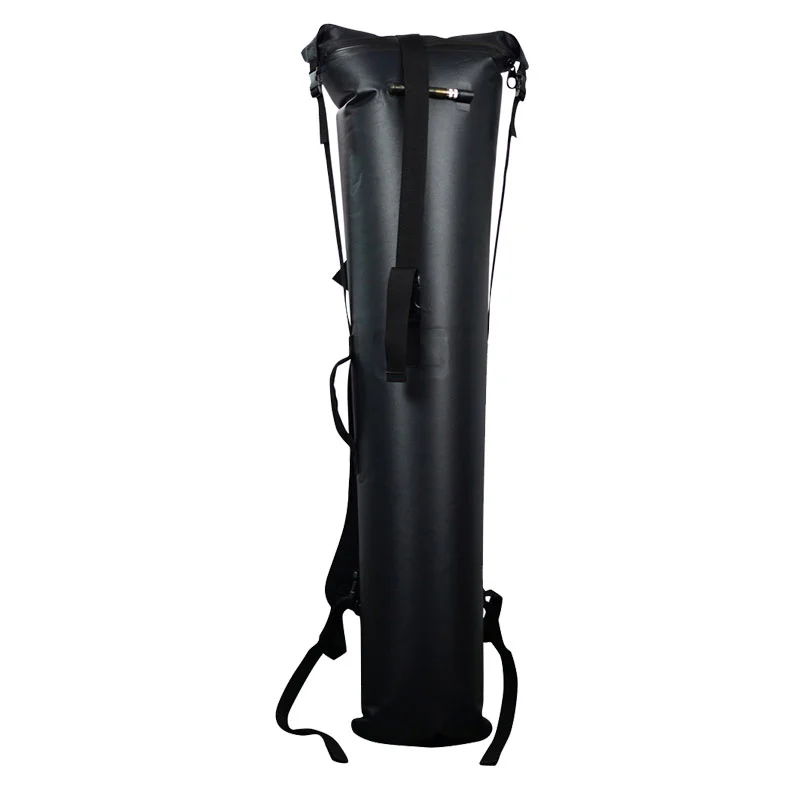
| Fold Characteristic | Cylindrical Opening (25 cm) | Tapered or Contoured Opening |
| Circumference across the mouth | Constant, 78.5 cm | Varies along the taper |
| Flattened strip width | 39.3 cm, uniform | Uneven; wider at one end |
| Material thickness in the fold | Two layers, consistent across the width | Bunched at corners, thin between |
| Buckle pressure distribution | Even from edge to edge | Concentrates on the bunched sections |
| Typical first failure point | None identified in testing | Bunched corner |
The 39.3 cm figure is half the circumference of the 25 cm section. Because the tube has the same cross-section at every point around the opening, that strip is two layers thick from edge to edge, and the buckle tension applied across it is distributed rather than concentrated.
A roll-top does not seal along a line. Each fold lays a compressed band across the full 39.3 cm width, and the bands stack.
| Fold Count | Compressed Band Length | Total Sealing Contact Area |
| 2 folds | approx. 10 cm | approx. 393 cm² — insufficient in testing |
| 3 folds (specified minimum) | approx. 15 cm | approx. 590 cm² |
| 4 folds | approx. 20 cm | approx. 785 cm² |
For comparison, a sealed-zipper closure on a case of this length presents roughly 65 cm² of sealing interface concentrated along a single continuous track. The roll-top distributes an order of magnitude more contact area across a compressed band, with no continuous path for water to follow along its length.
Air trapped inside the tube is usually described as a buoyancy feature. It also performs a structural function on the closure itself.
Once the roll is clipped, the enclosed volume is fixed. Any external compression — a hand pressing the bag, gear stacked on it, water pressure at depth — raises the internal pressure, and that pressure acts outward on the underside of the rolled closure, pressing the folded layers together more firmly. The seal tightens under the same load that would open a mechanical closure.
• Internal pressure presses the folded layers together from inside the roll
• External compression increases internal pressure, which increases sealing force
• The trapped volume also holds the tube's circular section, keeping the fold geometry intact
• The same air provides the buoyancy that keeps a sealed bag at the surface
| Sealing procedure:roll with a deliberate air pocket retained rather than pressing the air out. Expelling the air removes both the buoyancy and the internal pressure that reinforces the closure. This is covered on the instruction card supplied with each unit. |
| Element Removed | Consequence |
| Cylinder (contoured body instead) | Fold bunches at the tapered corners; sealing pressure concentrates on the bunched sections |
| Roll-top (zipper instead) | Sealed volume becomes fixed; air cannot be regulated; buoyancy and internal sealing pressure are lost |
| Welded seams (stitched instead) | Air escapes through the needle perforations; both flotation and internal pressure fail |
| Sealed air (vented design) | Buoyancy lost, and the closure no longer tightens under external load |
A tube with a zipper, or a roll-top on a stitched body, does not reproduce the same result. This is why all three are fixed elements of the construction.
1. Load the firearm through the full 39.3 cm flattened opening — no alignment required
2. Decide the configuration: retain an air pocket for water use, or roll tighter for compact carry
3. Fold the opening flat so both faces meet evenly across the entire width
4. Roll the folded section down three to four times, keeping the roll straight and free of debris
5. Clip the two POM side-release buckles and draw the closure tight
6. Check the roll is even edge to edge with no bunching at either end
| Item | Specification |
| Model Number | SL-E302 |
| Product Name | Roll-Top Gun Dry Bag Tube |
| System Configuration | Welded tube + roll-top + sealed air volume |
| Body Geometry | Cylindrical, 25 cm diameter |
| Body Length | 130 cm |
| Usable Capacity | 60 L |
| Net Weight | 1.35 kg ± 0.15 kg |
| Shell Material | 840D TPU laminated (500D PVC / 420D TPU optional) |
| Seam Construction | RF welded |
| Closure | Roll-top, three folds minimum, POM side-release buckles |
| Waterproof Rating | IPX7 — immersion to 1 m for 30 minutes |
| Max Firearm Length | 50 in (127 cm) |
| Carrying Style | Hand / Shoulder / Backpack |
| OEM / ODM | Supported |
| Component | Material | Role in the Sealing System |
| Tube Shell | 840D TPU Laminated | Contains air and water; forms the sealed volume |
| Seams | RF Welded | Prevents air and water passing through the body |
| Closure Edge | Reinforced welded fabric edge | Withstands repeated folding at the crease |
| Buckles | POM Side-Release | Holds the roll under sustained tension |
| Base | Reinforced circular welded base | Maintains section at the standing end |
| Webbing | Heavy-Duty Nylon | Closure tension and carry load |
| Option | Available | Notes |
| Tube Diameter | ✔ | Changes flattened fold width and sealing contact area |
| Tube Length | ✔ | Matched to target firearm range |
| Shell Material | ✔ | 840D TPU / 500D PVC / 420D TPU |
| Buckle Type and Colour | ✔ | Including oversized cold-weather latches |
| Sealing Instruction Card | ✔ | Multilingual available |
| Logo Printing / Welded Patch | ✔ | Applied without piercing the shell |
| Pantone Colour Matching | ✔ | Confirmed at sampling |
| Packaging / Private Label | ✔ | Colour box, printed carton, hang tag |
The complete sealing system is specified where a firearm may enter the water rather than merely get rained on:
Kayak, canoe, and packraft transport, river crossings and deep wading, small-boat and open-deck hunting, duck and waterfowl hunting in flooded timber, coastal and estuary access, expedition travel on water routes, guide and outfitter fleet use, and flood-prone storage environments.
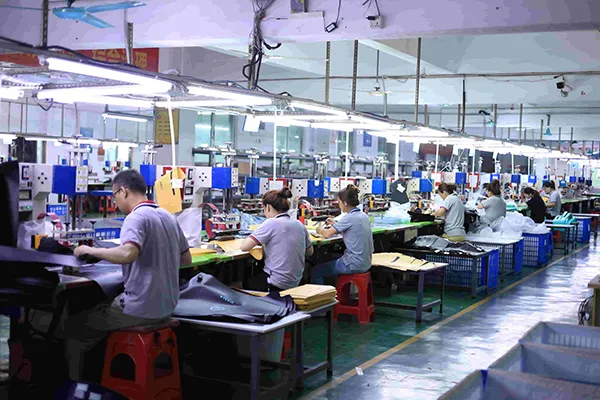
7. 840D TPU fabric inspection and weldability confirmation
8. Welding parameter setup for the fabric batch
9. First-article weld sample and destructive peel test
10. Precision cutting of tube panels to the circular development
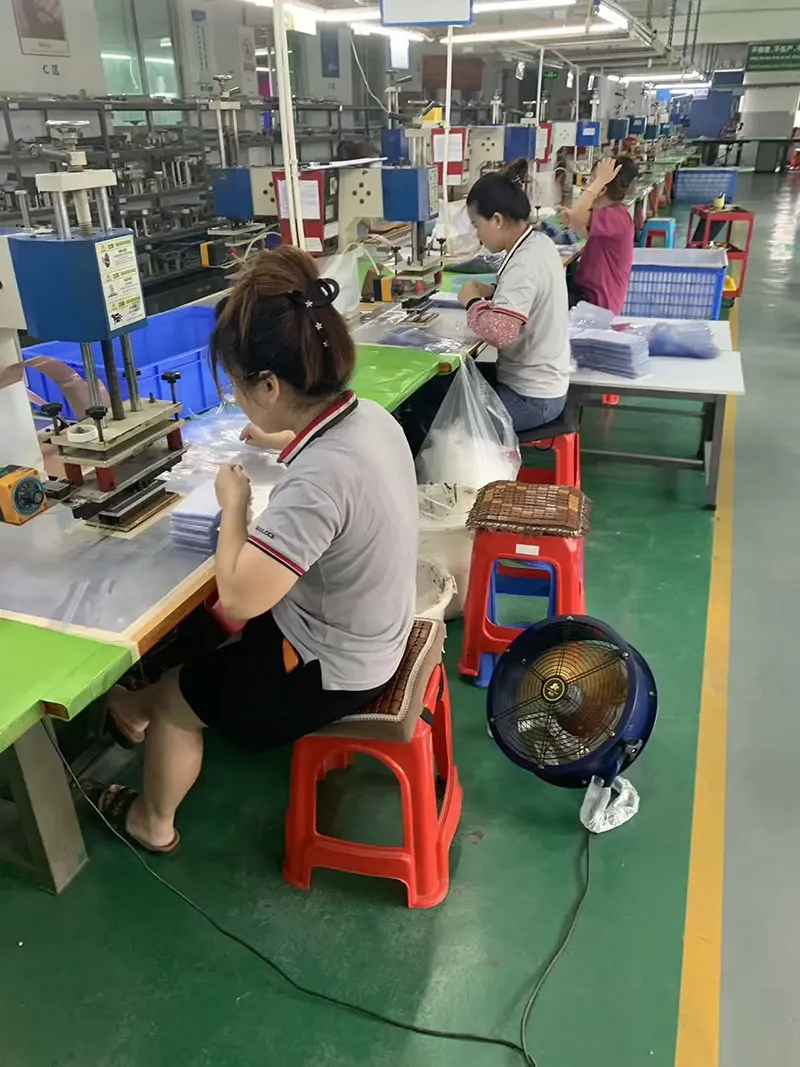
11. RF welding of the cylindrical body
12. Closure edge reinforcement and forming
13. Reinforced circular base welding
14. Buckle, webbing, and strap assembly
15. Seal-and-air-retention verification
16. Final quality inspection and export packing
| Inspection Item | Standard |
| Incoming Material Inspection (IQC) | Every batch |
| First-Article Weld Peel Test | Start of every run |
| Welded Seam Air and Water Integrity | 100% |
| Closure Edge Inspection | 100% |
| Fold Uniformity Check | 100% |
| Air Retention Verification | Per approved sampling plan |
| Immersion Verification | Per approved sampling plan |
| Packaging Inspection (OQC) | 100% |
| Test Item | Method | Result |
| Air Retention | Sealed with an air pocket, held under observation | Volume retained; no loss through seams or closure |
| Fold Count Comparison | Sealed at 2, 3, and 4 folds, then immersed | Three folds required; two insufficient |
| IPX7 Immersion | Sealed at 3 folds, immersed to 1 m for 30 min | No ingress at closure or seams |
| Fold Uniformity | Roll inspected across full 39.3 cm width | Even compression edge to edge, no corner bunching |
| Compression Response | External load applied to the sealed bag | Internal pressure rose; closure remained sealed |
| Flotation with Load | Sealed with retained air and rifle-weight load | Floated with contents above the surface |
| Closure Fold Fatigue | Repeated rolling at the same crease line | No cracking or delamination |
| Low-Temperature Sealing | Rolled and clipped after 12 h at -20°C | Closure remained pliable and sealed normally |
| Design | Fold Quality | Volume Control | Air Retention |
| Welded tube + roll-top (SL-E302) | Even across 39.3 cm | Adjustable by fold count | Retained; reinforces the seal |
| Contoured body + roll-top | Bunches at tapered corners | Limited | Partial |
| Tube + zipper | Not applicable | Fixed | Minimal control |
| Stitched tube + roll-top | Even | Adjustable | Escapes through perforations |
| Item | Specification |
| Individual packing | PE protective bag |
| Carton | 132 × 32 × 32 cm, 4 pcs, 5.4 kg net |
| Sealing instruction card | Supplied with each unit; multilingual available |
| MOQ | 300 pcs |
| Sample lead time | 7–10 days |
| Production lead time | 30–45 days |
| Trade terms | EXW / FOB / CIF |
| Certifications | ISO 9001, BSCI, SMETA, GRS (material dependent) |
| Included Item | Quantity |
| Roll-Top Gun Dry Bag Tube (SL-E302) | 1 |
| Adjustable Removable Shoulder Strap | 1 |
| Backpack Straps | 1 set |
| Sealing Instruction Card | 1 |
| PE Protective Bag | 1 |
• 12-month warranty against manufacturing defects, including welded seams and closure edge
• Replacement POM buckles supplied for dealer service programmes
• Multilingual sealing instruction cards for end-user training
• Diameter and length consultation against target firearm range
• Welding parameter records retained per project for OEM quality files
Project:
Staff Training Programme for a River Expedition OutfitterAn outfitter running multi-day river routes had bags failing in the field despite the product testing correctly at the factory. Investigation traced every incident to the same cause: seasonal staff were rolling the closure tight and pressing the air out, which removed both the buoyancy and the internal pressure supporting the seal.
The fix was procedural rather than structural. We supplied a four-language sealing card specifying the air pocket, and the outfitter added it to seasonal staff briefings alongside a high-visibility colourway for surface recovery.
• Initial order: 300 pcs
• Customized features: High-visibility Pantone colourway, four-language sealing card, extended tube length, tether anchor point
• Sample lead time: 9 days
• Production lead time: 40 days
• Outcome: Field failures ceased in the following season; sealing card adopted across the outfitter's full equipment range
“Once staff understood the air pocket is what makes it float and holds the seal, the failures we saw in the first season stopped completely.”
— Operations Manager, River Expedition Outfitter
“We tried a tapered dry bag first and it always crumpled at the corners when we rolled it. The straight tube folds flat every time.”
— Equipment Buyer, Guiding Company
“Pressing on a sealed bag makes the closure tighter, not looser. That was not obvious until you explained the pressure working on the roll.”
— Safety Officer, Paddling Programme
A cylinder has the same circumference at every point around the opening, so folding it flat produces a two-layer strip 39.3 cm wide that is even from edge to edge. A tapered opening bunches at the narrow points, and those bunched corners are where roll-top seals fail first.
Each fold lays a compressed band across the full 39.3 cm width. Three folds produce roughly 590 cm² of contact area and four folds roughly 785 cm². A sealed-zipper closure of comparable length presents around 65 cm² concentrated along a single track.
Once the roll is clipped, the enclosed volume is fixed. External compression raises internal pressure, and that pressure acts outward on the underside of the roll, pressing the folded layers together more firmly. The closure tightens under the load that would open a mechanical seal.
Not for water use. Expelling the air removes both the buoyancy and the internal pressure supporting the closure. Roll with a deliberate air pocket retained. Rolling tighter is appropriate only for compact carry on dry ground.
Two folds produce roughly 393 cm² of contact and did not seal reliably under immersion in testing. Three folds is the specified minimum and the basis of the IPX7 rating.
Air escapes through the needle perforations even when seam tape is applied over them. Without retained air there is no buoyancy and no internal pressure supporting the closure, which is why welded seams are a requirement of this system rather than an upgrade.
A zipper fixes the sealed volume and removes air regulation, so buoyancy control and the internal sealing pressure would both be lost. The bag might still resist rain, but it would not behave as a sealed system.
A sealing instruction card is supplied with each unit and is available in multiple languages for OEM programmes. Fleet customers commonly include it in staff briefings, which measurably reduces field complaints.
After twelve hours at -20°C the closure remained pliable and could be folded, rolled, and clipped normally, including with gloved hands.
Yes. Diameter sets the flattened fold width and therefore the sealing contact area. A larger diameter increases both. Diameter changes are quoted with the corresponding fold width so the sealing specification stays defined.
Yes. Length and diameter are both customizable, and the roll-top absorbs the difference between the body length and the firearm being carried.
MOQ 300 pcs, samples in 7–10 days, production in 30–45 days, quoted EXW, FOB, or CIF. Full OEM and ODM development is supported including diameter, length, material, hardware, instruction cards, and packaging.
Address
No. 88, Fenggang Section of Dongshen Road, Fenggang Town, Dongguan City, Guangdong Province, China
Tel